A trauma informed sound therapy example does not begin by asking someone to relax. It begins by giving them control. For a person whose nervous system has learned to scan for danger, an unexpected bass pulse, closed eyes, or an instruction to “let go” can feel activating rather than restorative. Trauma-informed vibroacoustic work uses audible sound and felt vibration with a different goal: create a predictable, adjustable sensory experience that supports choice, orientation, and gradual regulation.
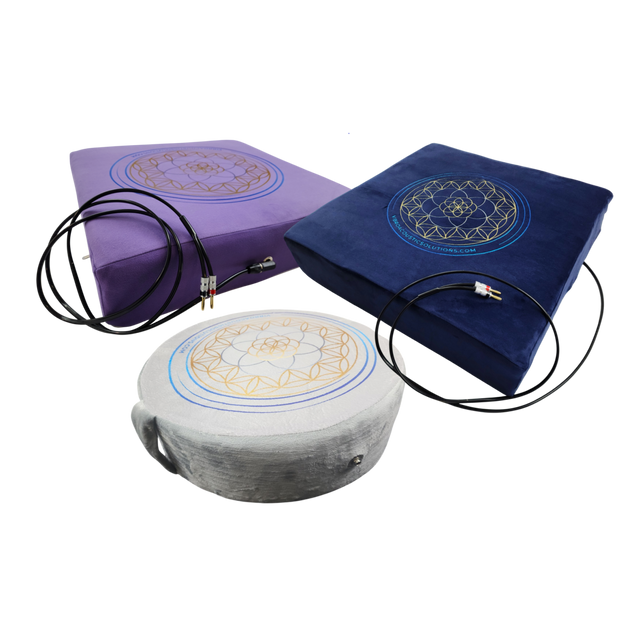
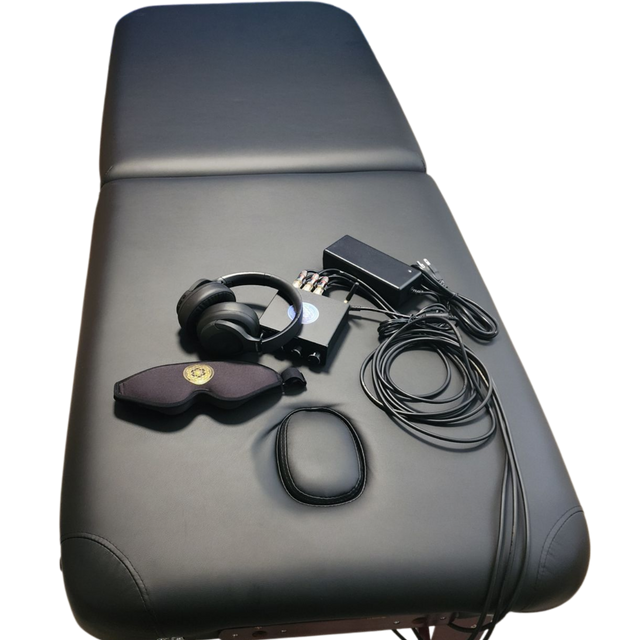
The equipment matters because low-frequency sound is not only heard through the ears. When transducers send frequencies through a bed, cushion, or massage table, the body feels rhythmic mechanical vibration through the skin, muscles, and connective tissue. This is often described as cellular micro-massage. At comfortable levels, the steady input can give the nervous system a clear, repeatable signal to notice: a pulse begins, it continues, and it can be changed or stopped.
What Makes Sound Therapy Trauma-Informed?
Trauma-informed practice is not a playlist or a single frequency. It is the way the session is designed and delivered. Safety is supported through consent, collaboration, predictability, and respect for the client’s lived experience. The practitioner does not assume that a deeply immersive experience is better. They create enough structure for the client to remain connected to the present moment.
In vibroacoustic therapy, frequencies commonly fall between about 20 and 120 Hz. The lower end of that range is felt as a broad, slow vibration through the body, while higher frequencies may feel more localized, energizing, or percussive depending on the system and placement. For trauma-sensitive sessions, many practitioners begin within roughly 30 to 60 Hz at a low amplitude. The purpose is not to overwhelm the senses with intensity. It is to offer a stable, trackable rhythm.
This approach reflects the science of somatic regulation. The autonomic nervous system constantly evaluates sensory information for cues of safety or threat. A session with clear boundaries, gradual volume changes, and voluntary participation may help a person practice noticing bodily sensation without being pushed beyond their window of tolerance. Some people find low-frequency vibration settling; others prefer less contact, a higher frequency range, or no vibration at all. That variability is meaningful data, not resistance.
A Trauma Informed Sound Therapy Example: A 20-Minute Session
Consider a massage therapist, somatic practitioner, or home user working with a person who arrives feeling tense, restless, and disconnected from their body after a demanding week. The person is fully clothed, positioned on a vibroacoustic table or reclined against a vibroacoustic cushion. They are told that they can keep their eyes open, sit up, move, speak, or end the session at any time.
Before sound begins, the practitioner explains what will happen in plain language: “You may feel a gentle pulse under your back and legs. We will start very quietly for two minutes. If it feels like too much, too little, or simply not right today, we can change it immediately.” That preview reduces surprise and puts agency where it belongs.
Minutes 1-3: Orient Before Introducing Vibration
The first few minutes are silent or include only soft room sound. Rather than inviting the person to go inward immediately, the practitioner may ask them to notice three neutral details in the room: the color of a wall, the temperature of the air, the support beneath their feet. This is orienting, a simple way of reinforcing present-time awareness.
The client is then asked whether they would like to begin with vibration. A clear yes is ideal, but so is uncertainty. If they are unsure, the practitioner can offer a brief 15-second test at very low volume. The client may choose to continue, lower the level, or stop.
Minutes 4-10: Establish a Gentle, Predictable Rhythm
A steady tone in the 35 to 45 Hz range is introduced at a low, comfortable level. This range is commonly used in vibroacoustic applications because it can be felt clearly through larger body surfaces without requiring high auditory volume. Gentle instrumental audio, ambient sound, or a simple sine-wave-based program may accompany the vibration, but it does not need to.
The practitioner avoids sudden frequency sweeps, dramatic crescendos, and layered effects during this early phase. Predictability is therapeutic. The client might be invited to place one hand on the chest or abdomen only if that feels comfortable, or simply notice whether the vibration is most noticeable in the back, hips, shoulders, or legs.
The question is not “Are you relaxed yet?” A better question is, “What do you notice, and would you like anything adjusted?” This preserves curiosity without turning body awareness into a performance.
Minutes 11-16: Follow the Client’s Response
If the client reports comfort and wants to continue, the session may remain at the same frequency or move gradually toward 50 to 60 Hz. The change should be announced before it happens. A practitioner might say, “I can slightly change the pulse so it feels a little more present. Would you like to try that, or stay where we are?”
This is where trauma-informed work differs from a fixed protocol. A pre-programmed sequence can be useful, but the person’s response takes priority over the program. Faster breathing, muscle bracing, numbness, dizziness, agitation, or a feeling of being far away may indicate that the system needs less intensity, more external orientation, or a full pause.
If activation appears, the practitioner does not interpret it as failure. They can lower or stop the vibration, invite the client to open their eyes, and return attention to the room. A sip of water, feet on the floor, or a brief conversation about what changed may be more regulating than continuing the sound.
Minutes 17-20: Return to Stillness Gradually
The final minutes taper rather than end abruptly. The frequency and amplitude are reduced over one to two minutes, followed by silence. The client is given time to notice the absence of vibration and to reorient to the room before standing.
A simple closing question can help integrate the experience: “What would you like to take with you from this session?” The answer may be physical, such as warmer hands or softer shoulders. It may be practical, such as realizing that a lower setting feels safer. It may simply be, “I knew I could stop whenever I wanted.” That recognition is significant.
Why Frequency Is Only One Part of the Experience
People often ask for the best frequency for stress, sleep, or trauma-related tension. Frequency is valuable, but it is only one variable. The felt experience also depends on amplitude, session length, body position, transducer placement, audible volume, room lighting, and the individual’s sensory history.
A 40 Hz tone, for example, may feel grounding to one person and too concentrated to another. Research interest in 40 Hz has expanded in areas involving rhythmic sensory stimulation and brain activity, while clinical vibroacoustic applications have also used lower ranges, often between 20 and 80 Hz, for relaxation, pain support, muscle tone, and mobility-related goals. In trauma-informed settings, the most useful frequency is often the one a person can experience with comfort, choice, and enough awareness to stay present.
Some clients also connect deeply with 432 Hz music, Solfeggio tones, drumming, singing bowls, or nature-based soundscapes. These sounds can carry personal, cultural, and spiritual meaning that strengthens a sense of ritual and safety. When paired with carefully controlled tactile vibration, they can become part of an experience that is both emotionally resonant and physically tangible.
Practical Setup for Home and Clinical Use
For home use, start shorter than you think you need. A five- to 10-minute session at a low setting can reveal far more than a 45-minute immersion. Sit or recline in a position that allows easy movement, keep the room comfortably lit, and place the remote or volume control within reach. Avoid treating the session as a test of whether you can stay still.
In a clinical setting, document the client’s preferences: preferred position, comfortable volume range, frequencies that felt supportive, and cues that suggest a pause is needed. A vibroacoustic bed, cushion, or massage-table attachment can be integrated into bodywork, psychotherapy-adjacent somatic work, recovery sessions, or quiet rest periods when used within the practitioner’s training and scope.
Vibroacoustic Solutions systems make this kind of graduated approach practical by allowing practitioners and home users to bring controlled low-frequency vibration into existing treatment spaces. The most advanced setup is not necessarily the one with the most stimulation. It is the one that makes thoughtful adjustment easy.
The real value of a trauma-informed sound therapy session is not that it forces the body into calm. It offers a respectful rehearsal for sensing, choosing, pausing, and returning to the present - one gentle vibration at a time.
Najnowsze posty

Sound Frequency Mat vs Cushion: Which Is Right?
Read article
Therapeutic Chair System Review for Home and Clinics
Read article
A Practical Guide to Clinic Relaxation Technology
Read article