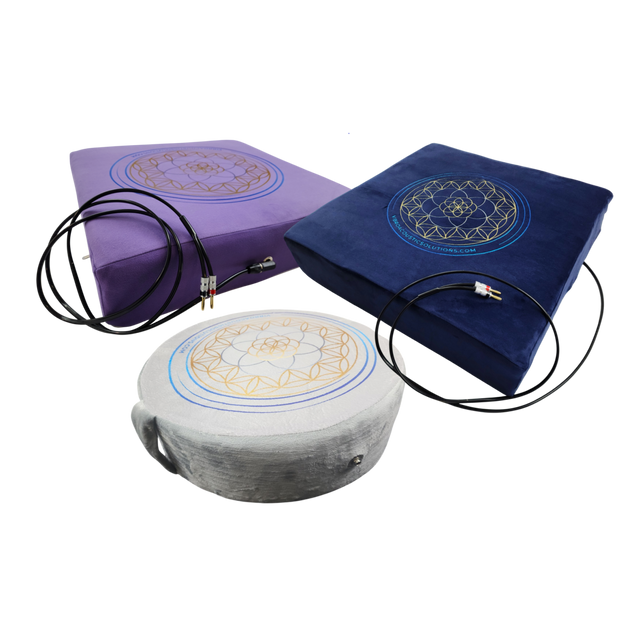
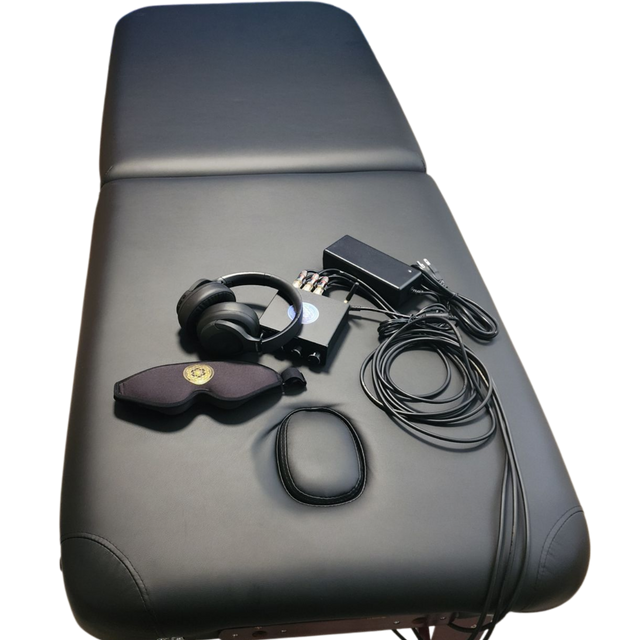
A well-prepared sound session does not begin when the music starts. It begins with the body’s sense of safety: a comfortable position, predictable volume, a clear purpose, and enough time to settle. Whether you are supporting a client on a vibroacoustic treatment table or creating a restorative practice at home, knowing how to prepare sound sessions helps turn sound from background noise into an intentional somatic experience.
Vibroacoustic therapy adds a physical dimension to listening. Low-frequency audio is transmitted through speakers or tactile transducers into a bed, cushion, chair, or massage table. The listener hears the sound while also feeling it as rhythmic vibration through the body. That mechanical input can be especially meaningful for people who have difficulty relaxing through stillness alone, or who respond strongly to sensory-based forms of regulation.
Start with the physics of the session
Sound is vibration moving through air. In a vibroacoustic system, low-frequency sound is also converted into mechanical vibration that moves through the surface supporting the body. Frequencies are measured in hertz (Hz), or cycles per second. Lower frequencies have longer waveforms and are generally felt more readily through the body than higher musical tones.
Many vibroacoustic sessions work primarily in the approximate 20 to 120 Hz range. Within this range, the sensation may feel like a slow pulse, a gentle internal massage, or a broad wave moving through the back, hips, and legs. The exact experience depends on the frequency, the intensity, the equipment, body position, and individual sensory preferences.
The body contains mechanoreceptors that respond to pressure, movement, and vibration. Input from these receptors travels through the peripheral nervous system and contributes to proprioception - the brain’s awareness of where the body is in space. Slow, predictable sensory input can give the nervous system a more organized stream of information to process. This is one reason carefully paced low-frequency sessions may feel grounding for people carrying muscular guarding, stress-related tension, or sensory overload.
Research on vibroacoustic interventions has explored outcomes including relaxation, pain perception, muscle tone, and emotional regulation. Clinical protocols vary widely, but many use low-frequency stimulation between 30 and 80 Hz for sessions lasting 20 to 45 minutes. The variability matters: there is no single frequency that is right for every body or every therapeutic goal.
Define the purpose before choosing frequencies
A sound session should have one primary intention. A home user may be preparing for sleep, easing into recovery after physical exertion, or taking a break from a demanding day. A practitioner may be helping a client transition into massage, breathwork, counseling, or a restorative treatment.
The goal guides every other decision. A session intended for downshifting should usually have fewer changes in volume, rhythm, and texture than a session designed for gentle daytime activation. For a client with sensory sensitivity, consistency may be more valuable than musical complexity. For someone who enjoys immersive sound, a gradual tonal journey may feel deeply supportive.
Use a brief intake, even for personal use. Ask: What does your body need right now? Is the desired outcome rest, comfort, focus, emotional settling, or physical recovery? What sounds or sensations feel unpleasant? The answers prevent a common mistake: selecting a track because it is popular rather than because it fits the person in the room.
Choose a frequency range with care
For a calming session, many practitioners begin with steady low-frequency material around 30 to 60 Hz at a modest intensity. These lower tones are often felt as broad and reassuring rather than sharp. A gradual progression can work well, such as beginning near 40 Hz and allowing the music to slowly evolve without abrupt changes.
Frequencies around 60 to 100 Hz may feel more alerting or muscularly stimulating for some listeners, particularly when paired with defined rhythmic patterns. They can be useful in a recovery-oriented or energizing session, but they require more attention to comfort and volume. The felt vibration should remain inviting, not demanding.
Music may also include higher audible layers, nature sounds, sustained instruments, binaural-style textures, or meaningful tonal traditions. Solfeggio frequencies, 432 Hz tuning, and the approximately 7.83 Hz Schumann resonance hold rich personal and cultural significance for many people. Some listeners describe these sounds as centering, spacious, or deeply familiar. In a clinical-grade setting, the most useful approach is to honor that experience while observing the person’s real-time response: breathing, muscle tone, facial expression, and verbal feedback.
Prepare the room before the person arrives
The environment should reduce unnecessary nervous system work. Lower harsh overhead lighting, silence nonessential alerts, and set the room temperature so the body can rest without becoming cold. Have a blanket, bolster, eye pillow, and water available, but do not overfill the space with choices or visual clutter.
Position the vibroacoustic bed, cushion, or table attachment on a stable surface. Check all cables, power connections, volume controls, and audio source settings before the session begins. Test the selected track for a minute while placing your hand on the equipment. You are listening for distortion and feeling for uneven or overly aggressive vibration.
For home systems, remember that more volume is not more therapeutic. A tactile transducer can create a strong body-level sensation even when the audible volume is relatively low. Start below the intensity you think is needed, then increase slowly only if the listener wants more. This protects comfort and gives the nervous system time to adapt.
How to prepare sound sessions with a clear arc
A therapeutic session benefits from a beginning, middle, and ending. The first five minutes are an arrival period. Use simple, stable sound so the body can orient to the surface, vibration, and room. Invite the person to notice contact points - heels, calves, hips, shoulders, and head - rather than asking them to achieve a particular state.
The middle portion is where the chosen soundscape can deepen. Keep transitions gradual. Sudden bass drops, startling chimes, spoken affirmations, or dramatic changes in tempo can pull a person out of regulation, even when the music is beautiful. In trauma-informed practice, predictability is a form of care.
During the final five to ten minutes, reduce complexity and intensity. Give the nervous system time to integrate the experience before movement resumes. Silence can be useful here, but it is not required. A soft, steady ending tone may make the transition feel less abrupt for people who are sensitive to environmental shifts.
A 30-minute session might include five minutes of arrival, 18 to 20 minutes of sustained vibroacoustic listening, and five to seven minutes of integration. For a first session, 15 to 20 minutes is often plenty. Longer is not automatically better, especially for people new to tactile vibration or those with a highly sensitive sensory system.
Use positioning and consent as therapeutic tools
Body position changes the way vibration is perceived. Supine positioning distributes sensation across the back of the body and can be restful for many people. Side-lying may feel safer or more comfortable for someone with low-back discomfort, pregnancy-related positioning needs, or difficulty lying flat. A seated vibroacoustic cushion can offer a lower-intensity entry point for workspaces, waiting rooms, and home use.
Before beginning, explain what the person may feel: gentle vibration, sound through the surface, and shifting sensations as the music changes. Let them know they can ask for the volume to be lowered, the track changed, or the session stopped at any time. Consent is not a one-time checkbox. It is an ongoing part of somatic care.
Practitioners should observe without overinterpreting. A sigh, muscle softening, or quiet stillness may indicate comfort, but each person communicates differently. Check in simply: “How is the intensity?” “Would you like more, less, or the same?” This keeps the client in relationship with their own body rather than asking them to tolerate a prescribed experience.
Make space for integration after the sound ends
Do not rush directly from vibration into conversation, scheduling, or driving. Offer one or two quiet minutes to notice the body. A glass of water, a slow seated transition, or a few easy breaths can help the experience land.
For clients, brief documentation can improve future sessions: the frequency range used, session length, body position, audio style, and response afterward. Over time, these notes reveal patterns. One person may settle best with 40 Hz and minimal music, while another prefers a more melodic track with gentle vibration closer to 60 Hz.
The most effective sound session is rarely the most elaborate one. It is the one that meets the body where it is, offers clear and comfortable sensory information, and leaves the person with more room to breathe, feel, and recover.
Najnowsze posty

Guide to Vibration Intensity Settings for Therapy
Read article

Vibroacoustic Cushions Versus Weighted Blankets
Read article