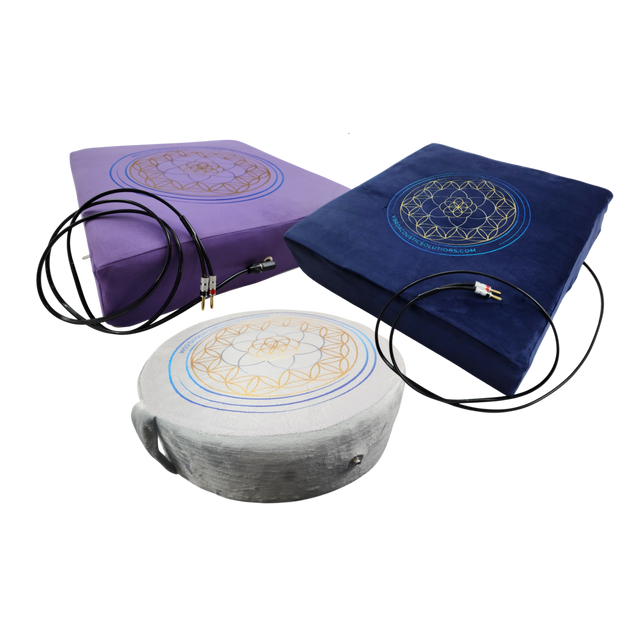
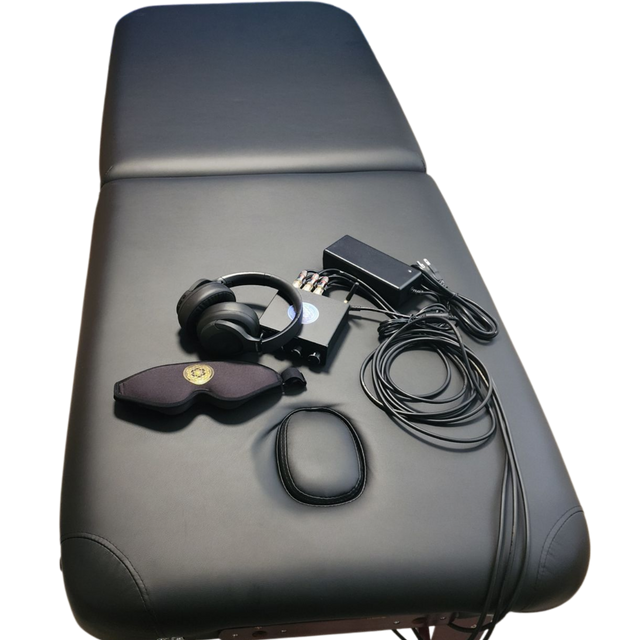
A 40 Hz tone is not simply heard. In a vibroacoustic system, it is delivered through transducers into the body as a steady, low-frequency vibration that can be felt through the back, hips, legs, or chest. That physical experience is what makes 40 Hz therapy examples so useful in both home and clinical settings: the frequency gives the nervous system a clear, rhythmic sensory signal while inviting tense tissue to soften.
Forty hertz sits in the low-frequency range where sound becomes especially tactile. The body experiences 40 cycles of vibration per second, often as a grounded, even pulse rather than a musical note. When paired with comfortable positioning, appropriate volume, and slow breathing, this frequency can support rest, body awareness, sensory regulation, and recovery-oriented care.
How 40 Hz therapy works in the body
Vibroacoustic therapy uses low-frequency sound, commonly between 20 and 120 Hz, transmitted through a chair, cushion, massage table, or bed. The sound energy creates mechanical vibration in the surface beneath the body. Rather than asking someone to concentrate on relaxation, the system provides a tactile cue that may help the body shift out of sustained guarding or high alert.
At 40 Hz, the vibration is usually distinct enough to feel clearly without being as deeply rumbling as frequencies closer to 20 or 30 Hz. Many people describe it as steady, centering, and easier to tolerate during a longer session. This matters because a predictable sensory input can be useful for the science of somatic regulation: the brain and body receive a repeated pattern, then have space to respond.
There is also scientific interest in 40 Hz because it falls within the gamma-frequency range used in auditory and visual sensory-stimulation research. Gamma activity is associated with attention, perception, and information processing. A 40 Hz vibroacoustic session is not identical to headphone-based auditory entrainment or light-based stimulation, since the primary experience is mechanical vibration through the body. Still, the shared rhythm makes 40 Hz a compelling frequency to explore with thoughtful, goal-centered protocols.
Research on vibroacoustic interventions across frequencies from roughly 20 to 120 Hz has reported improvements in self-reported relaxation, pain experience, mood, and muscle tension in various care settings. Results depend on the individual, the session length, the type of music or sound used, and whether vibration is part of a broader therapeutic plan. For practitioners, that is a strength rather than a limitation: the frequency can be tailored to the person in front of you.
40 Hz therapy examples for home and practice
A 20-minute decompression session after work
For a home user carrying the physical residue of a demanding day, 40 Hz can become a reliable transition ritual. Lie on a vibroacoustic bed or sit with a therapeutic cushion supporting the back and hips. Begin at a low intensity for two to three minutes, then increase only until the vibration is clearly felt and still comfortable.
A simple 20-minute session can include 40 Hz under soft ambient music or a slow, minimally changing soundscape. The purpose is not to force a meditative state. It is to give the body a consistent, low-frequency signal while the user notices breath, jaw tension, shoulder position, and the contact points against the surface. For people who find silent meditation difficult, the vibration provides an accessible anchor for attention.
A sensory regulation option for neurodivergent clients
Some autistic people and people with ADHD respond well to structured, predictable sensory input. In this context, 40 Hz may be used as part of a sensory-support routine, particularly when the person prefers deep-pressure-like or rhythmic tactile experiences. The key is choice and control.
A practitioner might offer a five- to 10-minute trial on a vibroacoustic cushion before a session begins. Let the client control the start, stop, and intensity whenever possible. Use familiar music if preferred, keep lighting and conversation low-demand, and observe for signs of settling, such as a slower breath, reduced fidgeting, or more comfortable posture. If the frequency feels too activating, reduce the level, shorten the exposure, or try a different frequency range on another day.
Pre-massage tissue preparation
Massage therapists can use 40 Hz as a preparatory phase before hands-on work. A client may rest on a massage table fitted with a vibroacoustic attachment kit for 10 to 15 minutes while receiving a gentle 40 Hz program. The mechanical vibration can help create a sense of warmth and contact through broad areas of the body, especially the back, pelvis, and legs.
This is not a replacement for assessment, skilled touch, or clinical judgment. It is a way to help the client arrive in their body before treatment begins. Many therapists find that clients settle into the table more quickly when the session opens with low-frequency sound, making the transition into massage feel less abrupt.
A recovery-focused routine after physical exertion
After training, gardening, travel, or a long shift on your feet, people often feel both physically tired and neurologically wired. A 40 Hz recovery session can address that mismatch by pairing a stable body-based stimulus with stillness. Start with 15 minutes on a vibroacoustic bed or recliner, supporting the knees and neck so the body does not have to hold itself in position.
Keep the intensity moderate. More vibration is not automatically more therapeutic. The goal is comfortable sensory input, not a forceful shaking sensation. Pairing 40 Hz with slow exhalations, hydration, and a quiet recovery environment can make the session feel more restorative, especially when the nervous system has been operating at a high pace.
A grounding layer in trauma-informed care
For trauma-informed practitioners, predictability is often more valuable than intensity. A stable 40 Hz program may be offered as an optional grounding resource during a session, particularly for clients who want more support sensing the boundaries of their body. The sound should be introduced clearly: what it feels like, how long it will run, and how the client can stop it.
Begin with short intervals, such as three to five minutes, and leave room for verbal check-ins. Some clients may appreciate the steady sensation through the back or legs because it reinforces present-moment physical contact. Others may prefer lower intensity, a different frequency, or no vibration at all. Trauma-informed vibroacoustic work is responsive, never prescriptive.
A bedtime downshift without screens
A 40 Hz session can also become part of a screen-free bedtime routine. About 30 to 60 minutes before sleep, use 15 to 20 minutes of low-volume vibroacoustic stimulation while reclining comfortably. Choose sound with minimal sudden changes, lyrics, or sharp percussion. A consistent routine teaches the body that this time of day is for reducing input, not adding more.
For people sensitive to vibration at night, a shorter session may work better than playing sound until sleep. The aim is to finish feeling quieter and more settled, then move naturally into the sleep environment.
Building a useful 40 Hz protocol
The best protocol is usually the one a person can use consistently and comfortably. For general relaxation, start with 15 to 20 minutes at a gentle-to-moderate intensity two or three times per week. For a clinic, begin with a short trial and document the client’s preferred intensity, body position, emotional response, and any changes they report after the session.
Avoid treating 40 Hz as a one-size-fits-all setting. Body size, sensory preferences, pain sensitivity, the furniture surface, and transducer placement all affect how the frequency feels. A high-quality vibroacoustic system should deliver a clean, stable vibration without rattling or distortion, because unwanted mechanical noise can interrupt the calming effect.
People with implanted medical devices, acute injuries, pregnancy-related concerns, seizure conditions, or other health considerations should speak with an appropriate healthcare professional before beginning a new vibration-based routine. Practitioners should also follow their scope of practice and use vibroacoustic therapy as a supportive modality within a well-considered care plan.
Choosing the right setting for 40 Hz
A vibroacoustic bed offers the most immersive whole-body experience and works well for dedicated relaxation rooms, recovery spaces, and integrative clinics. Cushions are a practical option for home users who want targeted support in a favorite chair or on a sofa. Massage table attachment kits allow bodyworkers to bring low-frequency sound directly into an existing session without replacing their table.
The equipment matters, but so does the experience around it. Lower the lights if that feels supportive, give the body enough warmth, and remove the expectation that something dramatic must happen. The most meaningful result may be simple: a client notices their shoulders drop, a home user feels less braced after work, or a tired body finally has a few minutes of steady, safe-feeling rest.
Used with care, 40 Hz can become more than a setting on a sound system. It can be a repeatable invitation to pause, feel the body from the inside, and make room for recovery.
Latest posts


Vibroacoustic Systems for Therapeutic Regulation
Read article