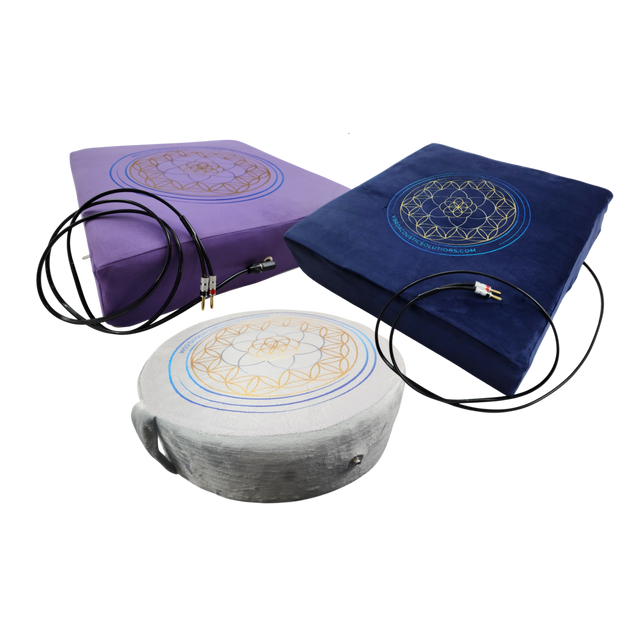
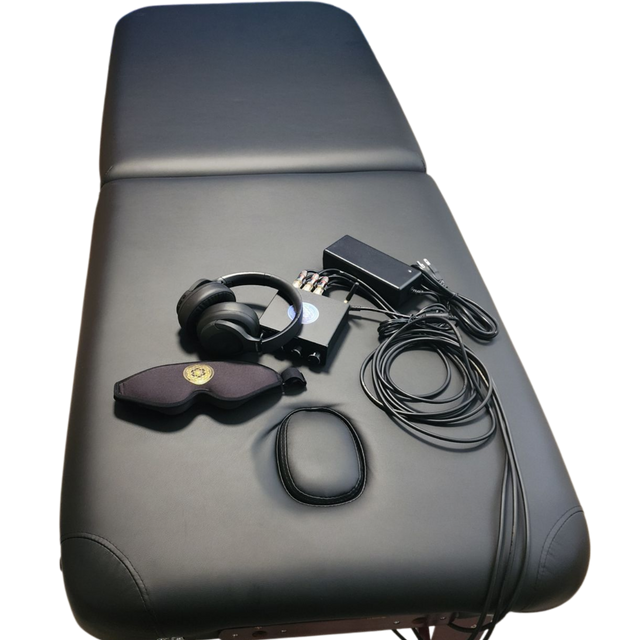
A vibroacoustic setup should fit the body, the room, and the purpose of the session. The home system versus treatment table decision is not simply about price or size. It determines how low-frequency sound reaches the body, whether the experience supports personal regulation or clinical care, and how easily therapy can become part of a consistent routine.
Vibroacoustic therapy uses transducers to convert an audio signal into physical vibration. Rather than only hearing a tone through speakers or headphones, the user feels frequency through the back, hips, legs, or other points of contact. Low-frequency protocols often work within approximately 20 to 120 Hz, where vibration can be felt deeply through tissue and the skeletal system. That tactile input, paired with carefully selected music or tones, can support a sense of safety, downregulation, body awareness, and recovery.
For a person building a calming practice at home, a dedicated bed or cushion system may be the clearest choice. For a massage therapist, bodyworker, or integrative clinic, an attachment kit on an existing table can create a practical clinical-grade experience without replacing familiar treatment furniture.
How frequency delivery changes the experience
The most useful comparison starts with mechanics. A vibroacoustic bed, mat, or cushion places transducers directly beneath or behind the body. The larger the contact area, the more broadly low-frequency energy can travel through the body. A full-body system can create an enveloping experience that feels less like listening to sound and more like resting inside it.
A treatment table setup concentrates that same principle into a professional treatment environment. Transducers mounted beneath a table surface send vibration upward while the practitioner maintains access to the client for massage, manual therapy, breathwork, coaching, or other forms of care. The frequency is not merely background ambiance. It becomes a tactile layer within the session.
Many clinical and wellness protocols use low frequencies in the 30 to 80 Hz range for relaxation, muscular ease, and sensory grounding. Frequencies near 40 Hz are also widely discussed in neuroscience research because of their relationship to gamma-band activity, while lower ranges around 20 to 40 Hz may feel especially settling and physically resonant for some users. The ideal setting depends on the person, the surface, the transducer placement, the audio program, and the intended outcome.
Published vibroacoustic therapy research has explored outcomes including pain perception, anxiety, relaxation, motor support, and quality of life. Results vary by population and protocol, which is why adjustable volume and frequency delivery matter. The goal is not simply more vibration. It is a comfortable, well-calibrated sensory experience.
Home system versus treatment table: the practical difference
A home system is designed around repeatability. It gives an individual or family a dedicated place to lie down, settle, and use vibroacoustic therapy without rearranging the room or scheduling an appointment. This makes it particularly appealing for people managing daily stress, sleep disruption, chronic tension, sensory overload, or post-exercise recovery.
A treatment table is designed around integration. A practitioner can retain the workflow of a familiar massage or therapy table while adding a sound-based somatic component to sessions. The table remains useful for hands-on treatment, yet the client also receives low-frequency vibration through the body during selected portions of care.
Neither option is inherently more therapeutic. The better choice depends on how often the system will be used, who will use it, and whether professional treatment access is essential.
When a home system makes more sense
Choose a home-focused system when consistency is the priority. Nervous system regulation tends to benefit from repeatable experiences, and a system already available in the bedroom, living room, or dedicated wellness space lowers the friction of using it. A 20- to 40-minute session can become part of an evening wind-down, a recovery day, or a sensory reset after work.
A full-body home bed is especially valuable for users who want broad contact across the back and legs. The body is supported in a reclined position, and there is no need to remain still for a provider's treatment plan. Cushions and more compact systems can be a strong fit for smaller homes, travel, seated use, or targeted support while reading, meditating, or resting.
Home systems also allow more personal control. The user can explore calming music, therapeutic sound programs, nature-based audio, or meaningful tonal traditions at a comfortable level. Some people feel drawn to 432 Hz music, Solfeggio tones, or other intentional soundscapes because of the emotional and contemplative space they create. When paired with tactile low-frequency vibration, these choices can make a home practice feel deeply personal.
The trade-off is that a home system does not provide the observational support of a trained practitioner. Users benefit from beginning gently, noticing how their body responds, and allowing comfort to guide session length and intensity.
When a treatment table is the stronger investment
A treatment table attachment is often the most efficient path for an established practice. It uses the table already at the center of the treatment room, preserves valuable floor space, and can expand the sensory depth of services without requiring a separate vibroacoustic bed.
For massage therapists, the combination can be particularly natural. A client may receive low-frequency vibration during an opening relaxation phase, while working with breath and body awareness, or during a quiet integration period at the end of a session. Practitioners can also use it alongside non-hands-on modalities, creating a restorative option during sessions that call for less direct touch.
Client flow matters here. A table-based setup supports smooth transitions because people already understand how to get on and off the table, and practitioners already know how to position bolsters, linens, and supports. The system becomes part of the room rather than a separate experience clients must learn to navigate.
The trade-off is that table systems are usually most effective when the practice has clear session protocols. Consider when vibration will be used, how long it will run, how intensity will be adjusted, and how you will explain the sensation before beginning. Clear communication helps clients feel informed and at ease, particularly those with heightened sensory sensitivity.
Comfort, surfaces, and setup quality
The furniture between the transducer and the body affects the experience. Dense foam, upholstery thickness, table construction, and body position can all change how strongly a frequency is felt. A system with adjustable output gives more room to tailor delivery to the individual rather than forcing every body into the same intensity.
On a home bed, comfort is usually the central design consideration. The surface should invite rest and allow the body to receive vibration without pressure points. On a treatment table, stability and accessibility become equally important. A practitioner needs a setup that remains dependable under repeated use and does not interfere with safe table height, client transfers, or hands-on work.
Audio quality matters as well, but the felt vibration should remain the foundation. Speakers can create atmosphere and provide musical context, while the transducers carry the low-frequency mechanical signal into the body. A balanced system avoids turning either element into an afterthought.
Budget should reflect the real use case
A dedicated vibroacoustic bed can be an excellent long-term investment for a household that will use it several times a week. Its value grows when it becomes a reliable regulation space rather than equipment stored away after the first month.
For a practitioner, converting an existing table can be more economical than purchasing a separate piece of furniture. It can also help test demand before expanding into a larger dedicated room or adding multiple systems. A clinic with high client volume, however, may eventually find value in both: a table attachment for integrated sessions and a separate bed for longer, self-guided relaxation appointments.
Think beyond the initial purchase. Include room layout, cleaning needs, training time, session design, and the cost of lost space. The most affordable system is not always the lowest-priced one. It is the one that will be used consistently and supports the kind of care you actually intend to provide.
Choosing with intention
If your primary goal is personal access to calming, low-frequency support, a home system creates a dependable place to rest, feel, and regulate. If your goal is to enrich professional sessions while preserving the familiar function of your practice room, a treatment table conversion offers a focused and flexible path.
Vibroacoustic Solutions designs both approaches around the same central idea: therapeutic sound becomes more meaningful when the body can feel it. Choose the format that makes regular use realistic, then give the experience enough time and quiet attention to become part of your care rhythm.
Najnowsze posty


Vibration Therapy Versus Massage for Recovery
Read article
Sound Vibration Therapy Guide for Better Regulation
Read article