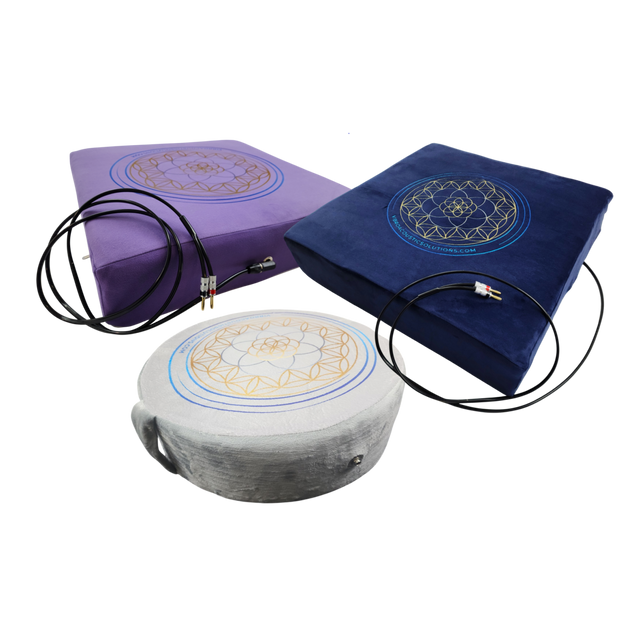
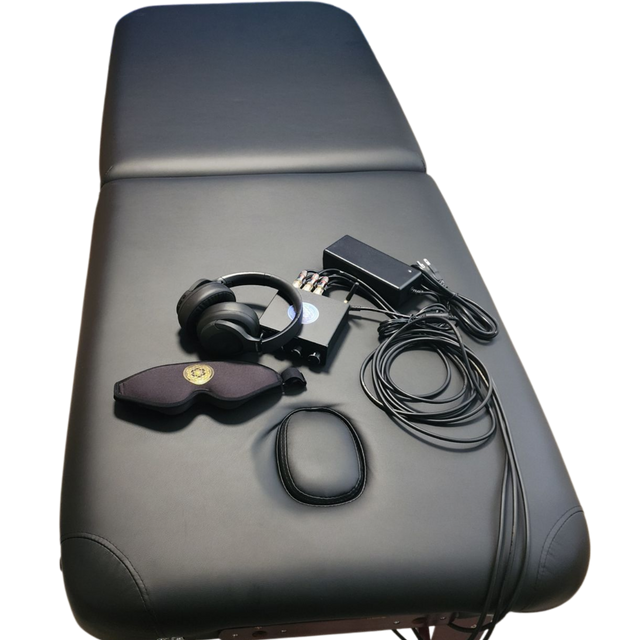
A treatment table is more than a surface to lie on. The right massage tables create the physical conditions for effective hands-on work: stable support, comfortable positioning, easy access to the body, and enough quiet for the nervous system to settle. When vibroacoustic therapy is added, the table also becomes a delivery system for low-frequency sound vibration that can be felt throughout the body.
That distinction matters. Vibroacoustic therapy does not simply play music near a client. Transducers transfer carefully selected low-frequency frequencies into the table frame or upholstery, creating mechanical vibration that travels through the body by contact. Frequencies commonly used in therapeutic settings range from approximately 20 to 120 Hz, with lower ranges often felt as slow, grounding pulses and mid-low ranges producing a more localized, rhythmic sensation. Paired with calming audio and skilled bodywork, this can help create an environment that supports relaxation, sensory regulation, recovery, and therapeutic presence.
What Massage Tables Need to Do Well
For a massage therapist, bodyworker, or clinic owner, the best table is not necessarily the most elaborate model. It is the one that supports safe, repeatable care for the people you actually serve. A practitioner who sees athletes may prioritize working weight and easy height adjustment. A trauma-informed somatic practice may place greater value on low-entry access, supportive bolsters, quiet hardware, and an unhurried sensory experience.
Stability comes first. A table should remain secure during shifting pressure, stretching, and repositioning. Look beyond the stated static weight capacity, which describes how much load a table can hold while still. Working weight capacity is more useful because it accounts for movement during a session. For professional bodywork, a table with a working capacity of 500 pounds or more is often a practical baseline, though individual practice needs vary.
Width is another meaningful trade-off. A 28- to 30-inch surface gives many clients a secure, supported feeling without forcing the practitioner to overreach. Wider tables can improve comfort for larger bodies and side-lying work, but they may increase strain for practitioners with a smaller reach. The goal is not maximum width. It is a table that lets the client soften while allowing the practitioner to work with sound body mechanics.
Height adjustment should be quick, stable, and appropriate for your modalities. Portable tables usually use manual leg adjustments. Electric lift tables offer more precise positioning and can be especially valuable for clients with mobility limitations, chronic pain, or a heightened need for ease during transitions. In a busy clinical setting, electric adjustment can also reduce repetitive strain for the practitioner over time.
Choosing Massage Tables for Vibroacoustic Therapy
A standard table can become a vibroacoustic treatment surface when the attachment system is designed for the table’s structure, upholstery, and use pattern. This makes conversion a practical option for practitioners who already have a reliable table and want to expand their therapeutic offerings without replacing their core equipment.
The physical pathway is straightforward: an audio signal moves from a source through an amplifier to tactile transducers. The transducers convert that signal into vibration. Because the client is in direct contact with the cushioned surface, those frequencies are received through the body as well as through the ears. At lower frequencies, sound becomes something clients often describe as a gentle internal rhythm, pulse, or wave rather than a conventional listening experience.
Table material affects how that vibration feels. A sturdy wooden or aluminum frame can both work well, but construction, cross-bracing, upholstery tension, and mounting location influence resonance. An attachment should be secured firmly enough to avoid rattling or shifting, while remaining compatible with the table’s folding mechanism and weight distribution. A poorly fitted component can create distracting mechanical noise, which works against the calm, predictable environment many clients need.
For clinical-grade results, focus on controllability rather than raw intensity. Volume and tactile output should be independently adjustable whenever possible. A client who is highly receptive to sensation may prefer a subtle setting, while another may find a more pronounced low-frequency experience deeply settling. Starting low and increasing gradually gives the nervous system time to orient to the input.
Frequency, touch, and nervous system regulation
Low-frequency vibration is often used because it provides a clear sensory signal without requiring cognitive effort. The body contains mechanoreceptors that respond to pressure, stretch, and vibration. When rhythmic vibration is delivered through a supportive table, it may contribute to the broader conditions that help a person shift out of habitual bracing and toward rest.
Many sessions use frequencies in the 30 to 80 Hz range because they are readily felt through the body and can be integrated with slow music, guided breathing, or quiet rest. Very low frequencies around 20 to 40 Hz may feel especially grounding to some clients. Frequencies from roughly 50 to 80 Hz can feel more energizing or muscular, depending on the person, the transducer placement, and the audio program.
Research into vibroacoustic therapy has explored its use in relaxation, pain perception, motor support, stress reduction, and quality of life. Researchers are particularly interested in how low-frequency stimulation, music, and therapeutic context work together. The experience is not only about a single Hz value. It is shaped by duration, amplitude, sound design, physical comfort, and the client’s current sensory state.
This is why personalization matters. Two people may receive the same 40 Hz program and describe it very differently. One may experience a welcome sense of heaviness and safety; another may prefer shorter intervals or lower intensity. Good practice makes room for both responses.
Set Up the Table for Comfort Before Technology
Vibroacoustic equipment works best when the client feels physically secure. Begin with familiar table fundamentals: a clean face cradle, stable arm support, smooth linens, and bolsters that reduce unnecessary muscular holding. A bolster under the knees in supine positioning can reduce lumbar tension. In prone work, ankle support may help the legs rest more comfortably. Side-lying setups deserve equal attention, particularly for clients who cannot tolerate extended time face down.
Do not let extra padding become an afterthought. Thick foam layers, heavily padded toppers, and loose blankets can dampen tactile transmission. That does not mean comfort should be sacrificed. It means the setup should be tested as a system. If vibration feels muted, first evaluate the mounting, surface layers, and signal settings before simply increasing intensity.
The room itself also contributes to the intervention. Keep cords routed safely away from walkways and table controls. Reduce unnecessary visual clutter. Use an audio source with clean playback and avoid abrupt changes in volume or track transitions. Predictability is therapeutic, especially for clients who arrive with stress, sensory sensitivity, trauma-related tension, or sleep disruption.
Before a first session, explain what the client may notice: gentle vibration through the back, hips, legs, or torso; low tones that can be heard and felt; and the option to adjust or pause at any time. Clear consent is not a formality. It allows the client to remain connected to their own internal signals throughout the experience.
Portable, Stationary, or Converted: Which Table Fits?
Portable massage tables remain a strong choice for mobile practitioners, smaller studios, and therapists who need to store equipment between appointments. Their limitations are usually related to setup time, lower weight capacity than fixed furniture, and the need to confirm that an attachment will not interfere with folding legs or transport.
Stationary and electric tables are often better suited to dedicated treatment rooms. They can offer a more substantial feel, easier accessibility, and a stable long-term platform for integrated vibroacoustic equipment. The trade-off is cost, footprint, and less flexibility if the practice changes locations.
A conversion kit offers a middle path. It lets a practitioner preserve a table they already trust while adding a new layer of somatic care. For home users, it can also make an existing daybed, recliner, or treatment surface part of a personal recovery space, provided the furniture is structurally sound and the system is installed as intended.
Vibroacoustic Solutions designs table attachment and conversion options for this exact practical reality: many people do not need to start over with an entirely new treatment table. They need a reliable way to bring therapeutic low-frequency vibration into a space that already supports care.
A Better Question Than “Which Table Is Best?”
The better question is: what does your table need to support? A sports recovery practice, a massage clinic, an autism-informed sensory space, and a home relaxation room will not make identical choices. The table should fit the body, workflow, budget, and level of therapeutic intention behind the session.
When stable massage tables are paired with thoughtfully delivered low-frequency vibration, the result can be more than a comfortable place to rest. It can become a consistent sensory environment where the body has room to settle, receive skilled care, and reconnect with its own capacity for regulation.
Najnowsze posty

How to Install Transducers on Massage Tables
Read article
A Sleep Routine Vibroacoustic Example That Works
Read article
What 40 Hz Research Says About Gamma Stimulation
Read article