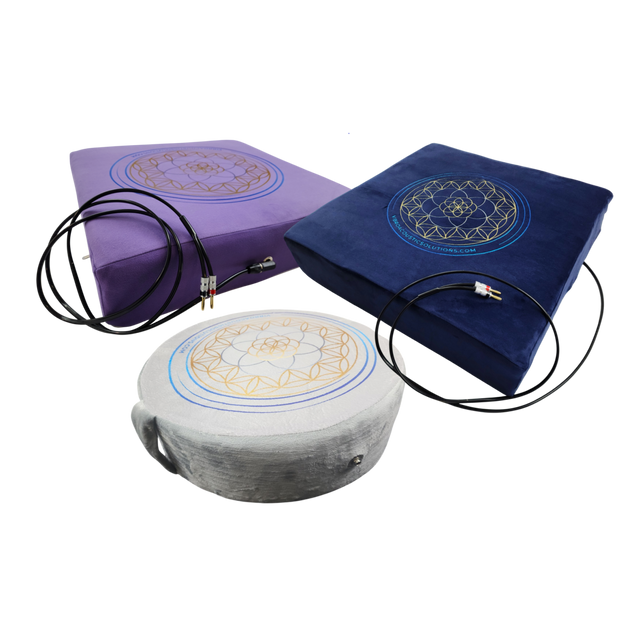
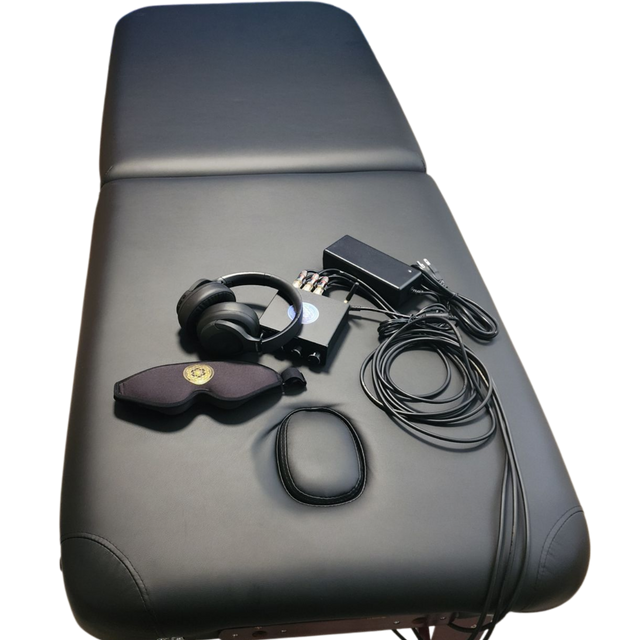
The last hour before bed is where many people accidentally train their nervous system to stay alert. Bright screens, unfinished work, tense shoulders, and a racing internal dialogue can keep the body in a state of readiness long after the day is over. A sleep routine vibroacoustic example gives that transition a physical cue: low-frequency sound is felt through the body, paired with quiet audio and repeatable bedtime signals that tell the system it can begin to downshift.
Vibroacoustic therapy uses transducers to convert sound into gentle mechanical vibration. Rather than only hearing a tone through speakers, the user feels it through a bed, cushion, or treatment table. This matters because low frequencies travel effectively through soft tissue and contact surfaces, creating a rhythmic sensory experience that can be easier to receive than verbal relaxation instructions when the mind is busy.
Why low-frequency vibration can fit a sleep routine
A well-designed evening session is not about forcing sleep. It is about reducing the sensory and muscular load that makes sleep harder to access. Frequencies in the lower audible range - often around 30 to 80 Hz - create a slow, tangible vibration that many people experience as grounding. At comfortable volume levels, the body can register a steady rhythm through the back, hips, legs, or shoulders while the room remains quiet and dim.
The physical mechanism is straightforward. A vibroacoustic transducer moves in response to the audio signal, transferring mechanical energy into the surface beneath the body. This repeated movement may feel like a broad, gentle internal massage rather than the localized pressure of a handheld massager. When paired with slow breathing, warmth, and reduced light exposure, it can support the conditions associated with parasympathetic activity: slower breathing, less muscle guarding, and a greater sense of safety in the body.
Research and clinical protocols in vibroacoustic therapy have used low-frequency stimulation in ranges such as 20 to 120 Hz, with 30 to 60 Hz commonly selected for relaxation-oriented sessions. The ideal setting is personal. A frequency that feels deeply settling for one person may feel too activating, too noticeable, or simply uncomfortable for another. The goal is not intensity. It is a pleasant level of sensory input that the body can accept without effort.
A 30-minute sleep routine vibroacoustic example
This example is designed for home use with a vibroacoustic bed, cushion, or massage-table attachment. It works especially well when used at roughly the same time each evening, since consistency helps make the session a recognizable pre-sleep cue.
Minutes 0-5: Create a low-stimulation landing zone
Begin before you lie down. Lower the room lights, place your phone out of reach, and set the bedroom temperature to a comfortable sleep-friendly level. Avoid using this first five minutes to answer messages or plan tomorrow. The purpose is to reduce competing demands on attention.
Choose a comfortable position on the vibroacoustic surface. Back-lying is often the simplest place to start because it gives broad contact through the spine and pelvis. If lying flat is uncomfortable, use a pillow under the knees or lie on your side with the cushion positioned where the vibration feels even and supportive.
Start with a low-frequency track around 40 Hz at a gentle volume. You should be able to feel the vibration clearly, but it should not rattle the body, create strain, or require you to adjust to it. Think of the setting as an invitation, not a stimulus to overpower the room.
Minutes 5-15: Pair vibration with extended exhalation
As the vibration settles in, let the breath become slightly slower without trying to control it rigidly. A useful pattern is an easy inhale for about four seconds and an unforced exhale for about six seconds. Longer exhales are commonly used in relaxation practices because they create a calmer respiratory rhythm and give the body more time in the release phase of each breath.
Notice where the vibration meets tension. For some people, it is most noticeable through the lower back and hips. For others, it travels through the rib cage, legs, or shoulder blades. There is no need to scan for problems or make anything happen. Simply let the steady low-frequency input give the nervous system one uncomplicated sensation to follow.
If you use music, choose sparse, slow material with minimal percussion and no sudden volume changes. Gentle ambient sound, soft drones, or tones with a steady tonal center often work well. Some users enjoy 432 Hz music or other frequency-based soundscapes for the sense of resonance and meaning they bring to an evening ritual. The best choice is the one that feels emotionally safe and physically settling.
Minutes 15-25: Reduce the frequency or soften the sound
For the middle portion of the routine, consider shifting from 40 Hz toward 30 to 35 Hz, or simply lower the overall intensity while keeping the same track. This gradual reduction creates a sensory taper instead of an abrupt stop. The body is no longer being asked to perform relaxation. It is being given fewer reasons to remain vigilant.
This is also a useful time for a simple body cue: unclench the jaw, let the tongue rest, lower the shoulders, and allow the hands to open. These small adjustments matter because the body often holds a daytime posture long after the workday has ended. Vibroacoustic stimulation does not need to be dramatic to be useful. Its value can be the quiet repetition of a signal that says there is nothing more to brace for right now.
People with chronic stress patterns may initially prefer shorter sessions of 10 to 15 minutes. More time is not automatically better. If you feel restless, emotionally stirred up, overheated, or overly alert, lower the volume, choose a less complex audio track, or end the session earlier. A sleep routine should leave you calmer than when you began.
Minutes 25-30: Finish without re-entering the day
During the final five minutes, fade the vibration to a very low level or turn it off while remaining still. Keep the lights down. Avoid checking the clock, reading news, or reopening your phone. If you are using a vibroacoustic cushion in another room, move to bed slowly and preserve the quiet sensory atmosphere.
You may fall asleep soon after, or you may simply feel less activated. Both are useful outcomes. The routine is building a repeatable pathway toward rest, not creating a test you have to pass each night.
Adjusting the routine for different needs
For a person who carries physical tension after long workdays, 40 to 60 Hz may feel especially satisfying at the beginning of the session because the vibration is more distinct. For someone who is sensitive to sensation, beginning at a lower volume or using 30 to 40 Hz for only 10 minutes may be more comfortable. A clinician may also use a similar sequence at the end of a massage, somatic therapy, or recovery-focused appointment to help clients transition out of treatment with less abruptness.
If sleep is disrupted by pain, sensory sensitivity, trauma-related tension, or a diagnosed health condition, treat vibroacoustic therapy as a supportive wellness practice within a broader care plan. Comfort is the key guide. Stop if the session causes discomfort, and consult an appropriate healthcare professional about persistent sleep concerns or symptoms that need clinical attention.
Consistency makes the frequency more meaningful
The most effective sleep ritual is usually the one you can repeat without friction. Keep the settings simple, use the same general time window, and resist the urge to change tracks or frequencies every night in search of a perfect formula. Over several evenings, the body begins to recognize the combination of low light, supported posture, low-frequency vibration, and slower breathing as a familiar route out of the day.
A clinical-grade vibroacoustic system can make that route more tangible by turning sound into a felt experience. At home or in practice, the real power is not in a single tone. It is in giving the nervous system a reliable, gentle place to settle before sleep.
Najnowsze posty

How to Install Transducers on Massage Tables
Read article

What 40 Hz Research Says About Gamma Stimulation
Read article