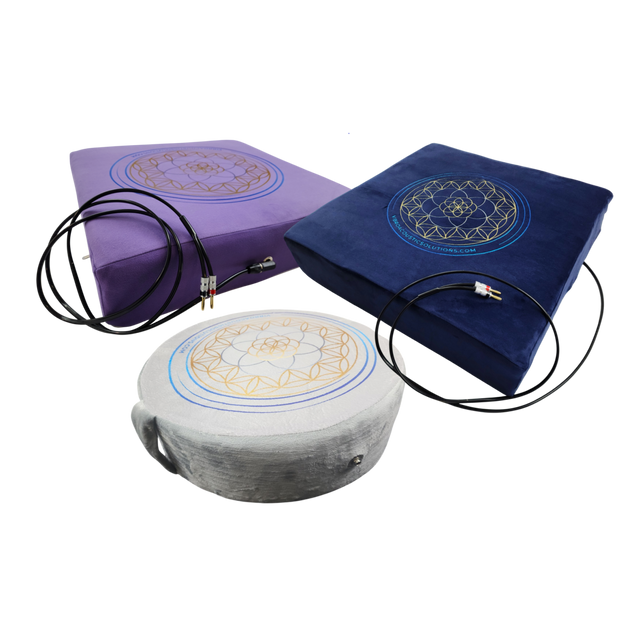
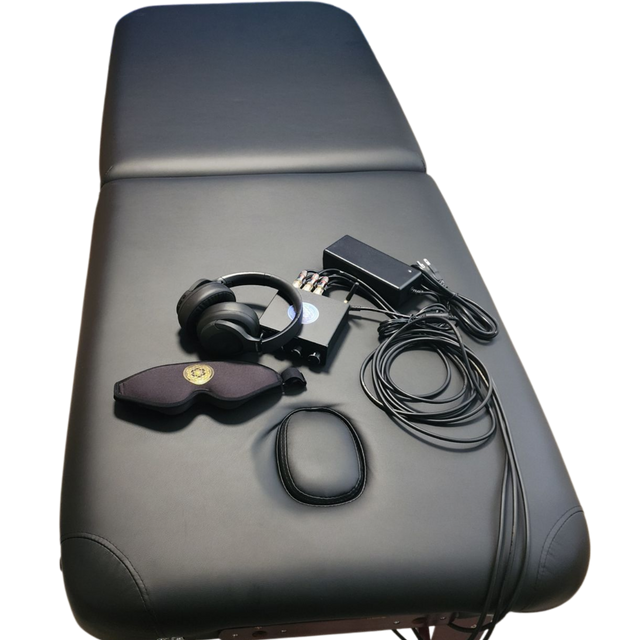
A vibroacoustic system does more than play music through a speaker. It delivers low-frequency sound through the body as carefully felt vibration, creating a direct sensory experience that can support relaxation, recovery, pain management routines, and nervous system regulation. For a person whose body feels stuck in high alert, that physical layer can be the difference between hearing calming sound and actually feeling safe enough to settle.
The technology is used in homes, massage practices, integrative clinics, sensory spaces, and rehabilitation settings because it meets the body where verbal instruction often cannot. A client does not need to understand frequency theory to notice the steady pulse beneath their back, hips, or feet. The body receives rhythm, pressure, and sound as tangible information.
How Vibroacoustic Systems Work
Vibroacoustic therapy uses transducers - specialized components that convert an audio signal into mechanical vibration. Rather than sending sound only into the air, a vibroacoustic bed, cushion, or treatment-table attachment transfers low-frequency energy into the surface supporting the body.
Most therapeutic programs emphasize frequencies between approximately 20 and 120 Hz. This is the range where sound becomes deeply tactile. At 30 Hz, a slow pulse may feel grounding and heavy. Around 40 Hz, many people experience a more defined rhythmic sensation through the torso and limbs. Frequencies between 60 and 100 Hz can feel more energizing or muscular, depending on intensity, body position, and the music or tones layered above them.
The physical mechanism matters. Low-frequency vibration activates mechanoreceptors in the skin and deeper tissues, including pressure-sensitive sensory receptors that respond to touch, movement, and vibration. The nervous system processes this incoming sensory information alongside auditory input, breathing patterns, muscle tension, and emotional state. When the signal is predictable, comfortable, and paced appropriately, it may help shift attention away from threat monitoring and toward interoception - awareness of what is happening within the body.
This is why a vibroacoustic session is often described as immersive rather than merely relaxing. The listener is not only hearing a calming composition. They are resting inside a field of organized sensory input.
Why Low Frequencies Can Feel So Regulating
The body naturally responds to rhythm. Heart rate, respiration, gait, and sleep cycles all have rhythmic patterns. Vibroacoustic systems introduce another steady pattern, one that can be adjusted for the individual rather than imposed at a single fixed setting.
Slow, consistent pulses may encourage fuller breathing and reduce protective muscular bracing. This can be especially meaningful for people who carry stress in the jaw, shoulders, low back, pelvic floor, or abdomen. The vibration does not force those tissues to release. Instead, it provides a non-invasive cue that can make softening feel more accessible.
Some clinical studies of vibroacoustic therapy have explored outcomes related to anxiety, pain, muscle tone, sleep, and quality of life. Protocols vary widely, which matters when interpreting results. A 20-minute session using 40 Hz sine-wave stimulation is not the same as a 45-minute music-based session that moves through multiple low-frequency ranges. Still, a recurring finding across therapeutic applications is that participants often report reduced perceived tension, improved relaxation, and greater comfort during or after sessions.
For practitioners, that distinction is useful. Vibroacoustic therapy is not one frequency with one guaranteed outcome. It is a flexible somatic tool. Frequency, amplitude, session length, body position, soundscape, clinical goal, and the person’s sensory preferences all shape the experience.
The Role of Music and Therapeutic Sound
Low-frequency vibration can be delivered as a pure tone, rhythmic pulse, or part of music designed for therapeutic use. Pure tones make the physical sensation easy to identify and may be helpful when a practitioner wants a highly controlled protocol. Music can create a more emotionally resonant experience, especially when it is paced to support rest, reflection, or recovery.
Many people also enjoy working with meaningful tonal traditions, including 432 Hz music, Solfeggio tones, drumming, chanting, or nature-based soundscapes. These choices can carry personal, cultural, and spiritual significance. In a vibroacoustic setting, the low-frequency layer gives that listening experience a physical dimension, allowing the body to participate in what the ears receive.
Choosing a Vibroacoustic System for Your Setting
The right system depends less on finding the most elaborate equipment and more on matching the setup to how it will actually be used. A home user may need a compact cushion for a bedroom, office, or favorite recliner. A massage therapist may benefit from an attachment kit that turns an existing table into a vibroacoustic treatment surface. A dedicated clinic or sensory room may call for a full vibroacoustic bed that supports longer, more immersive sessions.
When comparing options, start with the therapeutic environment. Consider the available space, the type of body support required, the number of people using the system, and whether sessions are self-guided or practitioner-led. A stable, comfortable surface is not a minor detail. When the body is distracted by pressure points, awkward positioning, or equipment noise, the nervous system has less capacity to respond to the therapeutic audio.
Sound control is equally important. Clinical-grade transducers should produce clear, even vibration rather than a harsh rattling sensation. The goal is discernible low-frequency movement that feels integrated with the audio, not overpowering. Intensity should be adjustable because sensory needs are personal. One client may find a subtle 30 Hz pulse deeply calming, while another prefers a more present sensation at 40 or 50 Hz.
For professional settings, repeatability matters. A practitioner should be able to recreate a successful session with consistent volume, frequency range, positioning, and duration. This supports better observation over time and makes vibroacoustic care easier to integrate with massage therapy, somatic work, breathwork, guided relaxation, or recovery-focused sessions.
Practical Applications at Home and in Practice
At home, vibroacoustic systems are often used as part of a pre-sleep routine, a decompression practice after work, or a quiet reset after physical activity. Short sessions can be practical. Fifteen to 30 minutes of supported rest with low-frequency sound may fit more easily into daily life than a longer wellness routine that requires extensive preparation.
For people with sensory dysregulation, the experience should begin gently. Lower intensity, shorter sessions, familiar music, and a clear option to stop can help establish a sense of control. This is particularly important for individuals with autism, ADHD, trauma-related tension, or heightened sound sensitivity. More sensation is not always better. The most effective setting is often the one that feels safe enough for the body to remain present.
In a treatment practice, vibroacoustic therapy can deepen the transition into hands-on work or provide a restorative close to a session. A massage therapist might use 20 to 30 minutes of low-frequency sound while a client rests supine before bodywork. A somatic practitioner may introduce vibration during grounding exercises, inviting the client to notice contact points, breath, temperature, and internal sensation. Recovery professionals may use it as a quiet, supported rest modality after training or movement-focused care.
Vibroacoustic Solutions designs systems with this adaptability in mind, from portable cushions to DIY conversion kits and full therapeutic surfaces. The aim is not to make every setting look like a clinic. It is to bring a dependable, science-centered sensory tool into the spaces where regulation and recovery already happen.
A Few Considerations for Safer Use
Vibroacoustic therapy is generally designed to be gentle and non-invasive, but individual circumstances still matter. People with implanted electronic devices, acute injuries, pregnancy-related concerns, seizure conditions, or complex health needs should consult an appropriate licensed healthcare professional before beginning a new vibration-based practice.
Comfort is also clinical information. If a frequency feels agitating, too intense, numb, or uncomfortable, reduce the level or stop the session. A well-designed session should feel supportive, not something to endure. Practitioners should document client preferences and responses, particularly when working with pain, sensory sensitivity, or trauma histories.
The most compelling quality of vibroacoustic systems is their simplicity: sound becomes touch, and touch becomes a cue for presence. Whether used on a treatment table, in a dedicated wellness room, or at the edge of a bed before sleep, the right frequency program can offer the body a quieter place to land.
Najnowsze posty

Tactile Audio Versus Headphones for Regulation
Read article
Dlaczego warto stosować przetworniki do stołów do masażu w praktyce?
Read article
Recenzja sprzętu wibroakustycznego: co jest ważne
Read article