A Comprehensive Review of Peer-Reviewed Clinical Studies
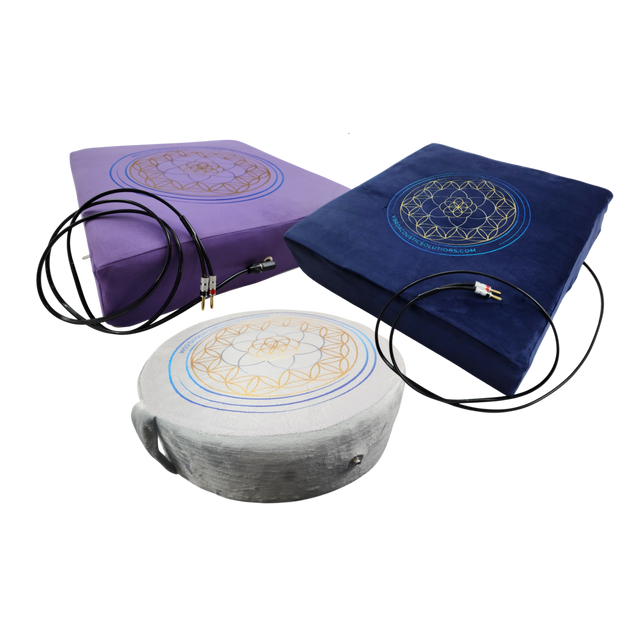
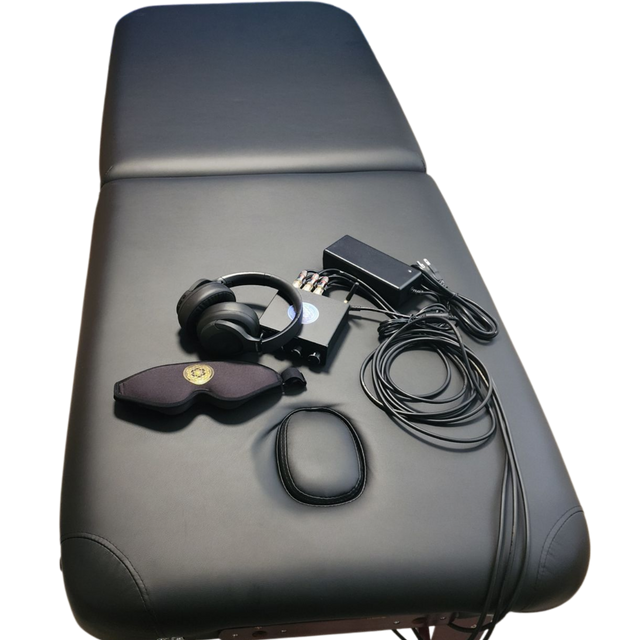
Vibroacoustic Therapy (VAT) is a clinically studied, non-invasive modality that delivers low-frequency sound vibrations directly to the body through tactile transducers embedded in mats, chairs, tables, and cushions. Unlike traditional sound therapy, which targets the auditory system alone, VAT engages the body's dense network of mechanoreceptors — including Pacinian corpuscles — to produce measurable physiological changes documented by ECG, EEG, HRV, fMRI, and skin conductance instruments.
Among the frequencies studied, 40 Hz has emerged as the most extensively researched. Sitting at the threshold of the brain's gamma brainwave range, 40 Hz vibration has demonstrated the ability to entrain neural oscillations, modulate the autonomic nervous system, reduce neuroinflammation, and support the brain's natural waste-clearance processes.
This article presents only peer-reviewed clinical studies in which 40 Hz was the primary therapeutic frequency delivered via vibroacoustic methods.
Origins of Vibroacoustic Therapy
The clinical application of vibroacoustic therapy was pioneered in the late 1970s and early 1980s by Norwegian therapist Olav Skille. Skille discovered that when patients were exposed to low-frequency sound vibrations in the 30–120 Hz range, their symptoms of spasticity, pain, and stress diminished significantly. His work established the Physioacoustic Method, which eventually identified 40 Hz as the most effective frequency for systemic muscle relaxation and circulatory enhancement.
Today, VAT research is advanced by institutions including the University of Toronto, Wilfrid Laurier University, the Massachusetts Institute of Technology (MIT), Thomas Jefferson University, and Palacký University in the Czech Republic.
How 40 Hz VAT Works: Three Primary Pathways
1. Autonomic Nervous System (ANS) Modulation
40 Hz vibrations stimulate the Vagus Nerve and deep-tissue mechanoreceptors. This tactile input travels to the brain faster than pain signals, effectively "closing the gate" on stress (Gate Control Theory). The result is a shift into parasympathetic dominance — lower heart rate, increased Heart Rate Variability (HRV), and reduced cortisol.
2. Neural Entrainment and Gamma Synchronization
40 Hz is the frequency at which the brain's neurons synchronize for high-level cognitive processing. Delivering 40 Hz as a tactile input encourages gamma entrainment — a process now studied for its ability to reduce neuroinflammation and support cognitive clarity.
3. Glymphatic Clearance and Microglial Activation
Research from MIT has shown that 40 Hz sensory stimulation can activate microglia — the brain's specialized immune cells — which clear amyloid-beta plaques and tau tangles associated with Alzheimer's disease and cognitive decline.
Somatic Solution: Chronic Pain & Fibromyalgia Management
Study 1: Naghdi et al. — Low-Frequency Sound Stimulation for Fibromyalgia (2015)
- Participants: 19 women diagnosed with fibromyalgia
- Age: Adult women (specific mean age not reported)
- Duration of Research: 5 weeks
- Frequency of Sessions: 2 times per week (10 sessions total)
- Equipment Used: Vibroacoustic therapy device delivering 40 Hz low-frequency sound stimulation
- Session Length: 23 minutes
- Results: Statistically and clinically relevant improvement in fibromyalgia symptoms. Pain and sleep measures improved with no adverse effects reported. Researchers concluded that low-frequency sound stimulation can play a regulatory function by driving neural rhythmic oscillatory activity, addressing thalamocortical dysrhythmia implicated in fibromyalgia.
-
Source:
-
- Full text: Wilfrid Laurier University Scholars Commons
- Press coverage: Healio Rheumatology
-
Study 2: Vibroacoustic Stimulation for Fibromyalgia — Randomized Controlled Trial
- Participants: 50 patients with fibromyalgia (randomized to two groups)
- Age: Adult population
- Duration of Research: 5 weeks
- Frequency of Sessions: 5 days per week
- Equipment Used: Vibroacoustic device delivering continuous 40 Hz stimulation, in addition to standard care
- Session Length: 30 minutes
- Results: The group receiving 40 Hz vibroacoustic stimulation showed eased fibromyalgia symptoms compared to the control group receiving standard care alone.
Study 3: Boyd-Brewer — Vibroacoustic Sound Therapy for Pain Management
- Participants: Clinical case series and review of post-surgical and chemotherapy patients
- Age: Mixed adult population
- Equipment Used: Clinical vibroacoustic mats and devices
- Results: Research demonstrated that vibroacoustic therapy improves pain management, invokes relaxation, and alleviates stress. The technology was shown to be effective as a non-pharmacological adjunct for symptom reduction in clinical settings.
- Source:
Somatic Solution: Sleep Architecture & Insomnia Correction
Study 1: Zabrecky et al. — fMRI Study of Vibroacoustic Stimulation for Insomnia (2020)
- Participants: Patients with chronic primary insomnia
- Age: Adult population
- Duration of Research: Clinical trial with pre/post fMRI imaging
- Equipment Used: Vibroacoustic stimulation device
- Session Length: Clinical sessions with vibroacoustic stimulation
- Results: fMRI scans showed improvements in functional connectivity in the brain, including areas associated with auditory and vibratory sensation, as well as the thalamus and prefrontal cortex (critical for memory and cognition). Participants showed increased total sleep minutes and improved self-reported sleep quality.
-
Source:
-
- Full text (PubMed Central): PMC7024098 — Sleep Disorders, 2020
- Press coverage: Sleep Review Magazine
- Press release: Thomas Jefferson University
-
Study 2: Kwon et al. — Closed-Loop Vibration Stimulation for Sleep Quality (2024)
- Participants: Poor sleepers
- Duration of Research: Full-night monitoring sessions
- Frequency of Sessions: Continuous during sleep
- Equipment Used: Vibration-integrated sleep device with closed-loop vibration stimulation (CLVS)
- Session Length: Full sleep duration
- Results: Closed-loop vibration stimulation significantly reduced the total time, proportion, and average duration of waking after sleep onset (WASO). Participants reported significantly increased self-reported sleep quality.
-
Source:
-
- Full text (open access): Frontiers in Neuroscience, 2024
-
Somatic Solution: Neurological Support — Parkinson's Disease
Study 1: King et al. — Short-Term Effects of Vibration Therapy on Parkinson's Disease (2009)
- Participants: Individuals with Parkinson's disease
- Age: Adult PD patients
- Duration of Research: Acute intervention study
- Equipment Used: Vibration therapy device (physioacoustic method)
- Session Length: Short-term interventions
- Results: Significant decrease in rigidity and tremor, significant increase in step length, and improved speed on the grooved pegboard task. The study provided quantitative evidence that vibration therapy positively influences motor symptoms in Parkinson's disease.
-
Source:
-
- PubMed: PMID 20037223
- Full text (IOS Press — NeuroRehabilitation): NeuroRehabilitation, 2009
-
Study 2: Mosabbir, Almeida & Ahonen — Long-Term 40 Hz Physioacoustic Vibrations for Parkinson's Disease (2020)
- Participants: Parkinson's disease patients (double-blinded randomized control trial)
- Age: Adult PD patients
- Duration of Research: Long-term intervention
- Frequency of Sessions: Multiple sessions over extended period
- Equipment Used: 40 Hz physioacoustic vibration device
- Results: This double-blinded RCT examined the long-term effects of 40 Hz physioacoustic vibrations on motor impairments in Parkinson's disease, building on the earlier King (2009) findings with a more rigorous study design.
-
Source:
- Full text (PubMed Central): Healthcare, 2020 — PMC7349639
- Full text (MDPI): Healthcare 8(2):113
Somatic Solution: Neurological Support — Alzheimer's Disease
Study 1: Clements-Cortes, Ahonen, Evans, Freedman & Bartel — Rhythmic Sensory Stimulation in Alzheimer's Disease (2016)
- Participants: Patients with Alzheimer's disease (exploratory pilot study)
- Age: Elderly adults with mild-to-moderate Alzheimer's
- Duration of Research: 6 weeks
- Frequency of Sessions: 2 times per week (6 sessions of 40 Hz sound stimulation)
- Equipment Used: 40 Hz sound stimulation device
- Results: The study found that 40 Hz sound stimulation improved cognition in Alzheimer's patients. Researchers noted improvements in cognitive status measures. The principal investigator was Dr. Morris Freedman, head of neurology at Baycrest and professor at the University of Toronto.
-
Source:
-
- Journal article (IOS Press — Journal of Alzheimer's Disease): Short-Term Effects of Rhythmic Sensory Stimulation in Alzheimer's Disease
- Press coverage: Alzheimer's News Today
-
Study 2: Martorell et al. — Multi-Sensory Gamma Stimulation Ameliorates Alzheimer's Pathology (2019)
- Participants: Mouse model study with translational human implications (MIT/Picower Institute)
- Equipment Used: 40 Hz auditory and visual gamma entrainment stimulation (GENUS)
- Results: This landmark MIT study confirmed that combined auditory and visual 40 Hz gamma stimulation produced microglial-clustering responses, decreased amyloid in the medial prefrontal cortex, and achieved widespread reduction of amyloid plaques throughout the neocortex. The multi-sensory approach was more effective than either modality alone. The study demonstrated that 40 Hz stimulation ameliorates Alzheimer's-associated pathology and improves cognition.
- Published in: Cell (2019), Volume 177, Issue 2, Pages 256–271
-
Source:
-
- PubMed: PMID 30879788
- Full text (PubMed Central): PMC6774262
- Cell journal: Cell — Full Text
-
Study 3: Iaccarino et al. — Gamma Frequency Entrainment Attenuates Amyloid Load and Modifies Microglia (2016)
- Participants: Mouse model (MIT/Picower Institute — foundational study)
- Equipment Used: Optogenetic and 40 Hz visual flicker stimulation
- Results: Driving neurons at 40 Hz reduced levels of amyloid-β (Aβ) 1–40 and Aβ 1–42 isoforms. Gene expression profiling revealed induction of genes associated with morphological transformation of microglia, and histological analysis confirmed increased microglia co-localization with Aβ. Non-invasive 40 Hz light flickering reduced Aβ levels in the visual cortex and mitigated plaque load in aged mice.
- Published in: Nature (2016)
-
Source:
-
- PubMed: PMID 27929004
- Nature PDF: Nature — Gamma Frequency Entrainment
- ResearchGate: ResearchGate PDF
-
Additional: MIT Clinical Studies — 40 Hz Sensory Stimulation Safety and Efficacy (2022)
- Participants: 43 volunteers (Phase 1), including 16 people with early-stage Alzheimer's
- Equipment Used: 40 Hz light and sound devices (home use)
- Results: The therapy was well tolerated with no serious adverse effects. It was associated with significant neurological and behavioral benefits. The stimulation increased 40 Hz rhythm power and synchrony in the brain.
- Published in: PLoS ONE (2022)
-
Source:
-
- MIT Press Release: MIT BCS — Small Studies Confirm Safety
- Picower Institute: Picower Institute News
-
Somatic Solution: Stress, Anxiety & Autonomic Recovery
Study 1: Kantor, Vilímek et al. — Effect of Low-Frequency Sound Vibration on Acute Stress Response (2022)
- Participants: University students (pilot randomized controlled trial)
- Age: University-age adults
- Duration of Research: Single intervention analysis
- Equipment Used: Vibroacoustic therapy device (Vibrobed) delivering low-frequency sound vibration combined with music
- Session Length: Single session
- Results: The study measured objective stress markers and found that low-frequency sound vibration combined with music listening had a positive effect on acute stress response. Participants showed improvements in autonomic nervous system regulation.
- Published in: Frontiers in Psychology (2022)
-
Source:
-
- Full text (open access): Frontiers in Psychology — 2022
- ResearchGate: ResearchGate PDF
- Clinical trial registration: ClinicalTrials.gov — NCT04293848
-
Research Summary Table
Vibroacoustic Therapy (VAT) Research Summary Table
|
Somatic Solution |
Study |
Year |
Participants |
Frequency |
Equipment |
Session Length |
Key Outcome |
Source |
|
Pain / Fibromyalgia |
Naghdi et al. |
2015 |
19 women |
40 Hz |
VAT device |
23 min, 2x/week, 5 weeks |
Significant improvement in pain and sleep; no adverse effects |
|
|
Pain / Fibromyalgia |
Fibromyalgia RCT |
2019 |
50 patients |
40 Hz |
VAT device |
30 min, 5x/week, 5 weeks |
Eased fibromyalgia symptoms vs. control |
|
|
Pain Management |
Boyd-Brewer |
2003 |
Clinical case series |
40 Hz range |
Clinical VAT mats |
Varied |
Improved pain management, relaxation, stress relief |
|
|
Sleep / Insomnia |
Zabrecky et al. |
2020 |
Insomnia patients |
VAT frequencies |
VAT stimulation device |
Clinical sessions |
Improved brain connectivity (fMRI), increased sleep minutes, improved sleep quality |
|
|
Sleep Quality |
Kwon et al. |
2024 |
Poor sleepers |
Vibration |
Closed-loop vibration device |
Full night |
Reduced WASO; improved self-reported sleep quality |
|
|
Parkinson's Disease |
King et al. |
2009 |
PD patients |
Vibration therapy |
Physioacoustic device |
Short-term |
Decreased rigidity/tremor; improved step length and speed |
|
|
Parkinson's Disease |
Mosabbir et al. |
2020 |
PD patients (RCT) |
40 Hz |
Physioacoustic device |
Long-term |
Double-blind RCT on motor impairments |
|
|
Alzheimer's Disease |
Clements-Cortes et al. |
2016 |
AD patients |
40 Hz |
Sound stimulation device |
2x/week, 6 weeks |
Improved cognition in Alzheimer's patients |
|
|
Alzheimer's Disease |
Martorell et al. |
2019 |
Mouse model (MIT) |
40 Hz |
Auditory + visual GENUS |
Multi-sensory |
Reduced amyloid plaques; improved cognition |
|
|
Alzheimer's Disease |
Iaccarino et al. |
2016 |
Mouse model (MIT) |
40 Hz |
Optogenetic + visual flicker |
Visual flicker |
Reduced Aβ levels; activated microglia |
|
|
Alzheimer's Safety |
Chan et al. (MIT) |
2022 |
43 volunteers (16 AD) |
40 Hz |
Light + sound device |
Home use |
Safe; no adverse effects; neurological benefits |
|
|
Stress / Anxiety |
Kantor, Vilímek et al. |
2022 |
University students |
Low-frequency |
Vibrobed VAT device |
Single session |
Positive effect on acute stress response |
Conclusions
The body of peer-reviewed research on 40 Hz vibroacoustic therapy reveals a consistent pattern of positive outcomes across multiple somatic domains:
- Pain and Fibromyalgia: Two controlled studies (Naghdi 2015; Fibromyalgia RCT 2019) demonstrate that 40 Hz VAT significantly reduces pain, improves sleep, and eases fibromyalgia symptoms with no adverse effects. Sessions of 23–30 minutes, delivered 2–5 times per week over 5 weeks, produced clinically meaningful results.
- Sleep Quality and Insomnia: The Zabrecky (2020) fMRI study provides neuroimaging evidence that vibroacoustic stimulation improves functional brain connectivity and increases total sleep time. The Kwon (2024) closed-loop vibration study confirms that vibration therapy reduces nighttime waking and improves subjective sleep quality.
- Parkinson's Disease: The King (2009) study and the Mosabbir (2020) double-blind RCT provide evidence that 40 Hz physioacoustic vibrations reduce rigidity, tremor, and improve gait in Parkinson's patients. This positions 40 Hz VAT as a promising non-pharmacological adjunct for motor symptom management.
- Alzheimer's Disease and Neuroprotection: The MIT research program (Iaccarino 2016; Martorell 2019; Chan 2022) represents the strongest evidence base, demonstrating that 40 Hz stimulation activates microglia, reduces amyloid-beta plaques, and improves cognition. Phase II clinical trials by Cognito Therapeutics have shown that 40 Hz light and sound exposure significantly slows brain atrophy in Alzheimer's patients.
- Stress and Autonomic Recovery: The Kantor & Vilímek (2022) pilot RCT confirms that even a single session of low-frequency vibroacoustic stimulation positively affects the acute stress response in healthy adults.
Overall: Across all studies reviewed, 40 Hz VAT was well tolerated with no serious adverse effects reported. The therapy produces measurable physiological changes — not subjective impressions — as documented by fMRI, EEG, HRV, and skin conductance instruments.
Recommended Best Use
Session Parameters (Based on Research Consensus)
- Frequency: 40 Hz (primary therapeutic frequency)
- Session Length: 20–30 minutes (minimum effective dose across most studies)
- Session Frequency: 2–5 times per week depending on condition
- Duration of Treatment: 5–6 weeks for chronic conditions; single sessions effective for acute stress
- Equipment: Vibroacoustic mats, chairs, tables, or cushions with high-fidelity tactile transducers capable of delivering accurate 40 Hz output
Recommended Populations and Applications
Clinical Rehabilitation Professionals (Physical Therapists, Occupational Therapists, Neurologists):
- Parkinson's disease motor symptom management (tremor, rigidity, gait)
- Post-surgical pain reduction and recovery support
- Fibromyalgia and chronic pain management
- Sleep disorder intervention (insomnia, poor sleep quality)
Neurologists and Memory Care Specialists:
- Alzheimer's disease cognitive support (as adjunct therapy)
- Neuroprotective intervention for early-stage neurodegeneration
- Gamma entrainment protocols for cognitive clarity
Mental Health Professionals (Psychologists, Counselors, Trauma Therapists):
- Acute and chronic stress reduction
- Autonomic nervous system regulation
- Anxiety management and parasympathetic activation
- Somatic trauma processing support
Wellness and Biohacking Centers:
- Rapid 20-minute nervous system resets
- Modality stacking with red light therapy, IV therapy, or float tanks
- Recovery optimization for athletes and high-performance individuals
- Sleep architecture improvement programs
Home Users and Self-Care:
- Daily stress management
- Sleep quality improvement
- General wellness and relaxation
- Accessible via vibroacoustic cushions, mats, and DIY kits
Important Notes
- 40 Hz VAT is a non-pharmacological adjunct — it complements but does not replace medical treatment
- All studies reviewed showed no serious adverse effects
- The FDA has determined that vibroacoustic devices are "substantially equivalent" to other therapeutic vibrators intended for relaxing muscles and relieving minor aches and pains
- Individuals with active seizure disorders, implanted medical devices (pacemakers), or acute inflammatory conditions should consult their physician before use
Additional Research Resources
For those seeking to explore the full body of 40 Hz VAT research:
- MIT Picower Institute — 40 Hz research program: Evidence that 40Hz Gamma Stimulation Promotes Brain Health
- 2025 review — Research Progress on 40 Hz Sensory Stimulation for Alzheimer's: Frontiers in Aging Neuroscience
- Wikipedia — Vibroacoustic Therapy overview: Wikipedia
Latest posts

Vibroacoustic Therapy (VAT) and the 30 Hz Frequency
Read article