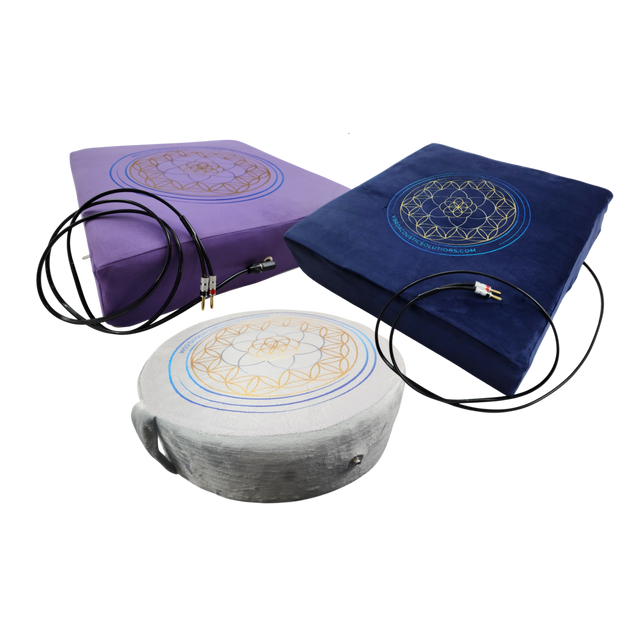
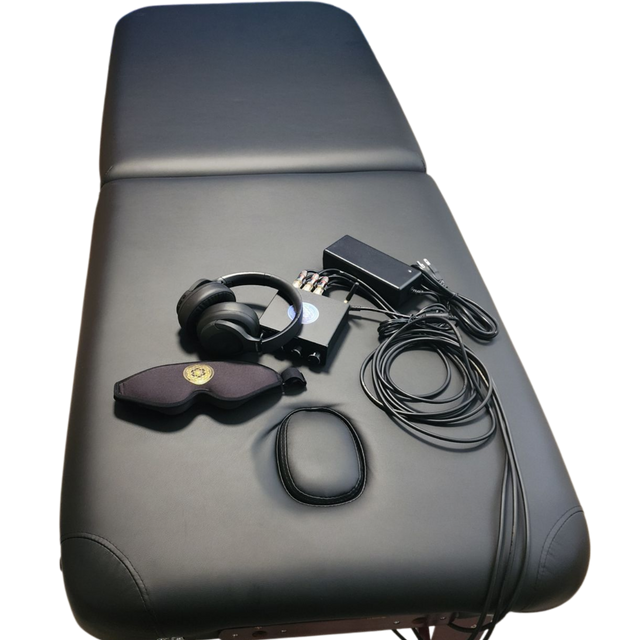
Stół do masażu może stać się znacznie silniejszą powierzchnią terapeutyczną, gdy klienci mogą odczuwać dźwięk, a także go słyszeć. Niniejsza recenzja przystawek do stołu terapeutycznego skupia się na tym, co odróżnia użyteczny zestaw do konwersji wibroakustycznej od konfiguracji, która tworzy nierównomierne wibracje, przerywa sesję lub po prostu nie pasuje do sposobu działania Twojej praktyki.
Głównym elementem nie jest lista odtwarzania. Jest nim przetwornik: urządzenie, które odbiera sygnał audio i przekształca go w fizyczne wibracje. Gdy niskoczęstotliwościowy dźwięk przechodzi przez konstrukcję stołu i wnika w ciało, klient doświadcza wibracji poprzez punkty kontaktu, takie jak plecy, biodra, nogi i ramiona. Tworzy to dotykowe doświadczenie słuchowe, które może wspierać rozluźnienie, świadomość ciała i głębsze poczucie odpoczynku podczas masażu, pracy somatycznej, terapii dźwiękiem lub sesji regeneracyjnych.
Dla praktyków, odpowiednia przystawka powinna być rozszerzeniem stołu zabiegowego, a nie kolejnym technicznym zadaniem do zarządzania między klientami.
Co powinna zapewnić przystawka do stołu terapeutycznego
Dobrze zaprojektowana przystawka wytwarza kontrolowane, niskoczęstotliwościowe wibracje na całej powierzchni zabiegowej. Terapia wibroakustyczna zazwyczaj działa w zakresie około 20 do 120 Hz, przy czym niższa część tego zakresu jest często najbardziej zauważalna w ciele. Częstotliwości około 20 do 80 Hz są szczególnie istotne dla dotykowego odczucia całego ciała, ponieważ mogą skutecznie przenikać przez tapicerowane meble i ramy stołów.
To fizyczne odczucie ma znaczenie, ponieważ układ nerwowy odbiera informacje nie tylko przez uszy. Powolne, przewidywalne wibracje mogą stanowić stały bodziec sensoryczny, który wielu klientów odczuwa jako ugruntowujący. W gabinecie masażu może uzupełniać dotyk, pomagając klientowi się uspokoić, zanim rozpocznie się praca manualna. W ustawieniach uwzględniających traumę lub wspierających sensorycznie, może oferować kontrolowaną formę bodźca, która nie wymaga przetwarzania werbalnego.
Najlepsze systemy nie tylko sprawiają, że stół brzęczy. Zachowują wystarczającą definicję tonalną, aby basy, rytmiczne impulsy i programy oparte na częstotliwościach wydawały się celowe, a nie mechaniczne. Klient powinien odczuwać stabilną, otulającą falę, a nie ostry grzechot skoncentrowany pod jedną częścią ciała.
Recenzja przystawki do stołu terapeutycznego: cechy, które mają znaczenie
Umiejscowienie przetwornika i zasięg wibracji
Umiejscowienie w dużej mierze decyduje o doświadczeniu klienta. Pojedynczy przetwornik zamontowany na środku stołu może zapewnić silne odczucie ogniskowe, ale zasięg może zmniejszać się w kierunku zagłówka i dolnych części nóg. Wiele przetworników lub system zaprojektowany do rozprowadzania wibracji przez ramę stołu może stworzyć bardziej zrównoważony efekt.
Większe wibracje nie zawsze oznaczają lepsze. Nadmierna miejscowa intensywność może rozpraszać, zwłaszcza osoby z wrażliwością sensoryczną, migrenami, ostrym stresem lub historią uczucia przytłoczenia interwencjami opartymi na ciele. Szukaj systemu z łatwą regulacją poziomu, abyś mógł delikatnie zacząć i zwiększać tylko wtedy, gdy klient dobrze reaguje.
Sam stół wpływa na zasięg. Lite drewno i solidne aluminiowe ramy przenoszą wibracje inaczej, podczas gdy ciężka pianka, gruba tapicerka i wzmocnione poprzeczki mogą je pochłaniać lub przekierowywać. Wysokiej jakości przystawka powinna być oceniana na rzeczywistym stole, na którym będzie używana, a nie tylko na powierzchni demonstracyjnej produktu.
Pasmo przenoszenia i jakość dźwięku
Przystawka do stołu musi mieć wystarczającą zdolność do odtwarzania niskich częstotliwości, które klienci mają odczuwać. Jeśli system ma problemy poniżej 40 Hz, może nadal generować pewne wibracje, ale może pomijać wolniejszy, pełniejszy ruch, który wyróżnia sesje wibroakustyczne.
Zapytaj, czy system jest zaprojektowany do dotykowego wyjścia niskich częstotliwości, a nie do standardowego odtwarzania muzyki. Konwencjonalny głośnik jest zaprojektowany do projekcji dźwięku do pomieszczenia. Dotykowy przetwornik jest zaprojektowany do przenoszenia energii na fizyczną powierzchnię. Oba mogą ze sobą współpracować, ale służą różnym funkcjom.
W ustawieniach klinicznych i wellness, użyteczny zakres często obejmuje wolne basy od 20 do 80 Hz, wraz z muzyką lub pejzażami dźwiękowymi, które zapewniają kontekst emocjonalny. Niektórzy praktycy używają starannie ustrukturyzowanych programów dźwiękowych, podczas gdy inni łączą delikatne utwory rytmiczne z ćwiczeniami oddechowymi, masażem lub kierowanym odpoczynkiem. Oba podejścia korzystają z czystego dostarczania sygnału i kontroli, które nie zmuszają do rozwiązywania problemów z dźwiękiem podczas sesji.
Bezpieczeństwo montażu i kompatybilność stołu
Zestaw do montażu powinien pasować do Twojego konkretnego stołu, nie naruszając stabilności ani możliwości składania. Jest to jedna z najmniej efektownych, a zarazem jedna z najważniejszych kwestii. Urządzenie, które wymaga trwałej modyfikacji, może być odpowiednie do dedykowanego gabinetu zabiegowego, ale jest mniej praktyczne dla mobilnych masażystów, którzy codziennie rozkładają i składają sprzęt.
Dokładnie sprawdź metodę montażu. Czy mocuje się do spodu stołu, leży na wyściełanej platformie, mocuje do elementów ramy, czy wymaga specjalnej podstawy? Czy sprzęt pozostawia odpowiedni luz dla mechanizmów regulacji wysokości, kabli, mocowań podgłówka i półek? Bezpieczne mocowanie zmniejsza hałas, chroni sprzęt i zapobiega przekształcaniu się wibracji w niepożądane grzechotanie.
Weź pod uwagę również wagę roboczą stołu i dynamiczne użytkowanie. Jeśli wykonujesz masaż głębokich tkanek, wspomagane rozciąganie lub zabiegi, które powodują znaczne ruchy na stole, przystawka musi pozostać stabilna w rzeczywistych warunkach zabiegowych. System, który pięknie działa w spoczynku, może zachowywać się inaczej, gdy stół jest aktywnie używany.
Elementy sterujące wspierające płynność kliniczną
Najbardziej praktyczne systemy zapewniają prostą kontrolę. Minimum to dostępna regulacja głośności i niezawodny sposób podłączenia źródła dźwięku. Bardziej zaawansowane konfiguracje mogą oferować oddzielną kontrolę nad wibracjami dotykowymi i dźwiękiem w pomieszczeniu, co jest cenne, gdy klient musi odczuwać niskie częstotliwości bez słyszenia muzyki o większej głośności.
Dla praktyków, niezawodność połączeń przewodowych często jest ważniejsza niż dodatkowe funkcje. Bluetooth jest wygodny w środowisku domowym, ale połączenie przewodowe może zmniejszyć problemy z parowaniem i nieoczekiwane alerty podczas sesji. Jeśli odtwarzanie bezprzewodowe jest częścią Twojej pracy, przetestuj je dokładnie przed użyciem z klientami.
Dobra konfiguracja sterowania ułatwia również miareczkowanie. Zacznij od niskiej intensywności, poproś klienta, aby zauważył doznanie, a następnie dostosuj. Jest to szczególnie przydatne podczas pracy z klientami, którzy są nowi w terapii wibroakustycznej, mają preferencje sensoryczne związane z autyzmem lub ADHD lub są w stanie wysokiej aktywacji.
Co ujawnia doświadczenie klienta
Silny system mocowania powinien zniknąć w tle po kilku pierwszych minutach. Klienci początkowo mogą zauważyć nowość wibracji pod sobą, a następnie zaczną opisywać ciepło, ciężkość, przestronność lub łatwiejsze przejście w stan odpoczynku. Inni mogą preferować lżejsze ustawienie i krótszą ekspozycję. Ta zmienność nie jest problemem. Dlatego kontrola praktyka ma znaczenie.
Wsłuchaj się w różnicę między przyjemnymi wibracjami a hałasem konstrukcyjnym. Spodziewane jest delikatne, równomierne odczucie niskich częstotliwości. Stukające elementy, brzęczenie przy niektórych dźwiękach lub wibracje, które silnie koncentrują się na żebrach lub miednicy, wskazują na problem z dopasowaniem, montażem lub kalibracją. Przed pierwszą wizytą przetestuj kilka utworów przy różnych głośnościach, w tym dźwięki z ciągłymi tonami basowymi i dźwięki ze zmieniającymi się rytmami.
Moment zastosowania wibracji wibroakustycznych również zmienia ich rolę. Niektórzy klinicy używają ich przez pięć do piętnastu minut na początku sesji, aby wspierać uspokojenie i świadomość interoceptywną. Inni używają ich podczas masażu, aby wzmocnić powolne tempo, lub pod koniec sesji jako spokojny okres integracji. Nie ma jednego najlepszego protokołu. Odpowiednia intensywność, zawartość częstotliwości i czas trwania zależą od klienta, modalności i celu terapeutycznego na dany dzień.
Użytek domowy a praktyka zawodowa
Użytkownicy domowi często priorytetowo traktują przystępność cenową, prostotę konfiguracji i możliwość przekształcenia znajomego mebla. Kompaktowa przystawka może być praktycznym punktem wyjścia do wieczornego relaksu, regenerującego słuchania i rutyn wspomagających sen. W tym środowisku prosty system z wyraźnymi elementami sterującymi może być preferowany w stosunku do bardziej złożonej konfiguracji profesjonalnej.
Praktykujący mają dodatkowe wymagania: trwałość stołu, powtarzalne wyniki, higieniczny montaż, bezpieczne zarządzanie kablami i możliwość dostosowania doświadczenia do wielu typów ciała i profili sensorycznych. Stół zabiegowy jest również częścią atmosfery pomieszczenia. Instalacja powinna wyglądać celowo i bezpiecznie, a nie improwizacyjnie.
Vibroacoustic Solutions oferuje opcje przystawek do stołów, zbudowane wokół tego podejścia do konwersji, pomagając praktykom dodawać kliniczne wibracje niskich częstotliwości bez wymiany zaufanego stołu do masażu. Najlepsze dopasowanie nadal zależy od konstrukcji stołu, stylu leczenia i tego, czy praca jest głównie stacjonarna, mobilna, czy dzielona między wielu praktyków.
Czy przystawka do stołu jest warta swojej ceny?
Przystawka do stołu terapeutycznego jest najbardziej wartościowa, gdy wibracje mają wyraźne miejsce w twoim modelu opieki. Dla masażystów może pogłębić przejście od przybycia do relaksu. Dla terapeutów dźwięku i praktyków somatycznych dodaje fizyczny wymiar do częstotliwości, które słyszą klienci. Dla klinik integracyjnych może stworzyć odrębną ofertę regeneracyjną bez dedykowania pokoju na pełne łóżko wibroakustyczne.
Kompromisem jest to, że przystawka nie zapewni identycznego, pełnego zanurzenia wibracyjnego, jak specjalnie zbudowane łóżko wibroakustyczne. Dedykowane łóżko jest od początku zaprojektowane pod kątem układu przetworników, materiałów powierzchniowych i akustyki. Przystawka to system konwersji, co czyni ją bardziej elastyczną i dostępną, ale bardziej zależną od jakości i konstrukcji stołu, na którym jest zamontowana.
Wybierz przystawkę, która zapewnia niezawodne wyjście niskich częstotliwości, bezpieczną instalację, proste sterowanie i wystarczający zakres, aby delikatnie spotkać klientów tam, gdzie są. Kiedy dźwięk staje się czymś, co ciało może bezpiecznie odczuwać, stół zabiegowy może stać się miejscem nie tylko odpoczynku, ale także znaczącej regulacji i regeneracji.
Najnowsze posty


Vibration Therapy Versus Massage for Recovery
Read article