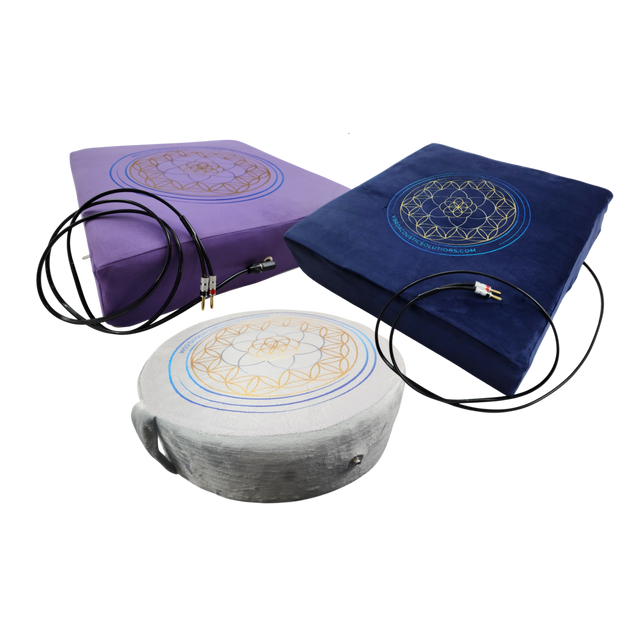
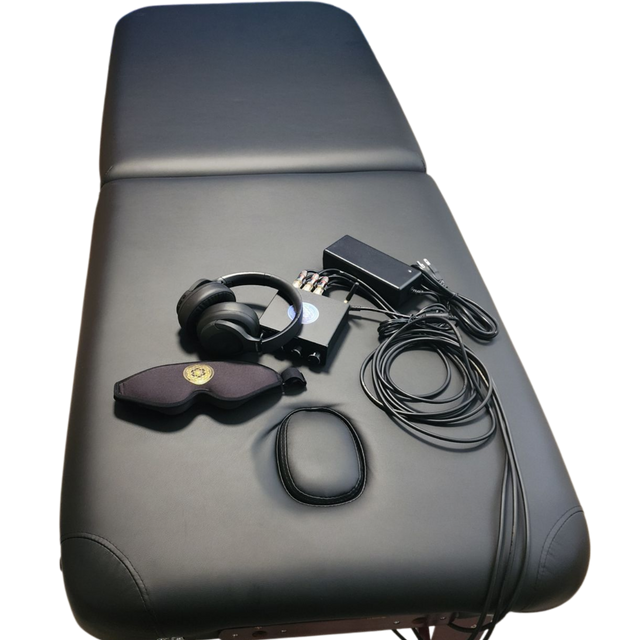
A massage practice sound table example should begin with more than a speaker placed under a client. The therapeutic value comes from controlled low-frequency vibration moving through the table and into the body as tactile sensation. When sound in the lower audible range, often about 30 to 120 Hz, is delivered through a properly mounted transducer, clients do not simply hear a tone. They feel a rhythmic, whole-body vibration that can complement hands-on care, breathwork, and rest.
For a massage therapist, this creates a new treatment layer without asking the client to perform, explain, or push through discomfort. The table becomes an environment for somatic regulation: steady mechanical vibration, supportive touch, and a quieter opportunity for the nervous system to settle.
What a Sound Table Does During Massage
A vibroacoustic sound table converts an audio signal into physical vibration. A tactile transducer, sometimes called a bass shaker, is attached to or integrated into the table frame. As it receives low-frequency audio, the transducer moves the surface of the table at the same frequency. The client experiences this as gentle vibration across contact points such as the back, hips, legs, and shoulders.
This mechanism matters because low-frequency vibration is felt through the skin, muscles, and connective tissue. A steady 40 Hz tone, for example, produces 40 cycles of movement each second. At an appropriate volume, this can feel less like an external sound and more like a contained internal hum.
Massage already gives the body sensory information through pressure, pace, temperature, and touch. Vibroacoustic therapy adds patterned mechanical input. That input may help shift attention away from persistent guarding, create a clearer sense of body boundaries, and support a slower, more regulated state. The response is individual. Some clients prefer a barely perceptible vibration, while others enjoy a fuller low-frequency field during broad, slow massage work.
Clinical and exploratory vibroacoustic research has examined low-frequency sound for relaxation, pain perception, muscle tone, and stress-related symptoms. Frequency ranges around 30 to 120 Hz are commonly used because they are readily felt through a treatment surface while remaining comfortable for many people. Within a massage practice, the goal is not intensity. It is accurate, comfortable delivery that supports the therapeutic intention of the session.
Massage Practice Sound Table Example: A 60-Minute Session
Consider a massage therapist working with a client who arrives feeling physically tense after a demanding work week. The client reports a tight upper back, shallow breathing, and difficulty transitioning out of work mode. They are not seeking a forceful intervention. They need an experience that helps the body register safety and rest.
The therapist has a standard professional massage table fitted with a vibroacoustic attachment kit. The transducers are secured to the frame, away from moving parts and the client’s body. An amplifier and audio source are positioned where cords cannot create a trip hazard. The therapist tests the system before the client enters the room, listening for rattles and feeling for even vibration across the table surface.
After the intake and consent conversation, the client lies supine. The therapist begins with no vibration for the first few minutes, using still contact at the shoulders and a calm invitation to notice the table beneath them. This establishes a baseline. The client can identify what their body feels like before the low-frequency program begins.
The therapist then introduces a gentle 40 Hz track at a low level. There is no need to make the sound audible in the room. The point is the tactile experience through the table. The therapist asks a simple question: “Does that feel calming, neutral, or too strong?” The client says it feels like a soft pulse through the back and legs, so the level remains unchanged.
For the next 15 minutes, the therapist uses slow effleurage through the shoulders, arms, and hands. The low-frequency vibration continues as a stable background signal. Instead of layering fast techniques over the sound table, the therapist lets the pace of touch match the steady sensory field. This is where many clients begin to soften their breathing or release habitual bracing.
At the midpoint, the client turns prone. The therapist pauses the vibration during repositioning, then restarts it at the same low level. For broad back work, a 50 to 60 Hz program may feel more present without becoming intrusive. The therapist uses gliding strokes, compressions, and gentle work around the hips while checking for comfort. If a client becomes restless, overly warm, or distracted by the sensation, the practitioner lowers the output or turns it off. A sound table is a therapeutic option, not a requirement to complete the session.
During the final 10 minutes, the therapist returns to a slower 30 to 40 Hz program or fades the vibration out entirely. This transition is useful. It gives the client time to notice the contrast between active vibration and stillness. The session ends with a few quiet moments before the client sits up, allowing orientation and hydration rather than an abrupt return to conversation.
Why the Session Flow Matters
The most effective sound table sessions are not built around a fixed playlist. They are built around pacing. Low frequencies can feel deeply grounding, but a client’s sensory preferences, current stress load, and relationship to touch all influence what feels supportive.
Starting low and slow gives the therapist useful feedback. A client who has a highly sensitized nervous system may prefer 30 to 40 Hz at a subtle level, paired with lighter touch and more silence. Someone seeking post-exercise recovery may enjoy a slightly fuller 50 to 80 Hz experience during broad work on the legs, glutes, or back. The right setting is the setting that allows the client to breathe, receive, and remain present.
Music can be part of the experience, but it should not obscure the low-frequency foundation. Some practitioners use simple sustained tones, ambient compositions, or carefully designed vibroacoustic tracks. Others incorporate 432 Hz music or tones that hold personal, cultural, or spiritual meaning for the client. These sound choices can deepen a sense of ritual and emotional safety. The transducer, however, should receive enough low-frequency content to create the tactile effect that distinguishes vibroacoustic therapy from ordinary background music.
Setting Up a Treatment Table Safely
A professional setup protects both the client experience and the equipment. The attachment system should be compatible with the table’s weight rating and frame design. Transducers need firm mechanical contact with the structure, since loose hardware can produce unwanted buzzing instead of clean vibration.
Keep amplifiers ventilated and cables secured. Test the table at the beginning of each day and after moving equipment. If vibration is uneven, noisy, or significantly stronger at one end of the table, inspect the mounting points before using it with a client.
Consent also belongs in the setup. Explain that the client may feel a low, gentle vibration through the table and can ask to reduce or stop it at any time. For clients who are pregnant, have implanted electronic devices, have a history of sound sensitivity, or are managing a health condition, encourage them to consult an appropriate qualified healthcare professional when needed. Practitioners should also follow their local scope-of-practice requirements and use sound-table sessions as complementary wellness support rather than a substitute for medical care.
How to Introduce Vibroacoustics to Clients
Avoid technical language before the client has felt the table. A clear explanation works better: “This table uses low-frequency sound you can feel as gentle vibration. We can use it lightly under your massage, and you are in control of the intensity.”
Afterward, ask more useful questions than “Did you like it?” Try asking where the vibration was felt most clearly, whether it changed the client’s breathing or body awareness, and whether they would prefer more, less, or no vibration next time. These observations help you personalize future sessions and document patterns in your treatment notes.
For clinics building a dedicated offering, a system such as a Vibroacoustic Solutions massage table attachment can make this modality accessible without replacing a trusted table. The equipment should serve your existing therapeutic style, not force your practice into a scripted experience.
The most meaningful sound table session is often quiet and unremarkable from the outside: a client resting on a familiar table, steady low-frequency vibration beneath them, and skilled hands responding to what the body communicates. That is enough to make the treatment room feel like a place where recovery has room to begin.
Najnowsze posty

Somatic Sound Therapy Versus Massage: Key Differences
Read article