A lot of people notice stress first in the body, not the mind. The jaw tightens, sleep gets lighter, digestion changes, and small tasks start to feel strangely difficult. If you have ever wondered how does stress affect the nervous system, the short answer is that stress changes the way your body prioritizes survival, shifting resources away from repair, connection, and rest.
That shift is not imaginary, and it is not just "being tense." It is a measurable physiological state involving the brain, spinal cord, autonomic nervous system, hormones, muscles, heart rate, and immune signaling. In the right dose, stress helps you respond to challenge. When it becomes frequent, unpredictable, or prolonged, it can begin to reshape how the nervous system functions.
How does stress affect the nervous system in real time?
The nervous system is constantly scanning for safety and threat. When the brain detects danger, whether that danger is physical, emotional, social, or environmental, it activates a survival response. The sympathetic branch of the autonomic nervous system increases alertness. Heart rate rises, breathing becomes faster, muscles prepare for action, and stress hormones such as cortisol and adrenaline are released.
This response is useful when you need to react quickly. It helps you move, focus, and protect yourself. The problem is that the nervous system does not always distinguish well between a life-threatening event and a steady stream of modern stressors like financial pressure, poor sleep, chronic pain, noise, overwork, or relationship conflict.
If the body keeps receiving the message that danger is ongoing, the stress response stops being a short-term tool and becomes a longer-term operating mode. That is where people begin to feel wired, exhausted, reactive, foggy, or disconnected.
The autonomic nervous system and the stress response
To understand how stress affects the nervous system, it helps to look at the autonomic nervous system, which regulates functions you do not consciously manage, such as heart rate, digestion, blood pressure, and respiratory rhythm.
The sympathetic branch is often described as fight-or-flight. It mobilizes energy. The parasympathetic branch supports rest, digestion, recovery, and regulation. A healthy nervous system moves between these states with flexibility. You activate when needed, then settle when the challenge passes.
Chronic stress reduces that flexibility. Some people become locked into sympathetic overactivation. They feel restless, hypervigilant, tense, and easily overstimulated. Others move toward shutdown or collapse, which can look like fatigue, emotional numbness, low motivation, or feeling detached from the body. Both patterns reflect a nervous system that is working hard to adapt.
This is one reason symptoms can seem inconsistent. One person under stress cannot sit still. Another can barely get out of bed. Both may be experiencing dysregulation, just through different pathways.
What happens in the brain under chronic stress
Stress changes brain signaling as well as body signaling. The amygdala, which helps detect threat, can become more reactive under prolonged stress. That means the brain starts to identify danger more quickly, even in situations that are not truly unsafe.
At the same time, the prefrontal cortex, which supports decision-making, impulse control, planning, and emotional regulation, can become less efficient. This is why chronic stress often makes people feel less patient, less organized, and less able to think clearly. It is not a character flaw. It is a nervous system under load.
The hippocampus, a brain structure involved in memory and context, is also affected by long-term stress exposure. Elevated cortisol over time may interfere with how memories are processed and how the brain distinguishes past threat from present reality. This matters for anyone dealing with trauma-related stress, but it also matters for ordinary chronic overload. The brain can start to operate as if stress is the baseline.
Why stress creates physical symptoms
Stress is often treated like an emotional issue, but the nervous system does not separate mental and physical experience that neatly. When the body is bracing for threat, muscles tighten, circulation patterns change, inflammatory signals may increase, and pain sensitivity can rise.
That is why stress can contribute to headaches, neck and shoulder tension, digestive discomfort, jaw clenching, racing heart, shallow breathing, sensory sensitivity, and poor sleep. It can also intensify existing conditions. Someone with chronic pain may find that symptoms flare during stressful periods. Someone with sensory processing challenges or ADHD may notice lower tolerance for noise, touch, or busy environments.
There is also a recovery cost. When the nervous system spends too much time in defense, it has fewer resources available for repair. Sleep quality often declines, and without deep restorative sleep, the system becomes even more vulnerable to stress the next day. That feedback loop is common.
How does stress affect the nervous system over time?
Short-term stress is adaptive. Long-term stress is cumulative. Over time, repeated activation can lead to what is often called allostatic load, the wear and tear that builds when the body must keep adjusting to ongoing demand.
This does not mean stress damages everyone in the same way. It depends on intensity, duration, previous trauma, health status, social support, sleep quality, and whether the person has reliable ways to return to regulation. Two people can face similar workloads and have very different nervous system responses.
For some, the main issue is hyperarousal. They feel constantly on edge and struggle to downshift. For others, stress shows up as depletion. They feel flat, heavy, and unable to recover motivation. In clinical and wellness settings, both patterns matter because each calls for a different pace and different kind of support.
This is where a science-based somatic approach becomes valuable. The goal is not simply to "relax" in a vague sense. The goal is to give the nervous system conditions that support felt safety, physiological regulation, and better state transitions.
The role of sensory input in regulation
The nervous system is shaped by input. Sound, vibration, pressure, breath, touch, temperature, movement, and environment all influence autonomic state. That matters because stress is not resolved by thought alone. Cognitive insight helps, but many stress responses are body-based and must be addressed through the body as well.
Rhythmic sensory input can be particularly effective for regulation because the brain and body respond strongly to predictable patterns. Slow, steady sensory cues may support parasympathetic activity, reduce muscular guarding, and help shift attention away from threat monitoring.
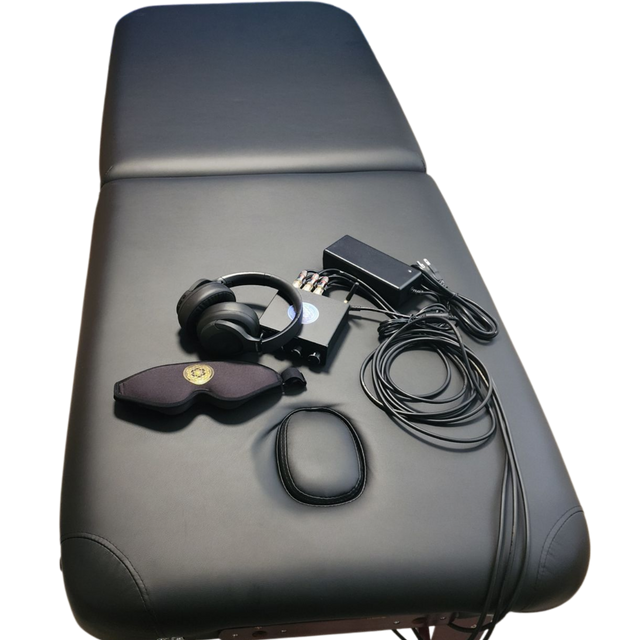
This is part of why somatic therapies and nervous system regulation tools have become so relevant for both home users and practitioners. When delivered appropriately, modalities that use therapeutic sound and vibration can help create an experience of containment, grounding, and physiological settling. In vibroacoustic therapy, low-frequency sound is used not just for comfort but for structured sensory stimulation that may support relaxation, body awareness, and downregulation.
That does not mean one session erases chronic stress. Nervous system change usually happens through repetition, consistency, and the right match between the person and the intervention. Some individuals need gentle input because their systems are highly sensitive. Others respond well to more immersive sessions. It depends on the stress pattern, the symptom profile, and the overall therapeutic context.
Signs your nervous system may be under too much stress
Many people normalize nervous system overload because they have lived with it for so long. Common signs include trouble falling asleep even when exhausted, waking up tense, digestive changes, startle responses, irritability, chronic muscle tightness, poor concentration, emotional reactivity, and feeling unable to fully rest.
You might also notice that quiet feels uncomfortable, that stillness makes your mind race, or that your body seems unable to settle after the day is over. In other cases, the signal is the opposite. You feel numb, low-energy, disconnected, or as if your body is present but you are not fully in it. Both are forms of dysregulation worth paying attention to.
Supporting a stressed nervous system in practical terms
The most effective support is usually layered. Sleep quality, blood sugar stability, hydration, movement, and emotional support all matter. So does reducing unnecessary sensory overload. But regulation often improves fastest when people stop relying only on willpower and start using body-based tools that speak the nervous system's language.
That may include breathwork, therapeutic touch, gentle movement, trauma-informed somatic care, and sound-based interventions. For practitioners, it can also include creating treatment environments that reduce threat and increase predictability. For home users, it may mean building short daily recovery windows rather than waiting until the body is completely overwhelmed.
Clinical-grade vibroacoustic therapy is one example of a non-invasive option that fits this model. When used thoughtfully, it can help support downregulation, relaxation, and a stronger felt sense of safety in the body. For people living in a cycle of stress and incomplete recovery, that kind of somatic support can be more than soothing. It can become part of a broader regulation strategy.
Stress will always be part of human physiology. The key question is whether your nervous system gets enough help returning from survival mode. When it does, healing stops feeling abstract and starts becoming something your body can recognize.
Latest posts

Somatic Sound Therapy Versus Massage: Key Differences
Read article

Massage Practice Sound Table Example That Works
Read article