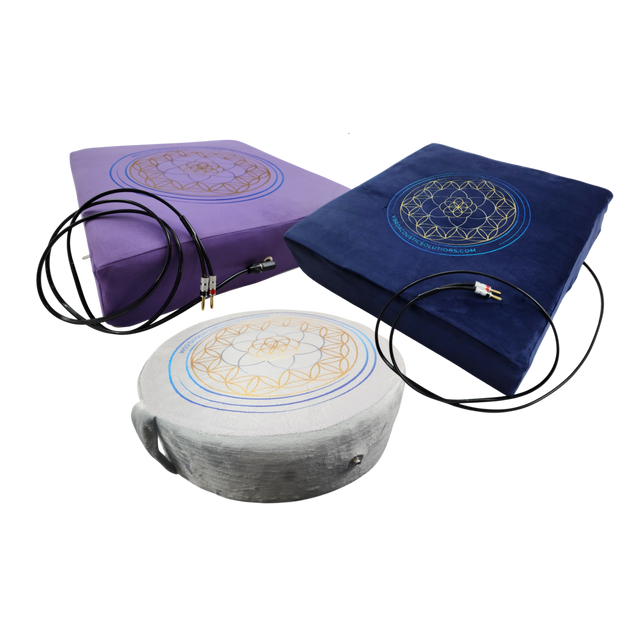
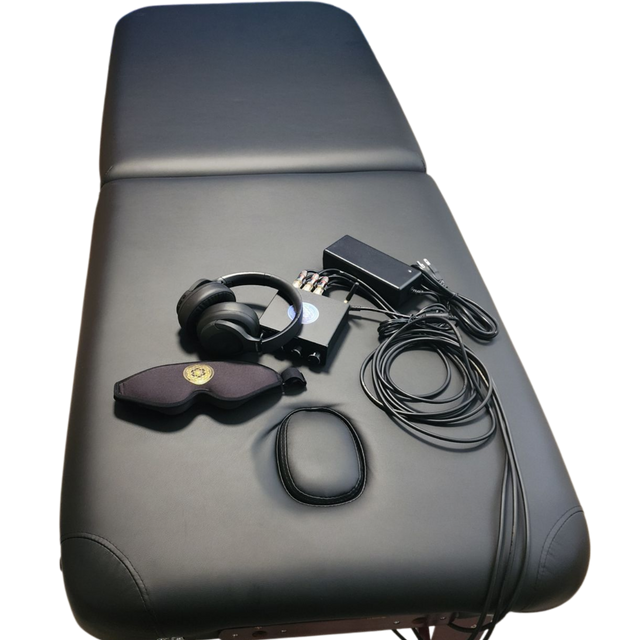
A tight lower back, a clenched jaw, or pain that lingers after activity can make the body feel like it has forgotten how to soften. Pain relief frequencies offer a tactile, sound-based way to invite that softening response. Rather than asking the body to push through discomfort, vibroacoustic therapy delivers carefully selected low-frequency sound through a bed, cushion, or treatment table, allowing vibration to be felt as well as heard.
The experience can be deeply calming, but it is not passive background music. Low-frequency sound creates mechanical movement in the body. That movement interacts with sensory receptors in the skin, muscles, and connective tissue, while the rhythmic audio environment supports attention, breathing, and nervous system regulation. For home users and practitioners alike, the practical question is not simply which frequency feels good. It is how to use frequency with enough intention to support comfort, recovery, and safety.
How pain relief frequencies work in the body
Sound is vibration measured in hertz, or Hz, meaning cycles per second. Human hearing typically spans approximately 20 Hz to 20,000 Hz, but the body can physically perceive low frequencies even when they are more felt than clearly heard. Vibroacoustic systems often work in a range of about 20 Hz to 120 Hz, where sound transducers convert an audio signal into gentle tactile vibration.
At these lower frequencies, vibration travels through the surface supporting the body. A vibroacoustic bed or cushion does not forcefully manipulate tissue. Instead, it provides a sustained, rhythmic mechanical input that the nervous system can register through touch and proprioception, the sense of where the body is in space.
Several types of sensory receptors respond to vibration. Meissner corpuscles are particularly responsive to lighter vibration in roughly the 10 Hz to 50 Hz range, while Pacinian corpuscles are highly responsive to more rapid vibration, often from about 60 Hz upward. Muscles and joints also provide constant feedback to the brain about movement, pressure, and position. When a stable low-frequency signal is paired with comfortable positioning and calming music, it can give the brain a strong message of physical support.
That matters because pain is never only a tissue-level experience. It is also shaped by stress load, sleep, attention, past injury, muscle guarding, and the state of the autonomic nervous system. A regulated body is often better able to release unnecessary tension and recover after exertion.
There is no single best frequency for pain
It is tempting to search for one universal number, such as 40 Hz or 50 Hz, that solves every kind of discomfort. In practice, frequency selection depends on the person, the symptom pattern, volume level, body position, and the quality of the full session. The most effective frequency is often the one that feels steady, safe, and tolerable enough for the body to settle.
Clinical and therapeutic vibroacoustic protocols commonly use frequencies between 30 Hz and 120 Hz. Lower ranges around 20 Hz to 40 Hz are often experienced as broad, grounding pulses. Many people describe them as especially supportive when they feel overstimulated, fatigued, or held in generalized muscular tension.
Mid-low frequencies around 40 Hz to 70 Hz can feel more present and rhythmic through the torso, hips, and back. This range is frequently used in relaxation and body-awareness sessions because it offers a clear tactile sensation without needing high volume. Frequencies from about 70 Hz to 120 Hz may feel more localized or energizing, depending on the equipment and the body area in contact with the transducer.
Research into vibroacoustic therapy has explored these ranges for pain, anxiety, spasticity, sleep, and rehabilitation support. Studies vary in design, equipment, session length, and participant population, yet a recurring clinical observation is that low-frequency vibration can reduce subjective pain ratings and muscle tension for some participants, particularly when used repeatedly as part of a broader care plan. The consistency of the setting matters as much as the number on the frequency dial.
Why vibration may change the pain experience
One useful way to understand vibroacoustic therapy is through sensory competition. The nervous system continuously filters incoming information. When the body receives a predictable, non-threatening tactile signal, that input may shift attention away from discomfort and toward rhythm, pressure, and support.
Low-frequency vibration may also help interrupt protective muscle guarding. Guarding is not a failure of the body. It is an intelligent protective response that can remain active long after the original stressor or injury has passed. A comfortable vibration session can create conditions that make it easier to notice where the body is bracing, breathe more fully, and allow the muscles to downshift.
The music component adds another layer. Slow, predictable music can support a calmer breathing rhythm and a less vigilant mental state. When sound is both audible and physical, the experience becomes multisensory. For many people, this makes it easier to stay present than with audio alone.
This is also why frequency should not be separated from dosage. Ten minutes of gentle vibration may be more regulating than a longer session at an intensity that feels intrusive. More sensation is not automatically more therapeutic.
Choosing a starting range for common needs
For general stress-related tension, begin with a comfortable low-frequency program around 30 Hz to 50 Hz. Keep the volume low enough that the vibration feels soothing rather than sharp or rattling. A 15- to 20-minute session in a supported reclined position is often a practical starting point.
For post-exercise recovery or broad muscle fatigue, some users prefer a slightly more noticeable range from 40 Hz to 70 Hz. The goal is not to create intense stimulation. It is to offer rhythmic input while the body rests, hydrates, and transitions out of exertion.
For sleep preparation, lower frequencies and gentler musical pacing are often preferable. A session of 20 to 30 minutes before bed can become part of a reliable wind-down routine, especially when paired with dim lighting and reduced screen exposure. If a frequency feels activating, reduce intensity or move lower in the range.
For clients with sensory sensitivity, trauma-related tension, autism, ADHD, or nervous system dysregulation, start conservatively. Shorter sessions, lower volume, and clear control over when the session begins and ends help preserve a sense of choice. Some people welcome stronger tactile input; others regulate best with barely perceptible vibration. Individual response should lead the protocol.
Frequency, music, and the meaning people bring to sound
Some listeners are drawn to specific musical tunings and tones, including 432 Hz music, Solfeggio frequencies, or the 7.83 Hz Schumann resonance. These frequencies carry cultural, spiritual, and personal meaning for many people. They can make a session feel intentional, connected, and emotionally resonant.
Within a vibroacoustic setting, it helps to distinguish the audible musical tuning from the tactile low-frequency signal moving through the equipment. A piece of music tuned to 432 Hz may be paired with a 40 Hz or 60 Hz vibroacoustic track, allowing the listener to receive both the musical experience they value and the physical sensation of low-frequency vibration.
For practitioners, this creates room for truly person-centered care. One client may respond best to a simple 40 Hz pulse with minimal music. Another may settle more deeply with nature sounds, spiritual music, or a carefully chosen playlist. The therapeutic value often lives in the relationship between the frequency, the environment, and the person receiving it.
A practical protocol for safer, more useful sessions
Begin by identifying the purpose of the session: downshifting after a stressful day, easing muscle tension, preparing for sleep, or supporting recovery. Choose one aim rather than trying to address everything at once.
Position the body comfortably, with the spine and joints supported. Start at a low intensity in the 30 Hz to 50 Hz range and remain there for 10 to 15 minutes. Notice breathing, jaw tension, abdominal holding, and whether the body feels more settled or more activated. Adjust only one variable at a time - frequency, volume, or session length - so you can learn what actually helps.
For professionals, document the frequency range, intensity, duration, client position, and reported response. This simple record makes it easier to recognize patterns across sessions and refine care. It also supports a more clinical-grade approach than selecting programs at random.
People with acute injuries, implanted medical devices, pregnancy-related concerns, seizure conditions, or complex health needs should consult an appropriate qualified healthcare professional before beginning a vibroacoustic program. Vibroacoustic therapy can be a meaningful complement to medical and rehabilitative care, especially when the goal is comfort, regulation, and improved body awareness.
The most valuable pain relief frequency is often not the most dramatic one. It is the frequency that helps the body feel safe enough to stop fighting itself, one well-supported session at a time.
Latest posts