Your body usually tells you before your thoughts catch up. Tight shoulders, shallow breathing, jaw tension, a racing heart at bedtime, or that wired-but-exhausted feeling after a long day - these are often signs that your system is not shifting well between stress and recovery. If you are searching for how to regulate nervous system function, the goal is not to force yourself to calm down. It is to give the body enough safety cues, sensory input, and recovery support that regulation becomes more available.
That distinction matters. Nervous system regulation is not a performance. It is a physiological process involving the autonomic nervous system, especially the balance between sympathetic activation and parasympathetic recovery. When people feel stuck in overactivation, shutdown, irritability, poor sleep, or sensory overwhelm, the issue is often less about willpower and more about state.
What nervous system regulation actually means
To regulate the nervous system is to help the body move more flexibly between activation and rest. A healthy system does not stay calm all the time. It responds to demand, then returns to baseline. Problems usually appear when that return becomes difficult.
Sympathetic activation prepares the body for action. That can feel like alertness, but it can also feel like anxiety, tension, hypervigilance, digestive disruption, or a sense that you cannot settle. Parasympathetic activity supports restoration, social engagement, digestion, and sleep. There is also a shutdown pattern that can show up as numbness, fatigue, disconnection, or a heavy sense of collapse. Many people move between these states without understanding why.
This is why advice like just relax rarely helps. Regulation has to happen through the body, not only through cognition. Breathing, touch, sound, rhythm, pressure, temperature, posture, movement, and environment all shape autonomic state.
How to regulate nervous system patterns in real life
The most effective approach is usually not one technique. It is a repeatable set of inputs that tell the body, over time, that it is safe enough to soften. The right tools depend on your starting state.
If you are highly activated, fast-paced practices may make things worse. Intense breathwork, strenuous exercise, or too much stimulation can push an already overloaded system further into stress. If you are shut down, very quiet stillness may not be enough to bring you back online. In that case, gentle sensory input, light movement, and structured rhythm may work better than meditation alone.
That is the first trade-off to understand. Regulation is state-dependent. What helps one person feel grounded can make another feel more dysregulated.
Start with breath, but keep it simple
Breath is often the fastest available pathway because it influences heart rate, vagal tone, and perceived safety. But breathing exercises should feel manageable. If deep breathing makes you dizzy or uneasy, that is useful information.
For many people, the best place to begin is a longer exhale. Try inhaling naturally for four seconds and exhaling for six. Do not force the inhale. Let the exhale be soft and steady. A few minutes can be enough to reduce physiological arousal.
If counting feels stressful, use sound instead. Humming, sighing, or slow vocal toning extends the exhale and adds vibration, which can be especially supportive for people who respond well to auditory and somatic input.
Use sensory regulation instead of only mental strategies
The nervous system responds strongly to sensory cues. That is why a weighted blanket, a warm shower, low-frequency sound, or predictable music can change how your body feels even when your thoughts are still busy.
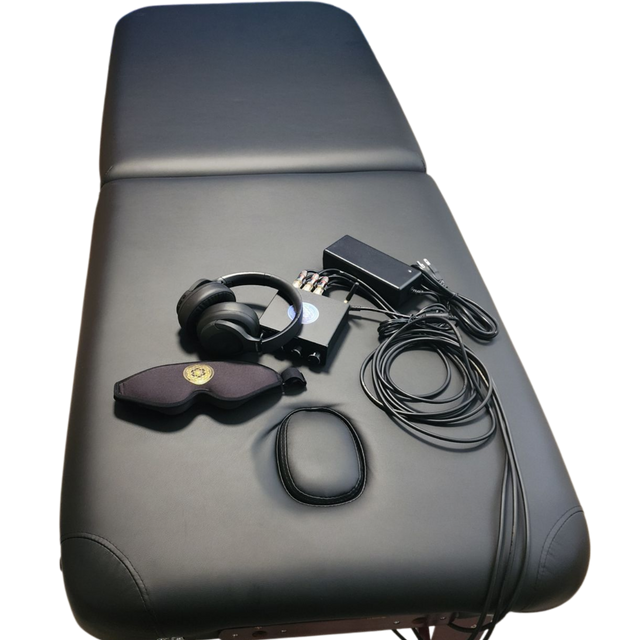
This is also where somatic technologies become relevant. Vibroacoustic therapy combines sound frequencies and therapeutic vibration to provide rhythmic sensory input that the body can feel directly. For some people, especially those dealing with stress, chronic tension, poor sleep, or sensory dysregulation, that input can support downshifting by pairing sound with low-frequency vibration and full-body relaxation. The mechanism is not mystical. It is about entrainment, resonance, muscle relaxation, and giving the nervous system coherent input that supports recovery.
At Vibroacoustic Solutions, this is framed as clinical-grade somatic support because the body often responds more consistently to structured sensory intervention than to abstract advice.
Regulate through rhythm and repetition
The nervous system likes patterns. Walking at a steady pace, rocking, stretching to music, drumming, and listening to consistent low-frequency sound can all provide rhythmic input that helps organize internal state.
This is one reason routines matter more than people expect. Waking at similar times, dimming lights in the evening, reducing abrupt stimulation before bed, and building a predictable wind-down sequence can make the body less reactive over time. These habits are not glamorous, but they are biologically persuasive.
Why sleep, pain, and trauma make regulation harder
People often assume dysregulation starts with stress alone. In practice, poor sleep, chronic pain, inflammation, sensory sensitivity, and unresolved trauma patterns can all keep the nervous system on alert.
Pain is a major one. When the body hurts, it scans for danger. Muscles guard. Breathing changes. Rest becomes less restorative. That means pain management is often nervous system work, and nervous system support is often pain work.
Trauma adds another layer. A trauma-affected nervous system may react strongly to cues that seem minor from the outside. This does not mean someone is weak or overreacting. It means the body has learned protective responses that are fast, intelligent, and sometimes no longer well matched to the present moment. In those cases, regulation often requires gradual exposure to safety, choice, pacing, and body-based tools that do not overwhelm the system.
If a practice makes you feel more activated, numb, panicky, or emotionally flooded, stop and scale back. Slower is often more effective than stronger.
A practical daily approach to regulate the nervous system
If you want to know how to regulate nervous system stress more consistently, think in layers rather than quick fixes. Start by identifying when you feel most dysregulated. Is it first thing in the morning, during transitions, after work, at bedtime, or after social interaction? Patterns reveal leverage points.
From there, build a short regulation sequence you can repeat. That might include two minutes of elongated exhale breathing, ten minutes of gentle movement, low light in the evening, and a sound-based relaxation session before sleep. Someone else may benefit more from morning sunlight, a brief walk after meals, reduced caffeine, and tactile sensory support during the day.
What matters is consistency and fit. A two-hour self-care routine that you never use will not regulate much. A ten-minute protocol you repeat daily often will.
It also helps to reduce unnecessary load. Too much noise, constant notifications, erratic sleep timing, overstimulating media, and back-to-back demands keep the body in a reactive mode. Regulation is not only about adding tools. It is also about removing inputs that keep the alarm system engaged.
When technology can support regulation
For people who struggle to feel their body settle on command, therapeutic technology can bridge the gap. Sound-based interventions, neuroacoustic tracks, and vibroacoustic systems provide external structure when internal regulation feels unreliable.
This can be especially helpful in clinical settings, massage practices, somatic therapy, and home recovery routines. A well-designed vibroacoustic session offers more than passive relaxation. It can create a controlled sensory environment that supports muscle release, parasympathetic activation, and a clearer shift out of stress physiology.
That said, technology is not a substitute for attunement. The settings, timing, frequency range, and session length should match the person and the context. Some people respond best to short sessions with gentle low frequencies. Others need a longer, more immersive experience to settle. Clinical judgment and personal feedback matter.
When to get more support
If your symptoms include panic, trauma flashbacks, severe insomnia, chronic shutdown, or persistent pain, self-regulation tools may help, but they may not be enough on their own. That is not failure. It just means the nervous system may need a wider support plan that includes trauma-informed therapy, medical evaluation, bodywork, or integrative care.
The strongest regulation strategies are often collaborative. They combine education, environmental changes, somatic practices, and when appropriate, therapeutic equipment that gives the body a direct pathway into recovery.
A regulated nervous system does not mean you never feel stress. It means your body becomes better at finding its way back. Sometimes that begins with one longer exhale. Sometimes it begins with finally giving your system the kind of sensory input it has been missing all along.
Latest posts

Somatic Sound Therapy Versus Massage: Key Differences
Read article

Massage Practice Sound Table Example That Works
Read article