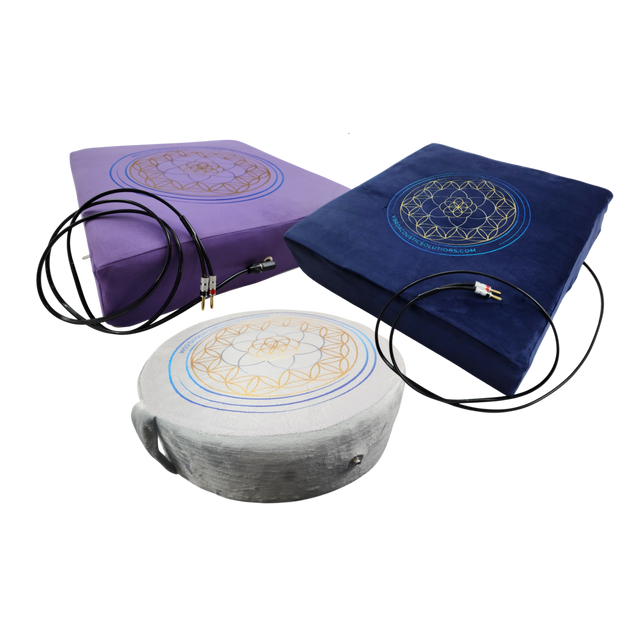
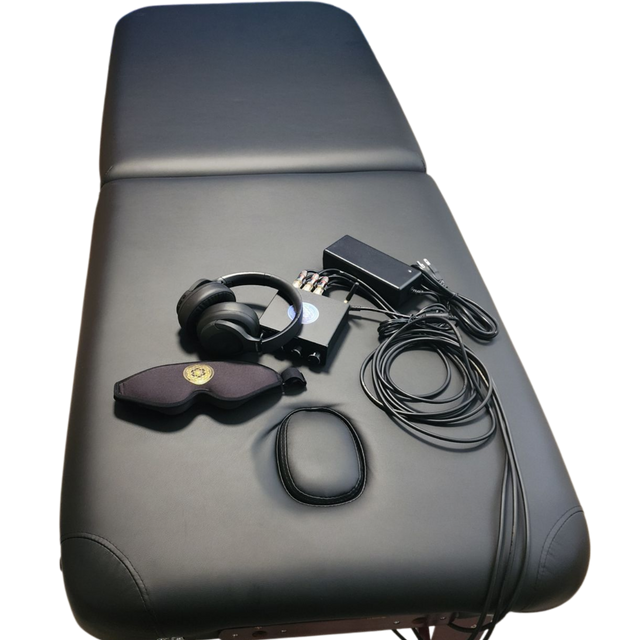
A vibroacoustic session should feel intentional from the first low-frequency pulse, not like background music with a speaker under a mat. When you plan vibroacoustic sessions around a clear therapeutic goal, the body receives a more coherent sensory experience: audible sound reaches the ears while precisely delivered vibration moves through the treatment surface and into the tissues.
That distinction matters. Low frequencies create mechanical oscillation. At 40 Hz, for example, the transducer cycles 40 times each second, producing a gentle rhythmic movement that clients may perceive through the back, hips, legs, or whole body. This tactile input can give the nervous system a consistent external cue for settling, orienting, or recovering after exertion. The right plan brings together frequency, duration, intensity, body position, and the client's state on that particular day.
Start With the Therapeutic Intention
Before choosing a track or frequency program, decide what the session is meant to support. A client arriving with post-work tension needs a different sensory environment than an athlete seeking recovery support or a home user preparing for sleep. The goal is not to force a particular response. It is to create conditions that help the body move toward comfort, regulation, and rest.
For many home sessions, one primary intention is enough: downshifting after stress, easing into a bedtime routine, supporting recovery, or taking a sensory reset. In a professional setting, the intention should fit the larger treatment plan. A massage therapist may use vibroacoustic input before hands-on work to help a client settle into the table. A somatic practitioner may place it after an emotionally demanding exercise, when predictable rhythm can support reorientation to the body.
Write the intention in a sentence that can be observed. For example: “The client will have 20 minutes of low-demand rest before massage,” or “This session will support a quieter transition into sleep.” This keeps the plan grounded in experience rather than promising a medical outcome.
Plan Vibroacoustic Sessions Around Frequency and Feel
Vibroacoustic therapy commonly uses low-frequency sound in approximately the 20 to 120 Hz range. These frequencies are felt as much as heard, especially when played through a purpose-built bed, cushion, or massage table attachment. Lower frequencies tend to feel broad and grounding, while higher frequencies in this range can feel more localized, active, or stimulating depending on the equipment, body position, and volume.
For gentle regulation-focused sessions, many practitioners begin within the 30 to 60 Hz range. Frequencies around 30 to 40 Hz often create a slow, substantial sensation that can pair well with paced breathing, body scanning, or quiet rest. A 40 Hz program is also widely discussed in sensory and neuroscience research because of its rhythmic gamma-band association, making it a meaningful option for clients who appreciate a structured, steady pulse.
For physical recovery or muscle comfort, a broader program moving through roughly 50 to 80 Hz may feel appropriate. The repeated mechanical input is often described as a form of micro-massage: a low-amplitude vibration that creates movement at the contact surface without the pressure of manual work. Comfort remains the deciding factor. More intensity is not automatically more therapeutic.
Some clients are drawn to 432 Hz music, Solfeggio tones, or nature-based soundscapes because of the emotional resonance, cultural meaning, and spaciousness they bring to a session. These can work beautifully as the audible layer above a low-frequency tactile program. Keep in mind that an audible musical pitch and a transducer's tactile frequency are separate design choices. A session may feature 40 Hz vibration beneath music tuned or composed around a preferred listening experience.
Build the Session in Three Phases
A well-planned session has an arrival, a therapeutic middle, and a gradual return. This simple arc gives clients time to notice their body rather than being abruptly switched from stimulation to conversation.
Arrival: 3 to 5 minutes
Begin at a lower intensity than you expect to use. Invite the client to get comfortable, notice contact points, and identify whether the vibration feels pleasant, neutral, or too strong. In a clinic, this is the time to confirm consent and explain that they can ask for changes at any point.
A stable frequency around 30 to 40 Hz works well for arrival because it gives the body a predictable rhythm. Avoid stacking multiple sensory inputs immediately. If the room includes music, dim lighting, weighted support, or aromatherapy, introduce those elements with care. For sensory-sensitive clients, fewer inputs may be more effective.
Therapeutic middle: 10 to 25 minutes
The middle portion is where the frequency program carries the session intention. A short 10- to 15-minute session can be useful between appointments, after a workout, or during a demanding workday. A 20- to 30-minute session allows more time for stillness and may be better suited to a pre-sleep ritual or an integrated treatment visit.
Use one of two approaches. The first is a steady-frequency session, such as holding at 40 Hz with gentle music. This is often useful when predictability is the priority. The second is a slow sweep, such as moving from 30 Hz upward through 60 or 70 Hz and then returning downward. A sweep can create a fuller physical experience, but it is not always the best choice for clients who are easily overstimulated or who prefer a consistent sensation.
Research on vibroacoustic therapy has explored its use in pain, anxiety, movement, and relaxation settings. Across studies, researchers have reported meaningful changes in self-reported comfort and stress measures for some participants, while also emphasizing differences in protocols, populations, and equipment. That variability is practical information: individual response should guide the session more than any single preset.
Return: 3 to 5 minutes
Lower the intensity gradually or shift toward a calmer, simpler frequency before ending. Give the client a moment of quiet after the vibration stops. This is especially valuable when a session has supported deep rest, emotional release, or a strong shift in body awareness.
Ask one or two useful questions: “What did you notice?” and “Would you want more, less, or different input next time?” Brief feedback builds a more personalized protocol over time.
Match Duration to the Person, Not the Product
A 30-minute session is not inherently better than a 10-minute session. For a new user, shorter exposure makes it easier to learn what intensity and frequency range feel supportive. It also reduces the chance that an unfamiliar tactile stimulus becomes tiring.
Home users may benefit from scheduling sessions at repeatable transition points: after work, following movement, or 30 minutes before bed. Consistency helps turn vibroacoustic therapy into a recognizable nervous system cue. A bed or cushion does not need to be used only during a formal practice. A focused 15-minute session with notifications off can be more restorative than an hour spent multitasking.
In a clinical workflow, consider the treatment context. A 10-minute vibroacoustic introduction before massage may prepare the client for touch. Fifteen minutes after a session may support a quieter integration period. For sound therapists and integrative providers, 20 to 30 minutes can serve as the central intervention when there is enough time to assess response and close the session thoughtfully.
Set Intensity With Consent and Precision
Intensity is one of the most important variables, and it should remain adjustable throughout the session. The aim is a clear, comfortable vibration, not a rattling surface or a sensation clients have to endure. A client should be able to breathe easily, communicate, and remain in choice.
Position also changes the experience. Supine placement often distributes vibration across the back of the body, while a cushion can provide more targeted contact at the back, hips, or legs. On a massage table, placement under the torso may feel very different from placement under the lower body. Small adjustments in support pillows, knees, and head position can substantially improve comfort.
Follow the equipment instructions and your professional scope of practice. For clients with acute symptoms, significant health concerns, implanted medical devices, pregnancy-related considerations, or uncertainty about vibration exposure, encourage consultation with the appropriate qualified healthcare professional before use. Vibroacoustic therapy can be a valuable supportive modality within a broader care plan, not a replacement for needed medical evaluation.
Document What Actually Helps
For practitioners, a brief session note turns good intentions into a repeatable protocol. Record the client goal, body position, approximate frequency range, duration, intensity, audible sound selection, and immediate response. Over several sessions, patterns become visible. One client may consistently prefer 35 to 45 Hz before hands-on treatment, while another responds best to a short 60 Hz recovery program followed by silence.
For home users, a simple journal is enough. Track the time of day, program used, how the body felt beforehand, and what changed afterward. This is not about chasing perfection. It is about learning the conditions that help you feel safer, more settled, and more at home in your body.
Vibroacoustic Solutions systems make this kind of intentional practice possible across beds, cushions, and treatment-table setups. The most effective protocol is rarely the most complicated one. It is the one a person can return to with comfort, curiosity, and a clear sense of support.
Latest posts