A nervous system that feels overloaded does not always need more input. Often, it needs the right kind of input: predictable, low-frequency sensation that helps the body register safety. That is the central question behind who needs sensory calming equipment. The answer includes far more people than those with a formal diagnosis, from a stressed professional who cannot settle at night to a client whose muscles remain guarded on the massage table.
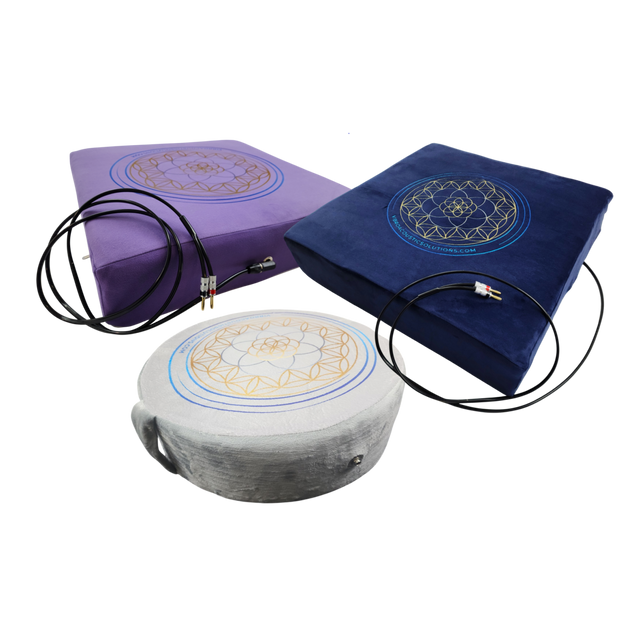
Sensory calming equipment can include weighted tools, quiet retreat spaces, rhythmic movement devices, and vibroacoustic systems. Vibroacoustic therapy is distinct because it delivers audible sound alongside low-frequency vibration through a bed, mat, cushion, or treatment table. Rather than simply hearing a tone, the person feels it move through the body.
How Vibroacoustic Calming Works in the Body
Before considering who may benefit, it helps to understand the physical mechanism. Low-frequency sound is measured in hertz (Hz), or cycles per second. When frequencies commonly used in vibroacoustic therapy - often roughly 20 to 120 Hz - are routed through transducers in a supportive surface, they become gentle mechanical vibration. The surface moves in response to the audio signal, creating rhythmic tactile input across the back, hips, legs, or other points of contact.
This matters because the skin, muscles, fascia, and joints contain sensory receptors that continually send information to the brain about pressure, movement, and position. Steady vibration gives those systems a consistent signal. For many people, predictable sensory input can feel more organizing than the irregular sounds, screens, conversations, and demands that fill daily life.
At lower frequencies, the experience is often felt more than heard. A 30 Hz tone may be perceived as a slow, grounding pulse through a bed or cushion. Frequencies around 40 Hz can feel more defined and rhythmic. Higher low-frequency ranges, such as 60 to 100 Hz, may feel more stimulating or muscular, depending on volume, placement, and the individual’s sensitivity. There is no single “best” frequency. Effective sessions match intensity, duration, and sound design to the person and their goal.
Research into vibroacoustic therapy has explored applications involving relaxation, pain perception, muscle tone, stress, and quality of life. Small clinical and practice-based studies have frequently used frequencies in the 30 to 80 Hz range, with sessions commonly lasting 20 to 45 minutes. The findings are especially interesting because vibration is not asking someone to think their way out of stress. It offers a body-based route into settling, while music or carefully designed sound creates an emotionally supportive environment.
Who Needs Sensory Calming Equipment?
Sensory calming equipment is useful for people whose system has difficulty shifting out of a high-alert state, as well as people who need intentional recovery after physical or emotional demand. Need does not have to mean crisis. It can mean wanting a reliable ritual that makes rest more accessible.
Adults carrying chronic stress and tension
Stress often appears in the body before it is acknowledged in words: a clenched jaw, shallow breathing, elevated shoulders, restless legs, or an inability to feel fully off-duty. For adults who move from work to caregiving to poor sleep without a true recovery window, vibroacoustic equipment can create a clear sensory boundary around rest.
The appeal is not passive entertainment. A reclined position, slow breathing, and low-frequency vibration provide several signals of reduced demand at once. Some people prefer a 20-minute session before bed; others use a cushion after work to transition out of a mentally demanding day. The practical benefit is consistency. A familiar sensory sequence can become easier for the body to recognize over time.
People with sensory processing differences
Autistic people, people with ADHD, and others with sensory processing differences can have highly individual responses to sound, touch, pressure, and movement. Some seek deep, steady sensory input, while others become uncomfortable quickly if stimulation is unpredictable or intense. Sensory calming equipment can be valuable when it is adjustable and used with choice.
For a sensory seeker, a vibroacoustic cushion or bed may offer the steady proprioceptive and tactile input that feels grounding. For a sensory-sensitive person, lower volume, shorter sessions, a familiar playlist, and control over when to stop are essential. The objective is never to force relaxation. It is to create an environment where the person has agency over their sensory experience.
Parents and caregivers should also consider the setting. A full-body system may be welcome in a quiet, low-light room, yet feel like too much in a busy shared space. Starting with five to 10 minutes at a low level offers a more useful introduction than assuming more vibration will produce a better result.
People managing persistent discomfort and recovery demands
Persistent physical discomfort can keep the nervous system on guard. So can intense training, repetitive work, travel, and long periods in one position. Vibroacoustic therapy is often incorporated into recovery routines because low-frequency vibration offers a gentle form of mechanical stimulation while the body is supported.
For home users, this may mean using a vibroacoustic bed or cushion as part of an evening wind-down routine. For athletes, it may be a quiet recovery period after training. For people who spend hours at a desk, it may be a structured pause that interrupts the pattern of bracing and immobility.
Individual response matters here. Some people find 40 to 60 Hz deeply soothing, while others prefer softer frequencies closer to 30 Hz. Anyone with a health condition, implanted device, pregnancy, recent surgery, or unexplained symptoms should consult an appropriate healthcare professional before beginning a new vibration-based practice.
People affected by trauma-related hyperarousal
Trauma-related tension can show up as hypervigilance, difficulty resting, sleep disruption, or a sense that the body does not fully believe it is safe to soften. Somatic practitioners often work carefully with pacing, consent, and present-moment awareness because regulation cannot be demanded.
In this context, calming equipment is most useful when it supports choice. The client should be able to control the volume, adjust the vibration level, change position, or end the session immediately. A predictable low-frequency program, used alongside grounding practices or professional therapeutic support, may help create a more tolerable pathway toward rest.
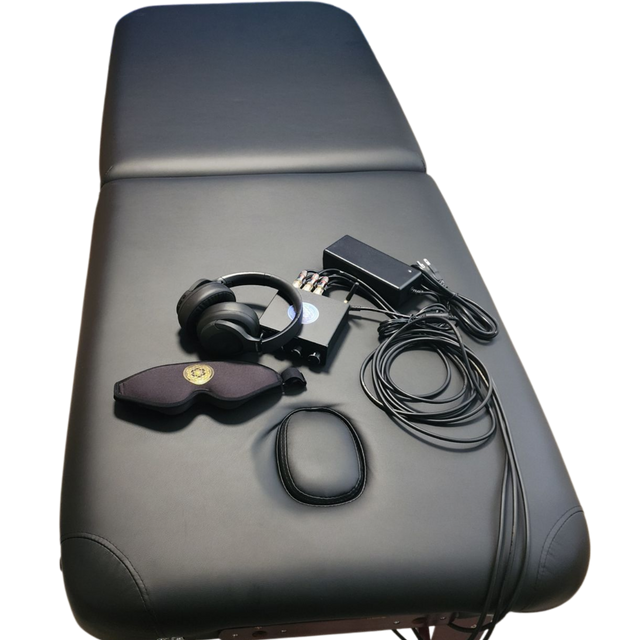
This is also where a treatment table attachment can be particularly valuable for practitioners. It allows the vibration to accompany established hands-on or somatic work without changing the entire structure of the session. The equipment should support clinical judgment, not overshadow it.
When Calming Equipment Makes Sense in a Practice
Massage therapists, bodyworkers, sound therapy professionals, and integrative health providers often serve clients who arrive already dysregulated. They may be rushed, anxious, sore, fatigued, or disconnected from bodily sensation. A vibroacoustic system can help establish a quieter baseline before hands-on work, deepen the restorative portion of a session, or provide a gentle integration period afterward.
The right format depends on workflow. A clinic with a dedicated relaxation room may choose a full vibroacoustic bed. A massage therapist who works from an existing table may prefer an attachment kit. A practitioner wanting to introduce the modality gradually may begin with a cushion for seated sessions or shorter add-on experiences.
Equipment alone is not the intervention. The surrounding choices matter: informed consent, an explanation of what the client may feel, a calm room, appropriate session length, and a plan for clients who prefer less stimulation. Clinical-grade technology earns trust when it is delivered with that same level of care.
How to Tell Whether Someone Is a Good Fit
A person may be a good candidate for sensory calming equipment if they describe difficulty unwinding, sleep-related restlessness, stress held in the body, a desire for non-invasive recovery support, or a preference for tactile rather than purely verbal relaxation methods. Curiosity is enough to begin, but expectations should be realistic. Vibroacoustic therapy is not a substitute for medical care, mental health treatment, or individualized assessment.
Comfort is the most useful measure. A well-matched session should feel steady rather than overwhelming. The person should remain able to breathe naturally, communicate, and stop whenever needed. If the sound feels sharp, the vibration feels agitating, or the body becomes more activated, reducing intensity or choosing a different approach is appropriate.
For many people, the most meaningful effect is simple: a period of time when the body is supported, the sensory environment is coherent, and there is nothing to perform. Vibroacoustic Solutions designs this kind of accessible, science-centered support for both home and professional settings. The goal is not to make every body respond the same way, but to offer another compassionate route toward regulation, recovery, and rest.
The people who need sensory calming equipment most are often the people who have forgotten what it feels like to be comfortably still. A carefully chosen sensory experience can offer them a place to start.
Latest posts