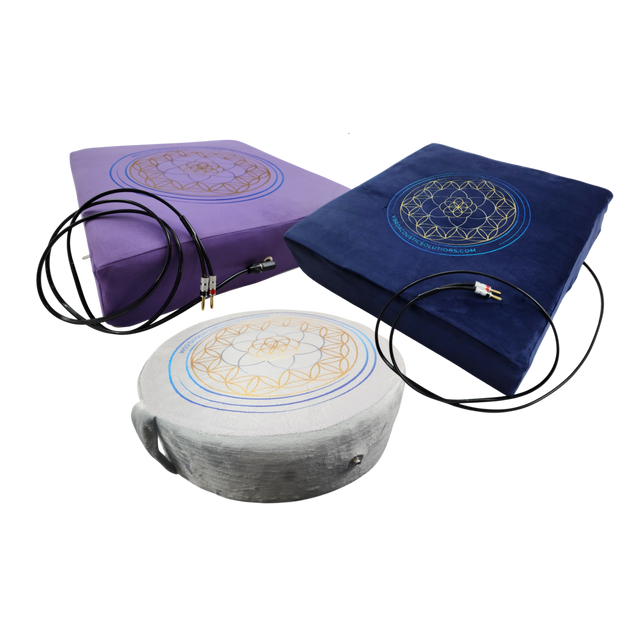
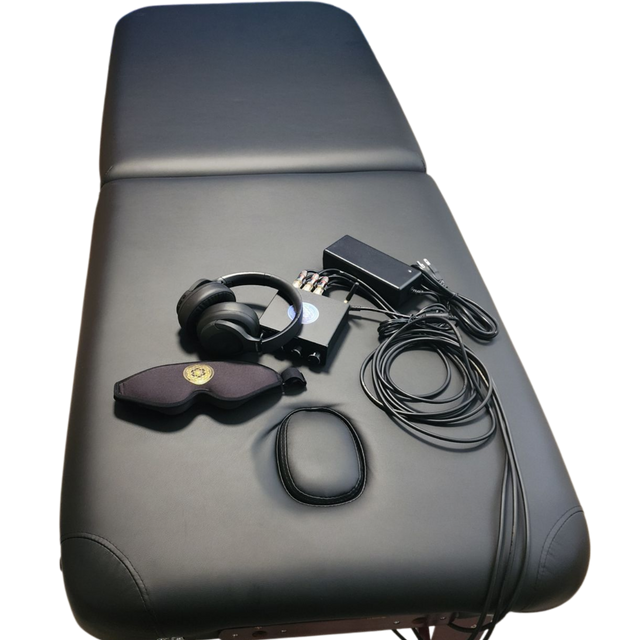
A client settles onto the table before a session, and the treatment surface begins to carry a slow, steady vibration through their back, hips, and legs. There is no need to explain a complicated technique for the body to recognize the input. This is the practical answer to why use massage table transducers: they turn a familiar treatment table into a whole-body vibroacoustic environment, adding precisely delivered low-frequency sound to the hands-on care already taking place.
For massage therapists, somatic practitioners, and wellness clinics, transducers offer a way to deepen the sensory quality of a session without replacing the relationship, clinical judgment, or skilled touch that makes bodywork effective. For home users, they can make a trusted massage table or adjustable treatment surface part of a consistent regulation and recovery practice.
What a Massage Table Transducer Actually Does
A transducer is a device that converts an electrical audio signal into physical vibration. When it is mounted securely beneath or within a massage table, a low-frequency audio track becomes tactile movement that travels through the table frame, padding, and into the body.
This is different from simply playing music in the room. Airborne sound is heard through the ears. Vibroacoustic stimulation is also felt through the skin, muscles, and points of contact with the table. The body receives vibration over a large surface area, particularly along the posterior chain: the shoulders, spine, pelvis, calves, and heels.
Most vibroacoustic applications work primarily in the low-frequency range, often around 20 to 120 Hz. Frequencies near 20 to 40 Hz tend to feel slow, heavy, and grounding. The 40 to 80 Hz range can feel more distinctly rhythmic and energizing, while frequencies closer to 100 Hz may create a finer, more localized sensation depending on table construction and body position. The experience is shaped not only by the Hz value, but by amplitude, waveform, music, table materials, and the client’s own sensitivity.
Why Use Massage Table Transducers for Bodywork?
The central advantage is that a transducer brings vibration into the same physical space as massage, assisted stretching, breathwork, or stillness. Rather than asking the client to move to a separate device, practitioners can add a measured vibroacoustic layer to the table they already use.
Low-frequency vibration stimulates cutaneous and deeper mechanoreceptors, the sensory structures that detect pressure, stretch, and movement. Pacinian corpuscles, for example, are especially responsive to rapidly changing vibration. This sensory input travels through peripheral nerves to the central nervous system, where it can influence how the body organizes attention, muscle tone, and perceived safety.
That does not mean every person will respond in the same way. Some clients describe a broad sense of settling, as if the table is gently holding them. Others notice that their breathing becomes easier to follow or that guarded areas feel more available to hands-on work. For people who spend much of the day in cognitive overdrive, a felt sensory signal can provide a useful anchor back into the body.
Research on vibroacoustic therapy has reported promising short-term changes in pain intensity, anxiety, relaxation, and quality of life across varied populations and protocols. The literature also makes clear that protocol design matters. Frequency, duration, sound selection, and the individual’s condition all influence the outcome. A massage table transducer is most valuable when it is used intentionally rather than treated as background novelty.
It Can Support the Transition Into Rest-and-Receive Mode
The first minutes of a massage often determine the tone of the entire session. A client may arrive with a fast pace, shallow breathing, or a nervous system still braced for the demands of the day. Gentle vibration can create a clear sensory boundary between the outside world and the treatment space.
For this purpose, lower-intensity programs in the 20 to 60 Hz range are commonly favored. The goal is not to overwhelm the body with stimulation. It is to offer a stable, predictable rhythm that gives the client something simple to feel. When paired with calm music, slow breathing cues, or a quiet opening phase, it can support a more receptive starting point.
It Adds Whole-Body Input Without Adding More Pressure
Massage practitioners frequently work with clients who want relief but are sensitive to deeper manual pressure, fatigued after training, or carrying widespread tension. Vibration offers another form of sensory input without requiring the therapist to increase force in one area.
This can be especially useful during broad, integrative portions of a session. While the transducers provide a low-frequency field through the table, the practitioner can use lighter contact, myofascial techniques, scalp work, or focused work on the neck and extremities. The result is often a session that feels full-body even when the therapist’s hands are working locally.
A More Flexible Path Into Vibroacoustic Therapy
A dedicated vibroacoustic bed can be an excellent clinical tool, but it is not the only entry point. Massage table transducers give practitioners a modular option: retain the table dimensions, linens, bolsters, and workflow that already fit the practice, then add a therapeutic sound component underneath.
That flexibility matters in shared offices, mobile practices, and growing clinics. A transducer attachment or conversion kit can make better use of an existing asset while preserving valuable floor space. It can also let a practitioner introduce vibroacoustic sessions gradually, learn what their clients respond to, and develop clear session protocols before expanding equipment.
For home users, the same principle applies. A table-based system may be more accessible than purchasing an entirely separate wellness bed, while still delivering the defining feature of vibroacoustic work: sound that is felt throughout the body rather than only heard.
Matching Frequency and Intensity to the Session
There is no single best frequency for every person or goal. A recovery-oriented session after physical exertion may use a different program than a quiet evening practice designed to support rest. Soundtracks that blend low-frequency pulses with music can create an immersive, emotionally resonant experience, while pure tones or simple rhythmic patterns may be preferred when a more focused sensory intervention is desired.
A useful starting approach is to keep the volume and vibration intensity modest, especially for first-time clients. Ask what they feel, not simply whether they like it. Is the vibration comfortable through the shoulders and pelvis? Does it feel settling, neutral, distracting, or too strong? Small adjustments can change the experience significantly.
Be attentive to resonance. Every table has its own structural response, and certain frequencies may create rattling, uneven vibration, or excess sensation near the transducer location. Proper mounting, a stable frame, and equipment designed for the weight and construction of the table all help create a more even, clinical-grade experience.
When Massage Table Transducers May Not Be the Right Choice
Vibroacoustic input should be optional, never imposed. Some people prefer silence, are highly sensitive to vibration, or need additional time to become comfortable with body-based sensory work. A short trial during intake or at the beginning of a session is often more useful than making assumptions.
Practitioners should also follow the equipment manufacturer’s safety guidance and use sound clinical judgment. If a client has an implanted electronic device, is pregnant, has an acute injury, has a history of seizure sensitivity, or has another condition that raises questions about vibration exposure, encourage consultation with an appropriate licensed healthcare professional before use. Comfort, informed choice, and conservative intensity are part of responsible practice.
Integrating Transducers Without Losing the Human Element
The most effective use of a massage table transducer is rarely constant stimulation from beginning to end. Consider it a therapeutic tool with a role in the arc of the session. You might use ten quiet minutes of low-frequency vibration during the opening to help the client arrive, reduce it during more detailed assessment work, then bring it back during the closing integration phase.
It also helps to set expectations in simple language. Let clients know that they will feel sound as vibration through the table and that they can request adjustments at any point. This preserves agency, an essential part of nervous system-informed care.
Massage table transducers do not make skilled touch less important. They make the treatment environment more capable of speaking to the body in its own language: rhythm, pressure, vibration, and rest. Used with care, they can help transform an ordinary table into a more immersive space for recovery, regulation, and embodied ease.
Latest posts