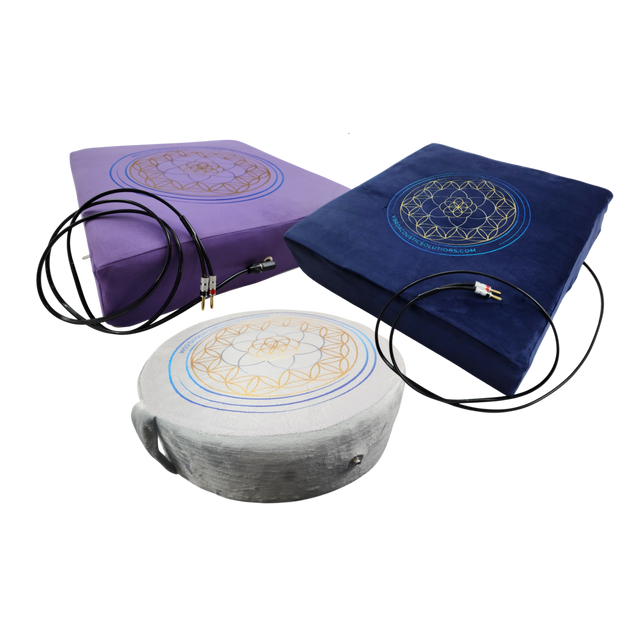
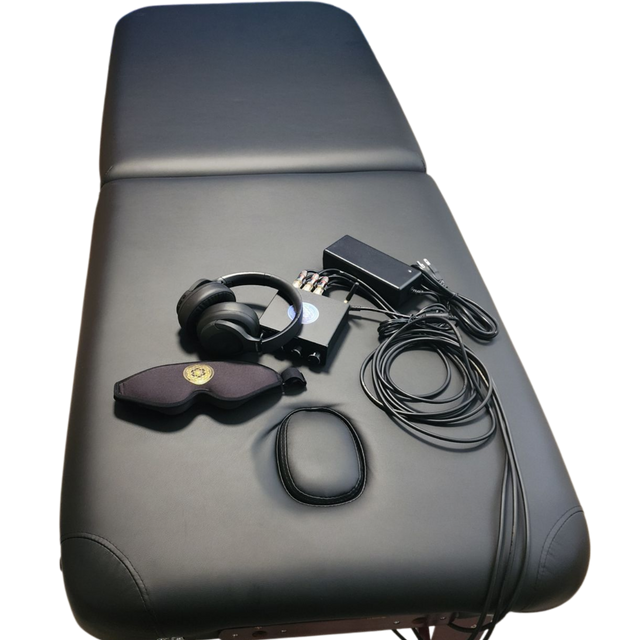
A sustained low tone can be heard through the ears, but it can also be felt through the body. That distinction is central to sound therapy. When sound is paired with low-frequency vibration through a bed, cushion, or treatment table, the experience becomes more than listening: it becomes a form of sensory input that the nervous system can register through the skin, muscles, connective tissue, and breath.
For people carrying chronic tension, disrupted sleep, sensory overload, or the physical residue of stress, this matters. The body does not always respond to a request to relax. It often responds more readily to safe, rhythmic signals it can feel.
What sound therapy is and how it works
Sound therapy is a broad term for therapeutic uses of sound, music, rhythm, voice, tonal instruments, and frequency-based experiences. A calming playlist, guided music relaxation, singing bowls, binaural audio, and vibroacoustic therapy can all sit within that larger landscape. Each uses sound differently.
Vibroacoustic therapy is especially physical. A transducer, sometimes called a tactile speaker, converts an audio signal into low-frequency vibration. Rather than pushing sound only into the air, it sends vibration into a supportive surface such as a bed, recliner, cushion, or massage table. The body receives this information through contact.
Most vibroacoustic sessions use frequencies in the approximate 20 to 120 Hz range. Frequencies near 20 to 40 Hz tend to feel slow, deep, and enveloping. The 40 to 80 Hz range can feel more rhythmic and muscular, while higher settings within the low-frequency range may feel more energizing or localized depending on the equipment, volume, body position, and program design.
The physical mechanism begins with vibration and pressure change. Mechanoreceptors in the skin and deeper tissues respond to touch, movement, and oscillation. The vestibular system also responds to rhythm and motion. When this input is predictable and comfortable, it can provide a strong cue of safety and containment. Many people notice that their exhale lengthens, their jaw softens, or their awareness returns to the body.
That is why a session can feel like a gentle internal massage even when there is no manual pressure. The vibration is not forcing tissue to change. It is offering rhythmic sensory information that may support settling, body awareness, and a shift out of constant vigilance.
Sound therapy and the science of regulation
The autonomic nervous system continually evaluates the environment for cues of demand or safety. Sound influences that evaluation. Sudden, sharp, unpredictable noise can increase alertness. Slow, stable rhythm and familiar musical structure can have the opposite effect, especially when the listener has chosen the experience and can control its intensity.
Vibroacoustic therapy adds a tactile layer to this process. A low-frequency pulse is experienced across the back, hips, legs, or torso, depending on the system. This full-body contact can be valuable for people who find spoken relaxation instructions difficult to follow or who feel disconnected from physical sensations after prolonged stress.
Researchers often explore regulation through measures such as heart rate variability, perceived stress, sleep quality, muscle tension, and pain ratings. A 2017 Cochrane review covering 92 studies of music interventions around surgery found that music was associated with lower anxiety and pain ratings in many participants, as well as reduced need for some pain medication. Vibroacoustic research is smaller and more varied, but clinical studies and reviews have reported promising changes in pain experience, relaxation, mood, and mobility across different populations.
The details matter. Not every sound program produces the same response, and more intensity is not automatically more therapeutic. A person with sensory sensitivity may prefer a very low setting and a simple 30 Hz pulse. Someone seeking post-exercise recovery may enjoy a broader program that moves through several frequencies. The most effective session is often the one that feels safe enough to repeat.
Frequency is felt, not just measured
Hertz, or Hz, describes cycles per second. A 40 Hz tone completes 40 cycles every second; a 60 Hz tone completes 60. On a vibroacoustic surface, those cycles create a distinct tactile character.
Lower frequencies are often chosen because they travel effectively through a supportive surface and are easy to perceive through the body. Around 30 Hz, many users describe a slow grounding sensation. Around 40 Hz, the experience may feel more structured and rhythmic. Frequencies in the 60 to 80 Hz range may feel more active, particularly through areas of muscular tension.
These descriptions are personal rather than prescriptive. Body size, positioning, hearing, sensitivity, and the construction of the bed or table all shape the experience. Clinical-grade equipment should allow the practitioner or home user to adjust volume, program length, and frequency range rather than locking every body into one setting.
When vibroacoustic sound therapy may fit
Sound-based care is often most useful as part of a consistent regulation practice, not as a one-time spectacle. A 20- to 30-minute session before bed may help create a transition out of work mode. A brief session after physical exertion can support a more deliberate recovery routine. In a treatment room, vibration can deepen a massage, somatic session, breathwork practice, or restorative bodywork without requiring the practitioner to add more physical pressure.
For home users, the accessibility of the setup matters. A dedicated vibroacoustic bed creates an immersive whole-body experience, while a cushion can bring tactile sound support to a favorite chair, couch, or existing mattress. DIY conversion kits and massage table attachment systems offer a practical route for people who already have furniture or a professional table they trust.
For practitioners, the value is not simply novelty. A well-integrated system can provide a consistent sensory foundation while the client receives other care. It may be particularly welcome in sessions focused on stress recovery, body awareness, relaxation, or gentle re-entry after emotionally demanding work.
Building a sound therapy practice that feels safe
Start with less stimulation than you think you need. Set the vibration at a level that is clearly perceptible but not demanding. For many people, 15 to 25 minutes is enough time to notice a shift without turning relaxation into another task to complete.
Positioning also changes the session. Lying on the back often creates the broadest contact through the spine and pelvis. Side-lying may be more comfortable for people who prefer less vibration through the chest. In a seated position, a vibroacoustic cushion can bring grounding feedback through the back and hips while leaving the person free to read, breathe, or listen to guided audio.
Pairing the vibration with audible sound is optional. Some people enjoy low ambient music, nature recordings, drumming, or carefully composed therapeutic audio. Others prefer the near-silent experience of feeling vibration without much sound in the room. Both approaches can be meaningful.
Traditional frequency practices can also have a place here. Solfeggio tones, 432 Hz tuning, sacred chanting, and the 7.83 Hz Schumann resonance carry deep cultural, spiritual, and symbolic associations for many listeners. People often describe these experiences as centering, connective, or emotionally spacious. In a therapeutic setting, the respectful question is not which approach is universally best, but which sound helps this particular person feel more present in their own body.
Practical considerations for home and clinical use
A quality system should offer controlled output, durable tactile transducers, and a surface designed to distribute vibration comfortably. The goal is not rattling furniture or overwhelming bass. It is a smooth, even delivery of low-frequency sound that can be adjusted to the user’s needs.
Practitioners should include vibroacoustic therapy in their intake and consent process, particularly when working with clients who have pronounced sensory sensitivities, acute injuries, implanted devices, pregnancy-related considerations, or complex health histories. A client’s medical team can help guide choices when needed. Comfort, communication, and the ability to stop immediately are part of a therapeutic experience.
At Vibroacoustic Solutions, that practical flexibility is central to making somatic technology usable beyond specialized clinics. A system should meet the person where they already receive care or rest, whether that is a professional massage table, a living-room chair, or a dedicated wellness space.
The most useful sound therapy routine is rarely the loudest or most elaborate one. It is the one that gives the body a reliable place to pause, feel supported, and practice returning to a steadier rhythm.
Najnowsze posty

Low Frequency Sound Massage for Nervous System Support
Read article