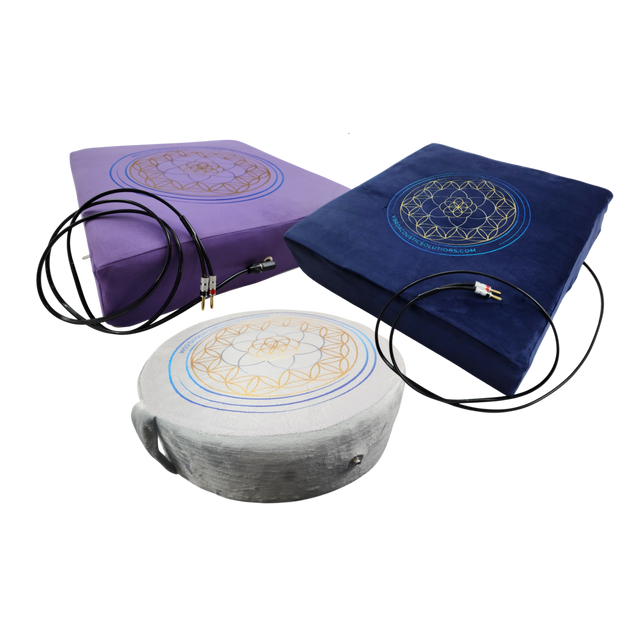
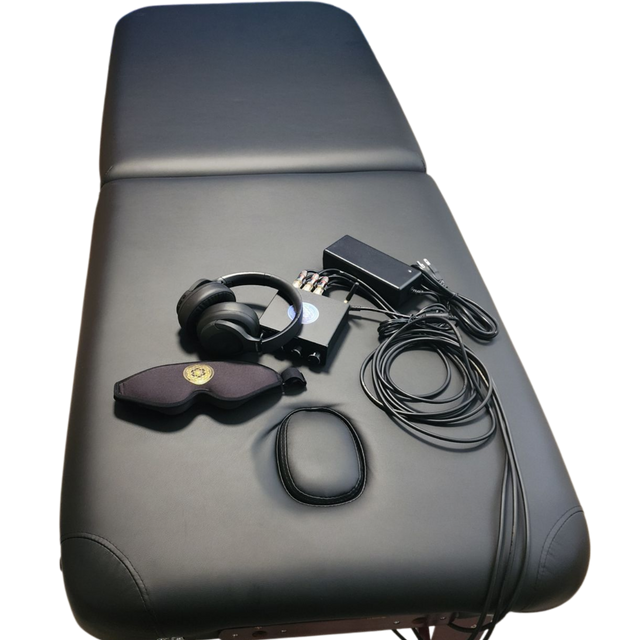
A well-designed vibroacoustic session does not begin with a playlist. It begins with a physical question: what kind of vibration does the body need to feel safe, settled, awake, or supported in recovery? This guide to therapeutic frequency ranges explains how low-frequency sound becomes tactile vibration, why different Hz ranges create different sensory experiences, and how to choose a practical starting point for home or clinical use.
How therapeutic frequencies become felt sensation
Frequency is measured in hertz, or Hz, meaning cycles per second. A 40 Hz tone completes 40 cycles each second; a 100 Hz tone completes 100. In a vibroacoustic bed, cushion, or table attachment, low-frequency audio travels through transducers that convert the signal into mechanical vibration. Rather than only hearing bass, the client feels a rhythmic wave moving through the tissue and skeletal structure in contact with the equipment.
That physical contact matters. The skin, fascia, muscles, joints, and nervous system continuously receive mechanical information through sensory receptors. Slow, sustained vibration can provide a clear, predictable sensory input. For a person carrying stress in the jaw, shoulders, low back, or hips, that input may feel grounding because it gives the nervous system a steady signal to organize around.
The most commonly used vibroacoustic range is approximately 30 to 120 Hz. Frequencies below 20 Hz are generally described as infrasonic and may be felt more than heard, while frequencies above roughly 120 Hz often become more localized, buzzy, or stimulating through a full-body surface. The best range is not universal. It depends on the person, the area of contact, volume, session length, and the goal of the session.
A guide to therapeutic frequency ranges by session goal
20 to 40 Hz: Deep grounding and downshifting
At 20 to 40 Hz, vibration tends to feel slow, heavy, and spacious. These frequencies are often used for settling, body awareness, restorative rest, and the transition from an activated state toward a calmer one. A 30 Hz signal, for example, can feel more like a broad pulse through a mattress than a sharply defined buzz.
This range is a natural starting point when someone describes being overstimulated, fatigued yet unable to relax, or disconnected from body sensation. In a practitioner setting, it may pair well with quiet breathing, gentle touch, massage, or a period of stillness before a more active treatment. Lower is not automatically better, however. Some people find very low vibration intense or unsettling at first, especially if they are highly sensory-sensitive. Start at a low intensity and give the body time to respond.
40 Hz: Focused rhythm with a substantial feel
Forty hertz occupies a distinctive place in therapeutic sound conversations. It remains low enough to be strongly felt through a bed or cushion, yet it has a more defined rhythm than 20 or 30 Hz. Many clients experience it as centered, steady, and quietly alert rather than sedating.
Researchers have also explored 40 Hz rhythmic sensory stimulation in relation to neural synchronization and attention. That work has made 40 Hz a frequency of interest for cognitive wellness and sensory regulation, while its tactile quality makes it useful in everyday vibroacoustic sessions. For a home user, 40 Hz can be a practical option for an afternoon reset, a focused rest break, or a transition after work when sleep is not the immediate goal.
50 to 80 Hz: Muscular comfort and embodied engagement
The 50 to 80 Hz range often feels more present in the muscles and surface tissues. It can be useful when the intention is physical recovery, post-activity relaxation, body scanning, or helping a client reconnect with areas that feel guarded or tense. In this range, the equipment, placement, and amplitude matter greatly. A 60 Hz tone delivered gently through a padded table can feel calming; the same signal at high intensity through a firm, compact cushion can feel much more direct.
There is a useful therapeutic trade-off here. Mid-low frequencies may provide a more noticeable mechanical sensation, which some clients find satisfying after exercise or prolonged sitting. Others may prefer a lower frequency and a longer session because their system responds best to less intensity. Ask simple questions during the session: Does this feel settling, neutral, or like too much input? The answer is more valuable than chasing a single ideal number.
80 to 120 Hz: Brighter, more localized stimulation
As frequencies move from 80 to 120 Hz, the sensation becomes faster and more concentrated. This range can support short, intentional applications where a client wants a clearer sensory cue, such as a brief pre-treatment body wake-up or localized support through a cushion or massage table attachment.
Higher frequencies are not necessarily more therapeutic. They are simply different. For someone with sensory processing needs, 90 Hz may feel organizing and enjoyable, while another person may perceive it as ticklish or overly activating. Short exposures and gradual adjustment are especially helpful here. A clinical-grade system should make it easy to adjust frequency and intensity without forcing the client to tolerate a fixed program.
Frequency is only one part of the therapeutic dose
A frequency chart is useful, but Hz alone does not determine the outcome. The effective dose of vibroacoustic therapy includes frequency, amplitude, duration, contact area, body position, and the audio environment. A low-frequency tone at moderate volume can create a broad, soothing wave through a full-body bed. The same tone delivered through a small cushion may be more concentrated around the back, hips, or legs.
Session length changes the experience as well. A five-minute session may work as a sensory check-in or treatment transition. Fifteen to 30 minutes gives the nervous system more time to respond to consistent input, particularly when paired with slow breathing or quiet music. Longer sessions can be deeply restorative for some people, but comfort should remain the guide. Numbness, discomfort, headache, agitation, or a sense of overload are signals to lower the intensity, change the range, shorten the session, or stop.
Music also changes the perceived effect. A 30 Hz sine wave feels very different from a musical track with a 30 Hz low-frequency layer. Pure tones make the frequency easy to identify and compare. Musical programs can feel more emotionally supportive and immersive, especially for relaxation or therapeutic bodywork. Many practitioners use both: a simple tone to establish a physical baseline, then music to create a more complete sensory experience.
Choosing a starting range for common goals
For rest, stress support, and evening wind-down, begin in the 20 to 40 Hz range at a comfortable low-to-moderate amplitude. Give the person at least five minutes before making changes. The goal is not to make the vibration disappear. It is to find an intensity that feels steady enough to support settling without demanding attention.
For recovery after movement, hands-on bodywork, or a long day of physical strain, try 40 to 70 Hz. This can provide a more tangible somatic experience while remaining within the range most full-body systems reproduce comfortably. If the person prefers a softer sensation, reduce amplitude before immediately changing frequency.
For focus, a midday reset, or structured sensory input, 40 to 80 Hz may be a useful exploration zone. Short sessions are often enough. Notice whether the person feels clearer and more present afterward, or more activated. A beneficial session should leave room for choice and self-awareness, not push the body past its capacity.
For sleep preparation, lower frequencies are usually the more natural place to start. Keep the environment dim, avoid abrupt track changes, and allow the session to taper gently. Some people enjoy a 432 Hz musical tuning layered with low-frequency vibration because of its warm, resonant character and long-standing significance in sound healing traditions. The audible tuning and the tactile bass frequency are separate settings, so a program can honor both the musical experience and the body-based vibration.
A safer way to personalize vibroacoustic sessions
Personalization does not require complicated protocols. Begin with one range, one comfortable intensity, and one clear intention. Track the response during the session and again 10 to 20 minutes later. Did breathing become easier? Did muscle guarding soften? Did the person feel sleepy, clear, restless, or emotionally moved? These observations help identify patterns that matter more than a generic frequency recommendation.
People who are pregnant, have implanted medical devices, have a history of seizures, are managing an acute injury, or are receiving care for a significant health condition should consult an appropriate licensed clinician before beginning a vibroacoustic program. Practitioners should also use informed consent, invite feedback, and avoid placing a client in a position where they feel unable to ask for an adjustment.
The most useful therapeutic frequency is the one that meets the body with enough consistency to feel safe, enough precision to feel intentional, and enough flexibility to change when the person in front of you needs something different.
Latest posts


Vibroacoustic Systems for Therapeutic Regulation
Read article