Stress is not only a thought pattern. It is a physical state involving breathing, muscle tone, heart rhythm, attention, and the autonomic nervous system. The best therapy tools for stress work because they give the body clear sensory information that it is safe to shift out of high alert - not because they ask you to simply think your way through overwhelm.
For some people, that signal comes through a slower exhale. For others, it is pressure, warmth, movement, sound, or a structured therapeutic environment. The right tool depends on what stress feels like in your body, how much time you have, and whether you need support at home, in a clinic, or during a treatment session.
What makes a stress tool therapeutic?
A useful stress tool should influence one or more measurable parts of the stress response. That may include reducing rapid, shallow breathing; improving heart rate variability; easing protective muscle bracing; or helping attention move away from threat scanning and toward present-moment sensory input.
The nervous system responds especially well to predictable, rhythmic input. A slow breath has rhythm. Gentle rocking has rhythm. Repeated low-frequency vibration has rhythm. These inputs can support parasympathetic activity, the branch of the autonomic nervous system associated with rest, digestion, and recovery.
That does not mean one intervention works identically for everyone. A person with a restless, activated stress pattern may benefit from movement before stillness. Someone who feels shut down, numb, or fatigued may need a more alerting sensory experience before they can settle. The most effective approach is often a small, repeatable practice that matches the state you are actually in.
Best therapy tools for stress and how they work
Guided breathing and respiratory biofeedback
Slow, paced breathing is one of the most accessible ways to influence stress physiology. Breathing around five to six breaths per minute, with an unforced and slightly longer exhale, can help synchronize respiration with heart-rate rhythms. This is often called resonance breathing.
Heart rate variability, or HRV, is a measure of variation between heartbeats. Higher HRV is generally associated with greater flexibility in responding to changing demands. HRV biofeedback devices make the process visible by showing how breath pace, attention, and posture affect those patterns in real time. A 2017 meta-analysis of HRV biofeedback research found meaningful reductions in self-reported stress and anxiety across studied populations.
This tool is especially useful for people who want a portable, skills-based practice. Its limitation is that deliberate breathing can feel frustrating when someone is highly activated or has a trauma history that makes internal body focus uncomfortable. In those moments, start with external sensory support, such as sound, touch, or a brief walk, then return to breath when it feels accessible.
Weighted pressure and tactile grounding
Steady, evenly distributed pressure can give the body a strong proprioceptive cue - information about where the body is in space. Weighted blankets, lap pads, and supportive bolsters are common options. Many people describe the sensation as containing, settling, and easier to receive than verbal reassurance when their nervous system is overloaded.
The goal is not to restrict movement. It is to create comfortable, consent-based pressure while allowing normal breathing and easy removal. For home use, a weighted lap pad may be more practical than a full blanket during daytime work or decompression. In a treatment setting, bolsters and grounding touch, used appropriately within scope and consent, can help clients feel more physically supported.
Movement tools that discharge tension
Stress often produces motor readiness: raised shoulders, clenched hands, shallow breath, and a body poised to act. Gentle movement gives that readiness somewhere to go. Walking, mobility work, shaking, tai chi, restorative yoga, and rhythmic cycling can all reduce the feeling of being trapped in a stress response.
The mechanism is partly mechanical. Movement changes circulation, joint position, muscle activation, and breathing depth. It also gives the brain updated sensory feedback that the body is capable, mobile, and no longer frozen in one protective posture.
For a brief reset, choose movement that is simple enough to repeat: five minutes of walking outside, slow spinal rotations, or a few supported squats. For practitioners, a client may respond better to movement before table work if they arrive visibly restless or unable to settle.
Sound and music-based relaxation
Sound influences stress through attention, expectation, emotion, and rhythm. Familiar music can create comfort and connection, while slower tempos and sustained tones may encourage slower breathing and a quieter internal pace. Many people also feel drawn to 432 Hz music, Solfeggio frequencies, or nature-based soundscapes because of their cultural meaning, meditative quality, and the spacious experience they create.
The most useful question is not whether a track has a fashionable label. It is whether the sound helps the listener feel more organized, grounded, and able to rest. Avoid using sound as background noise if it creates sensory clutter. For a stressed nervous system, fewer layers and a predictable volume are often more regulating.
Vibroacoustic therapy for whole-body regulation
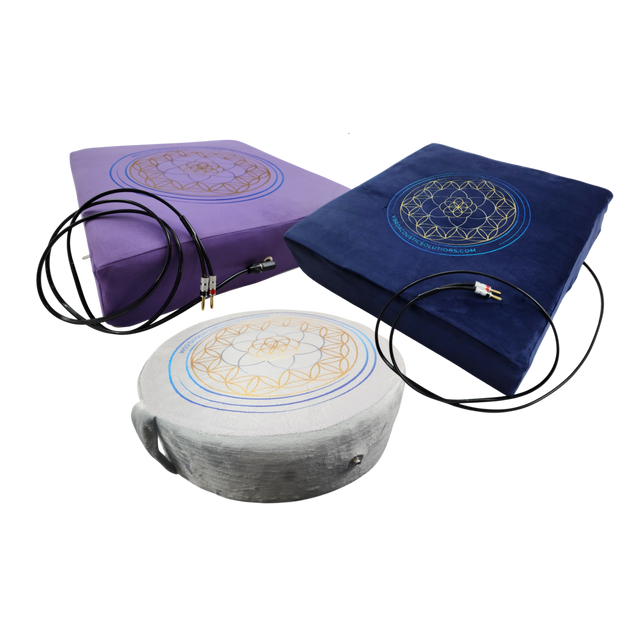
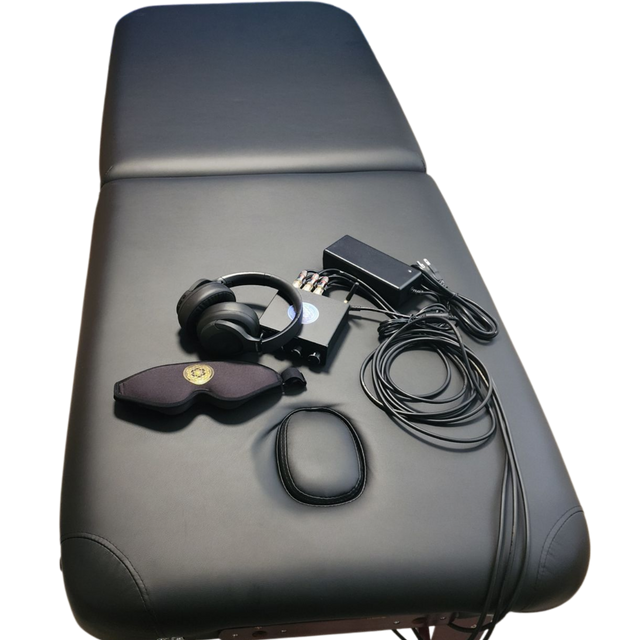
Vibroacoustic therapy adds a physical dimension to sound. Low-frequency audio is played through transducers built into a bed, chair, cushion, or treatment-table attachment. Instead of only hearing the tone, the person feels it as gentle vibration through the body.
This matters because low frequencies travel well through tissue and contact surfaces. Frequencies commonly used in vibroacoustic applications range from about 20 to 120 Hz, with lower ranges often felt as broad, grounding pulses and higher low-frequency ranges creating more localized sensation. The vibration provides tactile and proprioceptive input while music or therapeutic audio supports the auditory system. Together, these channels can make it easier for the nervous system to receive a calming signal.
The experience is sometimes described as a cellular micro-massage. That phrase reflects the felt effect of rhythmic mechanical stimulation across areas of contact, particularly the back, hips, legs, and shoulders. Rather than requiring the user to perform a technique perfectly, a vibroacoustic session creates an environment for stillness, sensory regulation, and recovery.
Research into vibroacoustic therapy has explored its use for relaxation, pain experience, muscle tension, mood, and stress-related symptoms. Results vary by protocol, population, frequency selection, session length, and the type of equipment used. That variation is useful: it shows why a clinical-grade system should allow thoughtful adjustment rather than treating every body and every session the same way.
For home users, a vibroacoustic cushion can create a practical decompression ritual after work, before sleep, or following emotionally demanding days. For massage therapists and somatic practitioners, a treatment-table attachment can deepen the sensory foundation of an existing session without changing the hands-on work that clients value. Vibroacoustic Solutions designs systems in these formats so the technology can fit the space and level of care already in place.
How to choose the right tool for your stress pattern
Begin with the question: what does stress make me do? If it makes you race, scroll, fidget, and struggle to sit still, try movement or tactile vibration before meditation. If it makes you tense, irritable, and physically sore, supported pressure, heat, massage, or vibroacoustic sessions may feel more direct. If it makes you feel scattered, breathing practice or biofeedback can provide a simple point of focus.
Also consider sensory preference. Some people need quiet and minimal stimulation. Others settle more easily with a warm blanket, music, low-frequency vibration, or a guided voice. A tool is not ineffective simply because it is not your tool. Regulation is personal, and the best setup is the one you can use consistently without dread or friction.
In professional settings, think about scope, client comfort, sanitation, contraindications for a given modality, and how easily the tool fits within the flow of care. A five-minute vibroacoustic settling period before bodywork may be more valuable than adding another complicated protocol. For home use, convenience matters just as much. A system that is ready when stress arrives is more likely to become part of a real recovery routine.
Build a repeatable regulation ritual
Stress tools work best when they are used before the body reaches its breaking point. Try pairing one method with a dependable transition: after closing your laptop, after a commute, before a therapy appointment, or 30 minutes before bed. Keep the ritual short enough to protect it. Ten minutes of paced breathing, a walk, or a low-frequency sound session can be more sustainable than an ambitious routine that disappears after a week.
A helpful stress practice should leave you with more choice: a little more space before reacting, a softer jaw, a deeper breath, or the ability to rest without fighting for it. That is a meaningful place to begin.
Latest posts


Vibroacoustic Systems for Therapeutic Regulation
Read article