A low-frequency tone can be heard through the ears, felt through the body, or both. That distinction is at the center of tactile audio versus headphones. Headphones create an auditory experience through the cochlea and auditory pathways. Tactile audio uses transducers to convert low-frequency sound into precisely delivered vibration, allowing the body to receive part of the signal through the skin, muscles, connective tissue, and skeletal structure.
For someone who feels overstimulated by conventional audio, carries persistent physical tension, or wants a more embodied relaxation practice, the difference can be profound. Neither format is inherently better. The right choice depends on the goal, the setting, sensory preferences, and whether the listener needs sound to be primarily heard, physically felt, or experienced as both.
How headphones and tactile audio move sound differently
Headphones work by moving air. Their drivers create changes in air pressure that travel through the ear canal, vibrate the eardrum, and are translated by the inner ear into neural signals. Most headphones reproduce a broad audible range, commonly described as roughly 20 Hz to 20,000 Hz, although the perception of very low bass varies greatly from person to person.
This makes headphones excellent for detail. A guided meditation, therapeutic music playlist, binaural audio track, or clinician's voice can be presented with clarity and privacy. Stereo imaging also matters: when sound is delivered separately to each ear, the brain can perceive spatial placement and subtle differences between channels.
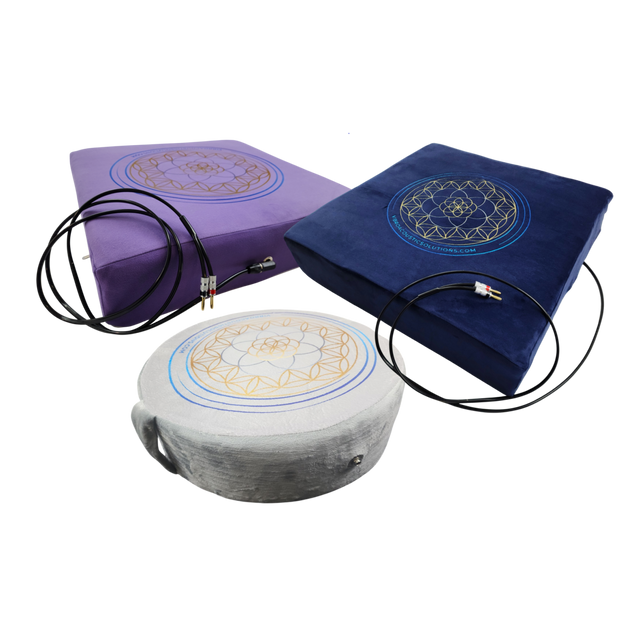
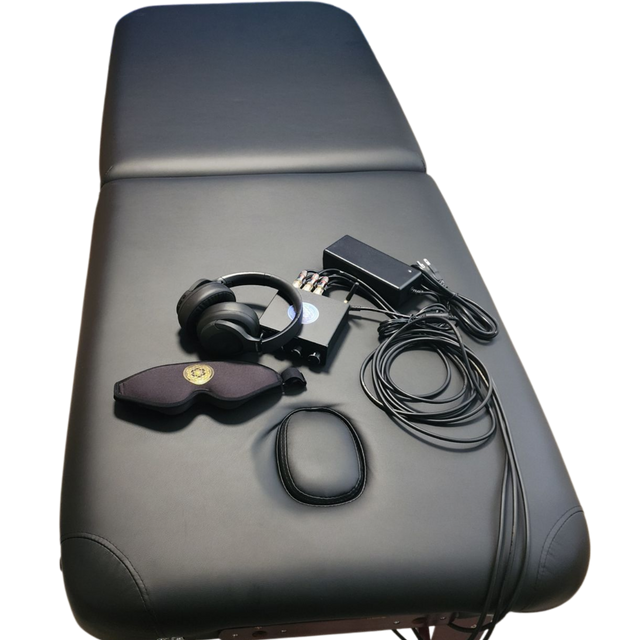
Tactile audio begins with the same principle - sound is vibration - but delivers it through a different pathway. A vibroacoustic transducer is mounted inside or beneath a bed, cushion, chair, or treatment table. When low-frequency audio is sent to the transducer, it creates mechanical movement in the surface supporting the body. Instead of only hearing a 40 Hz tone, a person may feel a slow, steady pulsing through their back, hips, legs, or whole body.
The body is especially responsive to this lower-frequency territory. Mechanoreceptors in the skin and deeper tissues detect pressure, stretch, and vibration. Pacinian corpuscles, for example, are highly responsive to vibration, particularly in ranges above approximately 60 Hz, while broader whole-body vibration can be perceived at lower frequencies through contact with a supportive surface. In vibroacoustic applications, frequencies from about 20 to 120 Hz are commonly used because they can be both audible and physically perceptible.
Tactile audio versus headphones for nervous system regulation
The most meaningful contrast is not volume. It is sensory load.
Headphones place the ears at the center of the experience. For many people, that is calming and effective. A familiar song, slow instrumental arrangement, nature recording, or spoken body scan can create a focused listening environment that reduces distractions. Headphones can be particularly practical during travel, in shared spaces, or when someone needs a brief reset without lying down.
Tactile audio creates a more somatic experience. The body is supported while low-frequency vibration travels through the surface beneath it. This may help shift attention away from racing thoughts and toward direct physical sensation: a gentle pulse at the shoulders, a settling weight through the pelvis, or a rhythmic vibration under the legs.
That shift is relevant to the science of somatic regulation. The nervous system continually gathers sensory information to assess comfort, safety, and demand. Slow, predictable vibration paired with a comfortable position and calming audio can give the system a consistent sensory pattern to orient around. Many users describe this as grounding because the experience is not only heard intellectually. It is felt.
Research into vibroacoustic therapy has explored outcomes related to relaxation, pain perception, muscle tension, and quality of life. Clinical studies often use low-frequency sound in the approximate 30 to 120 Hz range, delivered through chairs, mattresses, or treatment surfaces. Findings vary by protocol and population, but the field has generated particular interest in how rhythmic low-frequency stimulation may support relaxation responses and complement body-based care.
For clients who have trauma-related tension, chronic stress, ADHD-related restlessness, or sensory regulation needs, predictable vibration may feel more accessible than an instruction-heavy practice. At the same time, some people are highly sensitive to vibration and may prefer headphones, very low tactile intensity, or shorter sessions. A therapeutic approach begins with choice and gradual exposure rather than assuming one sensory format will fit everyone.
Where headphones have the advantage
Headphones remain the stronger option when precision listening is the goal. They can reproduce speech, high-frequency details, harmonies, and spatial effects that a tactile system is not designed to convey. They are portable, comparatively inexpensive, and easy to use for a 10-minute breathing practice at a desk or before sleep.
They can also be useful alongside tactile audio. In a vibroacoustic session, headphones or room speakers may provide music, guided relaxation, or therapeutic sound while the transducer carries the lower frequencies into the body. This layered approach gives the nervous system two coordinated inputs: auditory detail through the ears and low-frequency resonance through physical contact.
For practitioners, headphones can maintain privacy during individualized audio programs. They may be preferable when a client does not want vibration, when the session is primarily talk-based, or when a treatment room needs to remain quiet for adjacent services.
Where tactile audio changes the experience
Tactile audio is not simply bass turned up louder. Effective vibroacoustic design considers the transducer's power, the material and construction of the supporting surface, the listener's body position, and the audio program itself. A 40 Hz tone played through a small speaker can sound substantial while producing little useful body sensation. That same frequency transmitted through a properly configured treatment table can feel stable, clear, and deeply physical.
This is why placement matters. A cushion can provide focused contact at the back or seat. A massage table attachment kit can bring low-frequency vibration into hands-on sessions without requiring a dedicated bed. A full vibroacoustic bed distributes the experience across a larger portion of the body, which can be especially supportive for longer rest, recovery, and regulation sessions.
The low-frequency range also invites intentional pacing. Around 20 to 40 Hz, vibration may be experienced as slow and spacious. Frequencies from roughly 40 to 80 Hz can feel more distinctly rhythmic and present in the body. Higher settings within the commonly used vibroacoustic range, such as 80 to 120 Hz, may feel finer or more energized depending on the equipment, music, and individual sensitivity.
These are not fixed emotional prescriptions. A frequency is part of a larger therapeutic environment that includes posture, breath, volume, duration, room temperature, music selection, and the person's state that day. The most useful session is often the one that feels comfortably noticeable rather than overwhelming.
Choosing the right format for home or practice
Consider the outcome before choosing the equipment. If the need is private listening, guided instruction, detailed music, or portability, headphones may be enough. If the goal is to create a body-centered rest practice, enrich a massage or somatic session, or offer clients a direct experience of low-frequency sound, tactile audio adds a dimension headphones cannot reproduce.
For home use, start with a comfortable setup and modest intensity. A 15- to 30-minute session can be enough to learn how the body responds. Choose audio with a steady, uncluttered low-frequency foundation, and allow quiet time afterward rather than immediately rushing into another demand.
In a professional setting, tactile audio can be integrated before, during, or after another modality. A practitioner may use it as an arrival ritual, a quiet interval within a massage session, or a restorative closing period. Clear communication is essential: ask clients about sensory preferences, comfort with vibration, hearing sensitivity, pregnancy considerations, implanted devices, acute injuries, and any medical concerns that may affect their use of therapeutic equipment. Vibroacoustic therapy is a supportive wellness modality and should be coordinated thoughtfully with appropriate medical care.
The deeper question is what the body needs
The choice between tactile audio and headphones is ultimately a choice about where you want sound to land. Headphones can bring attention inward through listening. Tactile audio can invite attention back into the body through felt vibration. Used together, they create a fuller sensory field that can make rest feel less like an idea and more like a physical state.
For many people, the most helpful starting point is simple: notice whether the nervous system responds best to sound in the ears, vibration through the body, or the quiet integration of both.
Latest posts

Vibroacoustic Systems for Therapeutic Regulation
Read article