A hard training session does not just leave muscles tired. It changes tissue chemistry, fluid movement, and nervous system tone. That is why frequency therapy for muscle recovery has gained attention among athletes, bodyworkers, and recovery-focused clinicians. The real question is not whether sound and vibration feel relaxing. It is whether specific frequencies, delivered through the body in a controlled way, can influence the physical processes behind soreness, stiffness, and post-exercise fatigue.
What frequency therapy for muscle recovery actually does
The mechanism matters. In vibroacoustic therapy, low-frequency sound is transmitted into the body through speakers or transducers embedded in a bed, table, mat, or cushion. Unlike airborne sound that you mostly hear, these frequencies are also physically felt. That mechanical stimulation creates a subtle oscillatory effect in soft tissue, sometimes described as cellular micro-massage. While that phrase is useful, the more precise point is that low-frequency vibration can influence muscle tone, local circulation, and autonomic nervous system activity.
For recovery, those three pathways are highly relevant. Better circulation can support oxygen delivery and metabolic waste clearance. Reduced excessive muscle tone may ease guarding after intense exertion. A shift toward parasympathetic regulation can help the body move out of a stress-dominant state, which matters because tissue repair is not only local - it is also regulated by the nervous system.
Most vibroacoustic applications for recovery use low frequencies roughly in the 20 Hz to 120 Hz range, though exact protocols vary by system and goal. Frequencies around 30 to 50 Hz are often discussed in relation to muscle relaxation and body awareness. Mid-low ranges such as 40 Hz have also been studied in broader neurological contexts, though not all of that research can be directly applied to sports recovery. The key is not a single magical number. It is the combination of frequency, amplitude, duration, body position, and the person’s current state.
Why sore muscles may respond to low-frequency stimulation
After demanding exercise, muscle tissue can feel dense, tender, and less coordinated. Some of that comes from microtrauma associated with training adaptation. Some comes from temporary shifts in circulation, inflammation, and protective neuromuscular tension. Frequency-based stimulation may help because it introduces rhythmic input that the body can respond to mechanically and neurologically.
Mechanically, low-frequency vibration can promote gentle movement in tissue and may help reduce the sensation of stiffness. Neurologically, the body often interprets slow, predictable sensory input as safe. That can reduce guarding and improve perceived recovery even before structural repair is complete. This distinction matters. Frequency therapy is not forcing healing to happen faster in some dramatic way. It may support the conditions in which recovery proceeds more comfortably and efficiently.
There is also a pain-modulation angle. Vibration has long been studied for its capacity to influence pain perception through sensory gating and altered afferent input. In plain language, when the nervous system receives organized vibratory input, pain signals may be processed differently. That does not mean soreness disappears or injury is resolved. It means discomfort may become easier to regulate.
What the research says
The evidence base is promising but mixed, and honesty about that is part of scientific credibility. Research on whole-body vibration, local vibration, and vibroacoustic therapy overlaps in some areas, but these are not identical interventions. Whole-body vibration platforms, for example, involve standing or exercising on a vibrating surface and use different force profiles than a reclined vibroacoustic setup.
That said, several strands of research are relevant. Studies on vibration exposure have shown effects on blood flow, muscle activation, flexibility, and delayed onset muscle soreness in certain contexts. Some trials suggest vibration may reduce perceived soreness after exercise or improve short-term recovery markers, while others show modest or variable benefits depending on timing and protocol.
Vibroacoustic therapy research has more consistently shown effects in areas such as pain reduction, relaxation, and autonomic regulation. Those outcomes matter for muscle recovery because pain, stress load, and muscle guarding are tightly linked. If a person leaves a session with lower sympathetic arousal, slower breathing, and less protective tension, recovery may feel notably different over the next 12 to 24 hours.
Frequency-specific claims should still be handled carefully. For example, there is public interest in tones like 432 Hz or various Solfeggio frequencies, but these claims are often cultural or spiritual rather than clinically established. They are not the same as the low-frequency mechanical stimulation used in evidence-based vibroacoustic therapy. For muscle recovery, the more relevant discussion is usually about tactile low-frequency ranges that the body can physically receive, not numerology attached to audible tones.
Best-use cases for frequency therapy after exercise
Frequency therapy tends to fit best when recovery is limited by tension, soreness, overactivation, or poor downregulation. That includes the athlete who feels wired after evening training, the massage client whose tissue tightens back up after treatment, and the home user who is not injured but never feels fully recovered between workouts.
It can be especially useful after strength training, high-intensity intervals, repetitive endurance work, and physically demanding bodywork sessions where the therapist’s own shoulders, forearms, or lower back stay in a semi-contracted state. It may also support recovery for people whose muscle tension is compounded by stress, poor sleep, or trauma-related bracing patterns. In those cases, the target is not just the muscle. It is the muscle plus the nervous system that keeps re-tightening it.
The trade-off is that frequency therapy is supportive care, not a replacement for assessment. Sharp pain, swelling, loss of function, or suspected strain and tear should be evaluated properly. Recovery technology works best when it is matched to the actual problem.
How to use frequency therapy for muscle recovery
The most effective sessions are usually simple. After training or bodywork, the body often responds well to 15 to 30 minutes of low-frequency stimulation in a reclined, supported position. The goal is not intensity. Too much amplitude can feel agitating, especially when tissue is already sensitized. Gentle to moderate output is often enough to create meaningful sensory input without provoking more guarding.
A practical starting point is the 30 Hz to 50 Hz range for general relaxation and muscular settling, then adjusting based on response. Some users prefer slightly lower frequencies for full-body grounding, while others respond well to broader sweeps or layered protocols across a session. If the person is fatigued but overstimulated, slower and steadier often works better than more stimulating settings.
Breathing matters here. Pairing frequency exposure with slow exhalation can improve the regulatory effect. Hydration, sleep, and training load still matter too. Vibroacoustic therapy is not a shortcut around recovery basics. It is a way to improve the body’s receptivity to them.
For practitioners, this modality can be integrated before manual therapy to reduce guarding, after treatment to prolong relaxation, or as a stand-alone recovery service. For home users, consistency usually beats complexity. A short session used regularly after exercise may be more useful than occasional long sessions with constantly changing settings.
Choosing the right system and setting
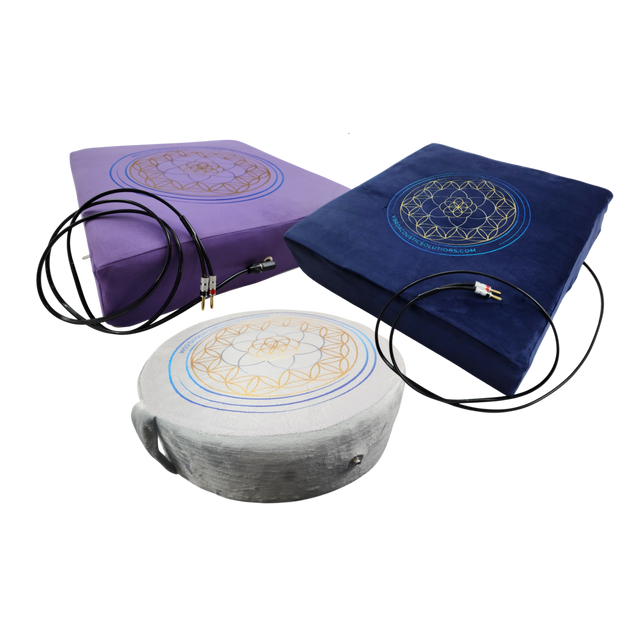
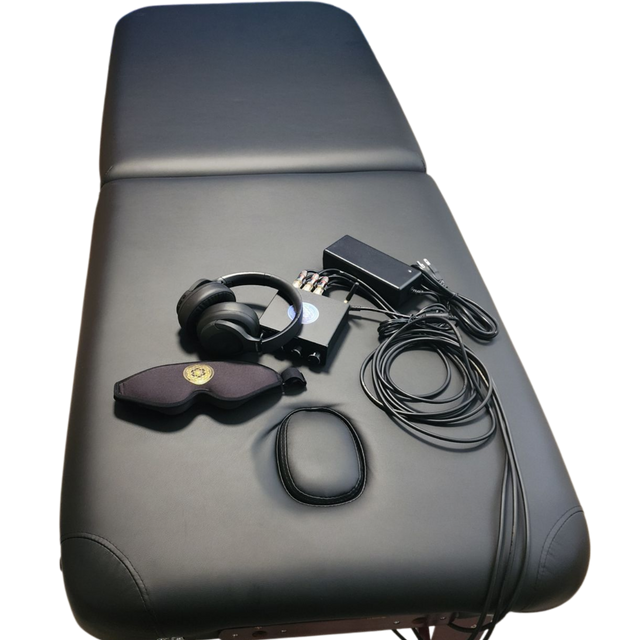
Delivery method changes the experience. A vibroacoustic bed or table-based system offers broad contact and even transmission across the body, which is helpful for systemic downregulation and generalized soreness. Cushions and localized attachments can work well for more targeted support or smaller spaces. DIY conversion kits can also be practical when an existing massage table or recovery surface needs to become a therapeutic sound platform without the cost of fully replacing equipment.
What matters most is not marketing language but controllable output, reliable low-frequency delivery, and a setup that lets the body relax while receiving stimulation. If the body is fighting the surface, the session loses part of its therapeutic value.
This is where clinical-grade design makes a difference. A system built for repeatable therapeutic use should deliver frequencies accurately, feel physically stable, and support protocols that are easy to reproduce for different clients or training phases. That kind of consistency is one reason brands like Vibroacoustic Solutions focus on both hardware and education rather than treating sound therapy as a vague ambiance tool.
What frequency therapy can and cannot promise
Frequency therapy can support muscle recovery by affecting tissue sensation, circulation, relaxation, and autonomic regulation. It may help the body shift out of post-exertion bracing and into a better repair state. For many people, that translates into less soreness, easier mobility, and a more complete sense of recovery.
What it cannot honestly promise is instant tissue repair, guaranteed performance gains, or a cure for injury. Results vary based on the type of exercise, the health of the tissue, the person’s stress load, and the precision of the protocol. It is best viewed as a therapeutic input that improves recovery conditions, not a miracle frequency.
The encouraging part is that recovery is rarely just about one variable. When low-frequency stimulation is applied thoughtfully, it can become a meaningful part of a bigger strategy - one that respects both the biomechanics of muscle fatigue and the science of somatic regulation. If your muscles recover poorly when your nervous system stays on high alert, that is exactly where frequency-based therapy becomes more than a comfort feature. It becomes a practical way to help the body receive recovery, not just chase it.
Latest posts


Vibroacoustic Systems for Therapeutic Regulation
Read article