Your body usually tells you the truth before your mind catches up. A clenched jaw, shallow breathing, a racing heart, sudden fatigue, irritability, or that wired-but-tired feeling are all signs the system is working hard to protect you. So when people ask, how do you regulate the nervous system, the real question is often this: how do you help the body feel safe enough to shift out of survival mode?
That shift matters because nervous system regulation is not just about feeling calmer. It affects sleep quality, pain sensitivity, digestion, focus, emotional resilience, and recovery. For some people, dysregulation shows up as anxiety and restlessness. For others, it looks more like shutdown, numbness, brain fog, or a sense of disconnection. Both patterns can come from the same underlying issue - the body does not feel fully settled.
What it means to regulate the nervous system
To regulate the nervous system is to support healthy movement between states of activation and rest. Your autonomic nervous system is designed to adapt. Sympathetic activation helps you respond to challenge. Parasympathetic activity supports rest, repair, digestion, and restoration. Regulation is not being calm all the time. It is the ability to respond, recover, and return to baseline without getting stuck.
This is why rigid advice can fall flat. A strategy that works for mild stress may not work when someone is highly activated, sleep deprived, living with chronic pain, or carrying trauma-related tension. Regulation is contextual. It depends on what state you are in, what your body can tolerate, and whether the intervention feels supportive rather than overwhelming.
How do you regulate the nervous system in real life?
You regulate the nervous system through repeated cues of safety that the body can actually register. Those cues can be physical, sensory, relational, or environmental. The most effective approaches usually work from the bottom up, meaning they involve the body directly rather than relying on willpower alone.
Breathing is one example, but it is not the only one. Slow exhalation can reduce physiological arousal by influencing vagal pathways and improving respiratory rhythm. Yet for some people, especially those who feel panicky when asked to control their breath, structured breathing can increase stress. In those cases, gentle movement, pressure, sound, warmth, or rhythmic sensory input may be a better place to start.
That is the broader principle worth remembering: regulation is less about forcing relaxation and more about helping the system organize itself.
Start with the body, not just the mind
If your shoulders are elevated, your muscles are braced, and your breathing is high in the chest, the body is already signaling threat. Trying to think your way into calm has limits. Somatic strategies tend to work better because they send direct input through the sensory and autonomic systems.
That might mean lying on the floor with your legs elevated, taking a slow walk, rocking gently, stretching the jaw and neck, or using weighted pressure. Rhythmic input is especially useful because the nervous system responds strongly to predictable patterns. Repetition, tempo, and vibration can all help reduce chaos in the system when used appropriately.
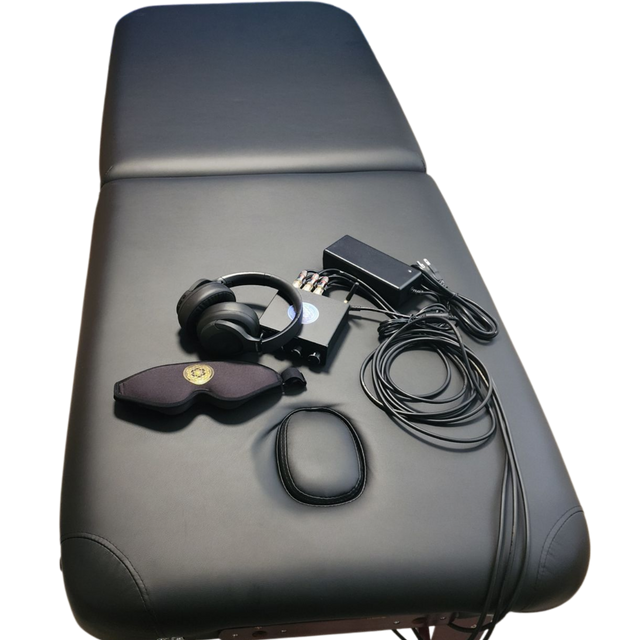
This is one reason sound-based and vibroacoustic approaches have gained attention in both wellness and clinical settings. Low-frequency vibration paired with therapeutic sound can provide structured sensory input that the body experiences physically, not just emotionally. For people who struggle to meditate or sit still, this can feel more accessible because regulation is happening through direct somatic stimulation.
Use breath carefully and specifically
Breathwork can be powerful, but the goal is not extreme control. It is gentle influence. Lengthening the exhale often helps because it nudges the system toward parasympathetic activity. A simple pattern like inhaling for four and exhaling for six may be enough.
Still, this is where nuance matters. Deep breathing is not automatically better. Large inhalations can sometimes increase alertness or make a dysregulated person feel more aware of distress. If that happens, make the breath smaller, quieter, and easier. Regulation should feel doable. If a practice creates strain, dizziness, or agitation, it is not the right match for that moment.
Sensory regulation is often the missing piece
Many adults living with chronic stress, trauma load, ADHD, autism-related sensory needs, or persistent pain are not just mentally overwhelmed. They are sensory overloaded or under-supported. Light, noise, unpredictability, physical discomfort, and constant digital stimulation can keep the nervous system on alert.
This is why sensory regulation deserves more attention. Lowering environmental intensity, using soothing sound, reducing visual clutter, and adding calming tactile or vibrational input can create a measurable difference in how the body organizes itself. In practice, that may look like a darkened room, a consistent evening routine, low-frequency sound therapy, or a treatment setting designed to reduce defensive arousal.
How vibroacoustic therapy fits into nervous system support
Vibroacoustic therapy uses low-frequency sound delivered through the body, often through a bed, mat, cushion, or treatment table attachment. The experience combines auditory stimulation with mechanical vibration, creating a form of structured sensory input that may support relaxation, body awareness, circulation, and musculoskeletal release.
From a regulation standpoint, the appeal is straightforward. The body receives rhythm, resonance, and gentle vibration in a way that can feel grounding and predictable. That matters because predictability supports safety, and safety supports regulation. Some users report reduced tension, improved sleep, and a greater sense of settling after sessions. For practitioners, it can also complement massage, somatic therapy, meditation, and recovery protocols by helping clients arrive in a more receptive physiological state.
This is not a claim that one tool fixes every nervous system issue. It depends on the person, the frequency range, session length, sensory sensitivity, and the clinical context. But when used thoughtfully, vibroacoustic therapy can function as a bottom-up intervention that helps the body shift from guarding toward restoration. For a brand like Vibroacoustic Solutions, that clinical-grade, accessible application is exactly where technology and somatic care meet.
Build regulation through repetition, not intensity
One of the biggest misconceptions is that nervous system regulation requires major effort. Usually it requires consistency. The nervous system learns through repetition. Small, repeatable cues practiced daily are often more effective than occasional high-effort interventions.
That could mean ten minutes of low-stimulation rest before bed, regular exposure to calming sound, short movement breaks during the workday, or a brief vibroacoustic session after emotionally demanding client work. The point is to give the body enough consistent evidence that it does not need to stay on guard all the time.
There is also a timing issue. Regulation is easier when you intervene early. If you notice the first signs of escalation - faster speech, muscle tightness, irritability, sensory sensitivity, or fatigue that suddenly tips into agitation - you have a better chance of shifting state before overwhelm takes hold.
What gets in the way of regulation
Sometimes the obstacle is not lack of knowledge. It is physiology, environment, or unrealistic expectations. If someone is under-slept, inflamed, over-caffeinated, in pain, and living in a high-stimulation environment, the nervous system is carrying a heavier load. No single practice will fully compensate for that.
There is also a common trap of turning regulation into performance. People try to do it correctly, efficiently, or fast. But the nervous system does not respond well to pressure. It responds to experiences of enough safety, enough support, and enough repetition. That is a different standard.
For clinicians and wellness practitioners, this is worth keeping in mind with clients too. What looks like resistance may actually be low capacity. A person may want to calm down and still not tolerate a given intervention. The answer is often to reduce intensity, shorten duration, and choose methods that are more sensory and less cognitively demanding.
How do you regulate the nervous system over time?
Over time, regulation becomes less about emergency coping and more about capacity building. You strengthen it by improving sleep, reducing excessive stimulation, supporting the body with movement and recovery, and choosing tools that help create reliable physiological cues of safety. You also build it through relationships, therapeutic alliance, and environments that do not keep the body braced.
That long view matters. A regulated nervous system is not one that never reacts. It is one that can recover with less effort and more trust in the body’s ability to return.
If you are trying to support your own regulation or create better outcomes for clients, start with one question: what helps the body feel safer, steadier, and less defended? The answer is usually more practical, more somatic, and more trainable than it first appears.
Latest posts

Somatic Sound Therapy Versus Massage: Key Differences
Read article

Massage Practice Sound Table Example That Works
Read article