A 6 Hz binaural beat and a 6 Hz vibration may share a number, but they do not enter the body through the same pathway. The conversation around low frequency audio versus binaural beats becomes much clearer when we separate what the ears hear, what the nervous system processes, and what the body physically feels.
Both approaches can be valuable tools for rest, focus, emotional regulation, and therapeutic environments. Yet they are designed for different sensory experiences. Binaural beats are primarily an auditory-perceptual experience delivered through headphones. Low frequency audio, especially when paired with vibroacoustic equipment, is a whole-body tactile experience that combines sound with measured mechanical vibration.
Low frequency audio versus binaural beats: the core difference
Low frequency audio generally refers to sound in the lower audible range, often from about 20 to 120 Hz in vibroacoustic applications. These frequencies have long wavelengths and can create noticeable movement in a speaker, transducer, floor, chair, cushion, or treatment table. When a vibroacoustic transducer is mounted beneath the body, the audio signal is converted into physical vibration. The listener is not simply hearing a bass tone. They are receiving rhythmic mechanical stimulation through the skin, muscles, connective tissue, and skeletal structure.
Binaural beats work differently. Two nearby frequencies are played separately, one to each ear through stereo headphones. For example, a 200 Hz tone in the left ear and a 206 Hz tone in the right ear create a perceived 6 Hz beat. The 6 Hz rhythm is not a physical sound wave moving through the room in the same way as a 6 Hz bass vibration. It is an auditory phenomenon created as the brain processes the difference between the two tones.
That distinction matters clinically and practically. Low frequency vibroacoustic stimulation can be felt even with the eyes closed and without closely attending to the music. Binaural beats require separate left and right audio channels, and the listener's auditory system is central to the experience.
How low frequency sound becomes a somatic intervention
A vibroacoustic system uses a signal chain: an audio source sends low-frequency content to an amplifier, which drives one or more tactile transducers. Those transducers move in response to the waveform. At frequencies commonly used in practice, such as 30 Hz, 40 Hz, 60 Hz, or 80 Hz, the body can perceive a steady pulsing or a deeper, more enveloping vibration.
This mechanical input is relevant to the science of somatic regulation because the body constantly gathers information from pressure, touch, movement, and vibration. Mechanoreceptors in the skin and deeper tissues respond to this input, while the predictable rhythm can support interoception - the ability to sense internal bodily state. A person who feels mentally overactivated may find that clear, repeatable physical sensation provides an anchor that is easier to follow than verbal instruction alone.
The experience is often described as a gentle internal massage, though the mechanism is more precise than that phrase suggests. The frequency, amplitude, waveform, placement of the transducer, body position, and duration all change the sensory outcome. A 40 Hz program through a treatment table can feel focused and energizing. A slower, softer program within the 20 to 50 Hz range may feel more grounding or settling, depending on the listener and the equipment settings.
Research in vibroacoustic therapy has explored applications including relaxation, pain support, muscle tone, mobility, and quality of life. Clinical studies vary in protocol and population, which is why skilled application matters. The most useful takeaway is not that one frequency fits every need. It is that carefully delivered low-frequency vibration gives practitioners a tangible, adjustable channel for supporting comfort and regulation.
How binaural beats influence the listening experience
Binaural beat programs are usually organized around brainwave-associated frequency ranges. Delta is commonly described as roughly 0.5 to 4 Hz, theta as 4 to 8 Hz, alpha as 8 to 12 Hz, beta as 13 to 30 Hz, and gamma above 30 Hz. A creator might use a 4 Hz difference tone for a quiet meditation track, an 8 to 10 Hz difference for relaxed alertness, or a higher-frequency difference for concentration.
People often appreciate binaural beats because they are portable, private, and easy to layer into an existing routine. A pair of headphones can turn a commute, evening wind-down, breathwork practice, or focused work session into a more intentional listening environment. The tonal bed, music, nature sounds, and guided language around the beats can also be part of what makes the session meaningful.
Studies on binaural beats have reported potential changes in anxiety, attention, sleep-related outcomes, and perceived relaxation, while results differ by frequency, duration, participant, and study design. That variability reflects an important truth about nervous system work: context is part of the intervention. A 20-minute track heard in a quiet, familiar space may land very differently than the same track played while someone is multitasking or bracing against a stressful day.
Which approach is better for sleep, stress, and recovery?
Neither is universally better. The right choice depends on the goal, the person, and the setting.
For a person who wants a simple auditory ritual before sleep, binaural beats may be an accessible starting point. They take little setup, can be used with headphones, and may help create a consistent cue that the day is ending. Some listeners prefer theta or delta-associated sessions, while others respond best to gentle music without a prominent beat.
For someone carrying physical tension, sensory overwhelm, chronic stress patterns, or difficulty settling into their body, low frequency audio delivered through a vibroacoustic bed, cushion, or massage table attachment may offer a different level of support. The body receives the rhythm directly. This can be especially useful for clients who find it difficult to relax through sound alone, or who benefit from a predictable form of non-invasive tactile input.
In recovery settings, low frequency vibration also has a practical advantage: it can be integrated with rest, massage, guided breathing, bodywork, or a quiet treatment protocol. The client does not have to perform or concentrate. They can lie down and receive the session. For massage therapists and somatic practitioners, that may create a deeper starting point for hands-on work or a calming close to a session.
Can you use both together?
Yes. In fact, combining them can create a more complete sensory environment when the setup is intentional. A practitioner might use low-frequency vibroacoustic stimulation through a table or mat while offering calming music through room speakers. A home user may choose a vibroacoustic cushion for body-based input and play a binaural beat track through headphones at a comfortable volume.
The key is not to overload the nervous system. If the physical vibration is strong, keep the headphone audio simple. If the music has many layers, use a gentler tactile setting. Start with sessions of 15 to 30 minutes, then adjust based on how the body responds during and after the experience.
A thoughtful protocol also considers sensory preferences. Some people love deep bass and feel immediately held by it. Others prefer subtle vibration, lower volume, dim lighting, and fewer auditory details. For clients with autism, ADHD-related sensory needs, trauma-related tension, migraine sensitivity, or sound sensitivity, choice and control are therapeutic features. Let the person know they can pause, reduce intensity, or change the program at any time.
Choosing equipment for the experience you want
If your primary goal is binaural beats, prioritize reliable stereo headphones and a quiet place to listen. The experience depends on channel separation, so a single speaker or mono playback system will not produce the intended left-right effect.
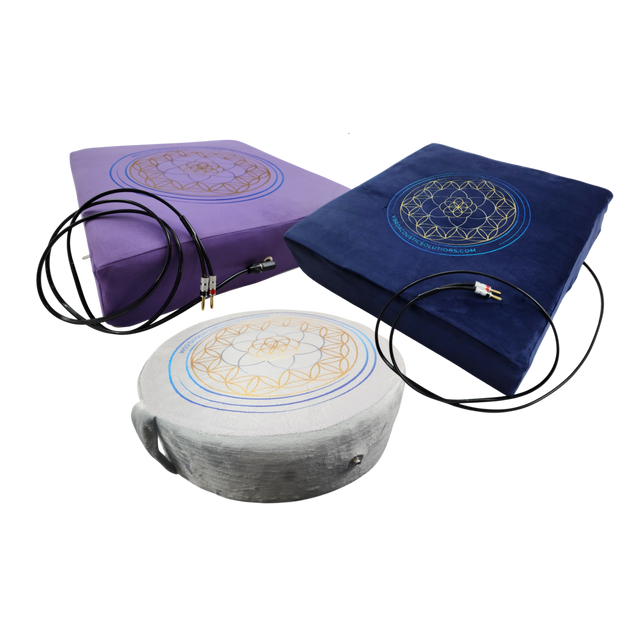
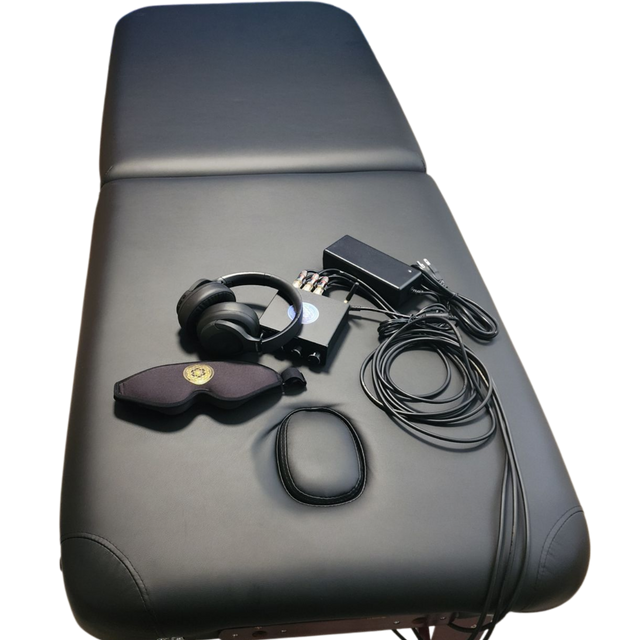
If your goal is felt low-frequency stimulation, choose equipment designed to transmit vibration safely and evenly through the body. Vibroacoustic beds, cushions, and table attachment kits use tactile transducers rather than relying on ordinary speakers to produce bass in the room. That difference improves efficiency and makes the sensation more direct, even at comfortable sound levels.
For professional settings, look for controls that allow frequency, intensity, and session duration to be adapted to the client. Clinical-grade flexibility is valuable because a recovery-focused session, a gentle regulation session, and a more activating daytime session may call for very different settings. Vibroacoustic Solutions designs systems with this kind of practical adaptability in mind, helping practitioners bring sound-based somatic care into treatment rooms without rebuilding their entire practice.
A more useful question than “which one works?”
Rather than asking whether low frequency audio or binaural beats works better, ask what kind of input is needed right now. Is the goal to focus the mind, create a calming auditory ritual, release physical holding patterns, or help the body recognize safety through steady sensation?
The answer may change from one day to the next. A pair of headphones can be exactly right for a quiet evening ritual. A vibroacoustic session can be exactly right when the body needs to feel the rhythm, not just hear it. When sound is matched to the person rather than treated as a one-size-fits-all solution, it becomes a more compassionate tool for recovery, rest, and regulation.
Latest posts

Somatic Sound Therapy Versus Massage: Key Differences
Read article
Massage Practice Sound Table Example That Works
Read article