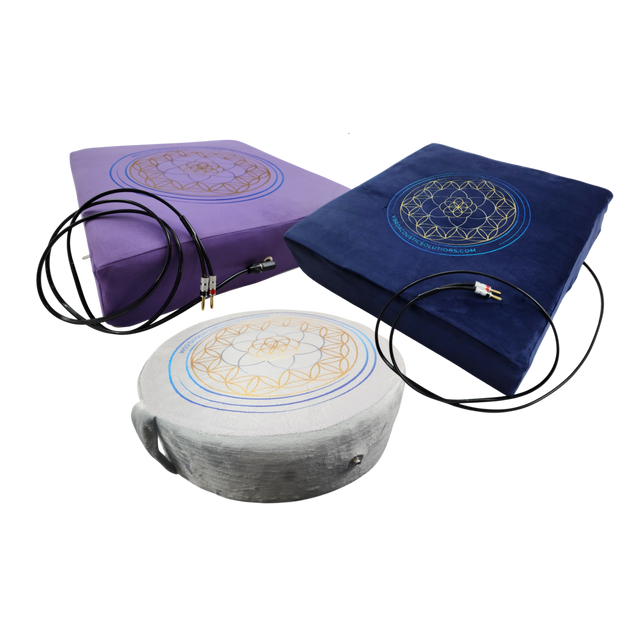
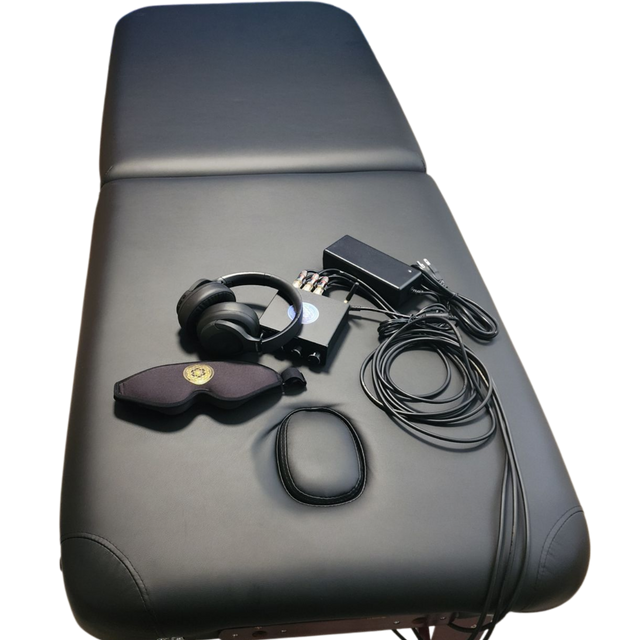
A massage table conversion kit review should begin beneath the upholstery, not with a playlist. Vibroacoustic therapy works by sending low-frequency audio signals through tactile transducers attached to a table’s underside. Those signals become precisely felt vibration in the body. Rather than only hearing bass through the ears, the client experiences frequency through contact points across the back, hips, legs, and shoulders. This combination of audible sound and mechanical vibration is what makes a conversion kit fundamentally different from a speaker placed near a massage table.
For massage therapists, somatic practitioners, and home users, the appeal is practical: an existing table can become a more immersive therapeutic surface without replacing furniture that already fits the room, workflow, and budget. The right kit, however, depends on table construction, client population, treatment goals, and the quality of the system behind the transducers.
What a Conversion Kit Actually Changes
A transducer is often described as a speaker without a cone. Instead of moving air, it mounts to a solid surface and transfers vibrational energy into that surface. When low-frequency content is present in an audio track, the table becomes the medium carrying the signal to the person lying on it.
Most therapeutic applications center on the lower audible spectrum, commonly from roughly 20 to 120 Hz. Frequencies around 30 to 60 Hz tend to feel grounded and physically present through a table, while the 60 to 100 Hz range can provide more defined, rhythmic tactile sensation. The exact experience depends on body position, table materials, padding density, room acoustics, and the audio program itself.
This physical mechanism matters in a massage setting. Gentle, predictable vibration can add a steady sensory layer while hands-on work addresses tissue and movement patterns. Many clients describe the experience as settling, organizing, or deeply restorative because the body receives a consistent signal over time. In somatic care, predictable sensory input can be especially valuable for supporting a sense of safety and nervous system regulation.
Research into vibroacoustic therapy has explored low-frequency sound and vibration in contexts including relaxation, pain support, motor function, and stress-related symptoms. Protocols vary widely, though 30 to 120 Hz appears often in published clinical and therapeutic work. That range is broad for a reason: there is no single frequency that suits every body, treatment intention, or moment in a session.
Massage Table Conversion Kit Review: The Criteria That Count
The strongest conversion kit is not necessarily the one with the highest advertised wattage. A useful review looks at whether the system creates controlled, even, and repeatable vibration on the specific table you own.
Transducer placement and coverage
Placement has a direct effect on what the client feels. A single transducer mounted near the center of a table may create a concentrated sensation through the torso. Two or more properly positioned transducers can distribute vibration more evenly across a longer treatment surface. More units are not automatically better, though. Poorly matched placement can create dead spots, excessive vibration at one end, or distracting rattling.
For a standard massage table, mounting locations should allow the tabletop to resonate while avoiding hardware, folding mechanisms, cables, and areas that could interfere with leg clearance. A thoughtful system provides installation guidance tailored to common table designs rather than treating every surface as interchangeable.
Table construction also matters. Wood, composite, and aluminum-frame tables transmit vibration differently. A sturdy tabletop with intact supports generally provides a more stable foundation than a table with loose hinges, worn fasteners, or a heavily flexing center panel. Before installation, check that the table is level, structurally sound, and rated appropriately for its normal client load.
Frequency response, amplifier control, and usable power
A conversion kit should reproduce low frequencies clearly enough to be felt without forcing the system into harsh, uncontrolled output. Look for an amplifier designed to work with tactile transducers and a signal path that supports the low-frequency range used in vibroacoustic programs.
Power ratings can be confusing because peak power, continuous power, impedance, and amplifier headroom all affect performance. In practice, the more meaningful question is whether the system can provide a full-bodied sensation at a comfortable level without distortion, overheating, or vibration that overwhelms the table. A clinical-grade experience is controlled, not simply intense.
Volume control is essential, particularly in a professional setting. One client may welcome a clearly felt 40 Hz pulse during a recovery-focused session, while another may prefer a quieter 70 Hz soundscape that is just perceptible through the body. The ability to make small adjustments is more useful than a system that jumps quickly from subtle to excessive.
Audio source and therapeutic programming
The kit hardware is only part of the experience. Low-frequency audio designed for vibroacoustic use generally creates more intentional tactile results than ordinary music with occasional bass notes. A well-produced track gives the transducers sustained, clean frequency content rather than random bursts that can make the table feel inconsistent.
This does not mean music has no place. Music can make a session more emotionally spacious and familiar, while dedicated low-frequency programs can provide a more defined somatic stimulus. Many practitioners use both, selecting audio according to the client’s preferences and the purpose of the appointment.
When evaluating a kit, consider how easily it connects to your audio source and whether its controls fit your workflow. A setup that requires repeated cable changes or complicated calibration may be acceptable for a dedicated therapy room, but less suitable for a busy practice with back-to-back appointments.
Comfort Is a Performance Feature
A conversion kit should deepen comfort, not compromise it. The transducers need to mount securely below the tabletop, with wiring routed so it cannot snag during setup, transport, or table adjustment. The client should not feel exposed hardware, sharp edges, or unevenness through the padding.
Padding changes the tactile experience as well. Very thick foam can soften high-frequency tactile detail, while a thinner or firmer surface may transmit vibration more immediately. Neither is inherently preferable. A restorative relaxation practice may favor a gentler, enveloping feel, while a practitioner who wants more distinct sensory feedback may choose a firmer surface and conservative volume.
Noise is another overlooked factor. Some table resonance is natural, but buzzing, rattling, and loose hardware are signs that the installation needs attention. In a quiet treatment room, mechanical noise can pull a client out of the experience. Test the system at several frequencies before using it in a session, especially around 30, 40, 60, and 80 Hz, where a table’s structure may respond differently.
Safety and Clinical Fit
Vibroacoustic equipment belongs in a thoughtful intake and consent process. Explain what clients may feel, begin at a low level, and invite feedback throughout the session. For people with sensory sensitivity, trauma-related tension, or a preference for low-stimulation care, a gradual introduction often creates the best experience.
Follow the manufacturer’s electrical instructions, keep cables protected, and use equipment only with compatible power supplies and audio components. A practitioner should also consider whether the added equipment affects table portability, room turnover, cleaning routines, or insurance requirements. For home users, it is worth deciding whether the table will remain in one place or needs to fold and travel regularly.
If a client has a health condition, implanted device, is pregnant, or has questions about whether tactile vibration is appropriate for them, encourage them to consult their qualified healthcare professional. Vibroacoustic therapy can be a supportive wellness modality within a broader care plan, not a substitute for individualized medical guidance.
Who Gets the Most Value From a Kit?
A conversion kit makes particular sense for practitioners who already own a reliable table and want to add sound-based somatic support without purchasing a dedicated vibroacoustic bed. It can also be a practical choice for home users creating a recovery or relaxation space in a limited footprint.
It may be less ideal for a lightweight portable table that is constantly moved between locations, for a table with structural wear, or for someone who wants an all-in-one system with no installation process. In those cases, the savings of a conversion kit should be weighed against time, setup confidence, and long-term use.
Vibroacoustic Solutions approaches conversion kits as a bridge between accessible equipment and serious therapeutic application. The value is not merely that a table vibrates. It is that low-frequency sound can be delivered in a deliberate, body-based way within the care environment a practitioner or home user already trusts.
The best choice is the kit that feels stable, controlled, and easy to use often. When the technology fades into the background and the body can simply receive the rhythm, a familiar massage table becomes a more resonant place for rest, recovery, and regulation.
Latest posts


Vibroacoustic Systems for Therapeutic Regulation
Read article