Your body often tells the truth before your mind catches up. Tight shoulders, shallow breathing, jaw tension, poor sleep, sensory overwhelm, and that hard-to-name feeling of being constantly on edge are all signs that your internal stress response may be working overtime. That is why nervous system regulation techniques matter - not as a trend, but as practical tools for shifting the body out of survival mode and back toward safety, recovery, and function.
For both clinicians and home users, the goal is not to eliminate stress altogether. A healthy nervous system needs flexibility. It needs to mobilize when action is required and settle when the demand has passed. Regulation is the capacity to move between those states without getting stuck in chronic activation, collapse, irritability, or exhaustion.
What nervous system regulation actually means
Nervous system regulation refers to the body’s ability to adjust arousal levels in response to changing conditions. When regulation is working well, heart rate, muscle tone, breathing pattern, attention, digestion, and emotional intensity can all shift appropriately with the situation. When it is impaired, even ordinary inputs can feel like threats.
This is why dysregulation shows up in so many ways. For one person, it looks like anxiety and racing thoughts. For another, it feels like pain sensitivity, insomnia, shutdown, brain fog, or sensory overload. The symptoms vary, but the underlying pattern is often the same - the body is having difficulty returning to baseline.
From a clinical perspective, regulation is not purely psychological. It is physiological. The autonomic nervous system, vagal pathways, sensory processing, interoception, and muscular tension all play a role. That is also why the most effective strategies are often body-based rather than purely cognitive.
Why nervous system regulation techniques work
The best nervous system regulation techniques give the brain and body new signals of safety. Some do this through breath and movement. Others work through touch, pressure, rhythm, sound, temperature, or environmental predictability. These inputs influence autonomic state, often by reducing sympathetic overactivation or supporting parasympathetic recovery.
There is no universal technique that works for everyone in every moment. Someone in a hyperaroused state may benefit from slow exhalations, low-frequency sound, and grounding pressure. Someone in a shut-down or hypoaroused state may respond better to gentle movement, stimulation, light, or rhythmic sensory input. Context matters, and so does timing.
1. Controlled breathing that changes the output, not just the feeling
Breathwork is widely recommended because respiration directly affects autonomic function. But technique matters. Fast, deep breathing can increase activation in some people, especially those with trauma histories or panic sensitivity. For regulation, slower breathing with a slightly longer exhale is often more effective.
A simple place to start is inhaling for four seconds and exhaling for six. The longer exhale helps signal downshifting without forcing the body into an extreme pattern. This can be useful before sleep, after a stressful meeting, or during moments of sensory build-up.
The trade-off is that breathing exercises are not always accessible in acute distress. If someone is already highly dysregulated, being told to focus on breath can feel frustrating or even threatening. In those cases, adding an external anchor such as touch or sound may work better.
2. Grounding through pressure, contact, and body orientation
The nervous system continuously scans for cues about whether the body is supported. Firm contact with a chair, feet pressing into the floor, lying under a weighted blanket, or receiving steady manual pressure can help improve orienting and containment.
This matters because regulation is not just calming down. It is also about reestablishing a clear sense of where the body is in space. Proprioceptive input often helps when someone feels scattered, detached, or overstimulated.
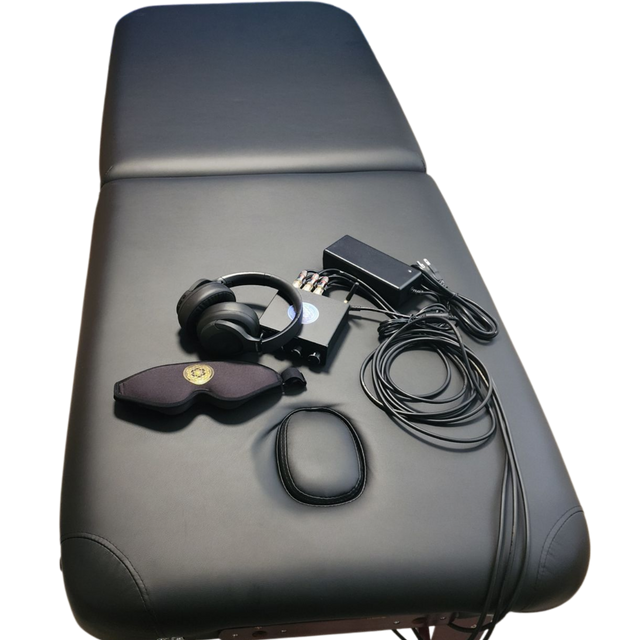
For practitioners, this is one reason supportive positioning on a treatment table matters. For home users, even small changes such as sitting with the back fully supported or using intentional pressure across the legs can reduce physiological noise and make other techniques more effective.
3. Rhythmic movement to discharge activation safely
Humans regulate through motion more than many people realize. Walking, rocking, stretching, swaying, and repetitive low-intensity movement can help metabolize stress responses that would otherwise stay trapped as tension, agitation, or restlessness.
Rhythm is the key factor. Predictable movement tends to be more regulating than intense exercise when the nervous system is overloaded. A hard workout can help some individuals, but it can also push an already activated system further into stress chemistry. Gentle rhythmic movement is often the better first step.
This is especially relevant for people who say they cannot relax when sitting still. In many cases, stillness is not the starting point. Regulation has to be approached through motion first.
4. Sound and vibroacoustic input for somatic downshifting
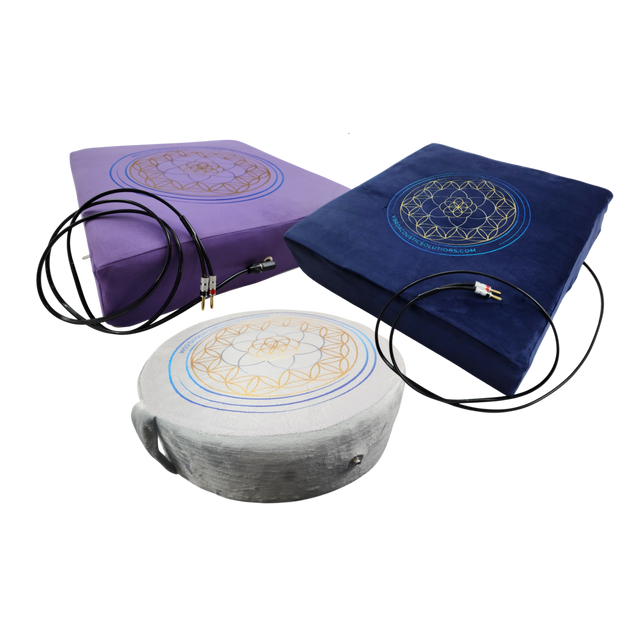
Sound-based interventions can be particularly effective because the nervous system is highly responsive to frequency, rhythm, and vibration. Vibroacoustic therapy uses low-frequency sound delivered through the body to create a combination of auditory stimulation and mechanical vibration. That combination can support parasympathetic activity, muscle relaxation, sensory organization, and a felt sense of safety.
For people dealing with chronic stress, pain, trauma-related tension, or sleep disruption, this can be more than a pleasant experience. The low-frequency component acts like cellular micro-massage, while the predictable sensory input gives the brain a coherent signal to organize around. In therapeutic settings, this often helps clients settle faster than verbal instruction alone.
It is not magic, and it is not one-size-fits-all. Frequency selection, volume, body position, session length, and individual sensory profile all matter. Some clients need very gentle stimulation. Others respond better to more immersive input. But when applied thoughtfully, vibroacoustic therapy is one of the most practical nervous system regulation techniques because it works through the body directly, without requiring the user to force relaxation.
5. Temperature shifts that cue the body toward safety
Temperature can influence arousal quickly. Warmth tends to reduce guarding and support muscle relaxation, while cool stimulation can increase alertness or help interrupt spiraling states. This is why warm baths, heating pads, cool facial rinses, and contrast strategies are commonly used in somatic care.
The important point is to match the input to the state. If someone is anxious, cold exposure may feel too sharp. If someone is foggy or dissociated, a brief cool stimulus may help bring them back online. Regulation is not always about calming. Sometimes it is about restoring the right level of activation.
6. Sensory editing in the immediate environment
Many dysregulated nervous systems are not failing to cope. They are coping with too much input. Harsh lighting, constant notifications, layered noise, poor ergonomics, and unpredictable transitions can keep the body in low-grade defense for hours.
Reducing sensory load is a legitimate intervention. Dimmer light, fewer alerts, a quieter room, supportive surfaces, and scheduled recovery time all lower the number of stress signals the brain has to process. This is particularly important for people with migraines, ADHD, autism-related sensory sensitivity, trauma histories, or chronic pain.
Clinical-grade regulation often begins with the environment, not the protocol. A room that feels safe, quiet, and physically supportive can change outcomes before any formal treatment begins.
7. Co-regulation with another person
The nervous system is social. Voice tone, pacing, facial expression, and physical presence all influence autonomic state. This is why calm, attuned interaction can help a dysregulated person settle more effectively than self-talk alone.
In therapeutic practice, co-regulation may involve slower pacing, clear structure, and a non-threatening presence. At home, it may look like sitting quietly beside a partner, speaking in a steady tone, or sharing a regulating activity such as a walk or sound session.
This does not mean people should become dependent on others to feel stable. It means regulation is relational as well as individual. For many people, healing starts when the body experiences safety in connection.
8. Repetition that teaches the body a new baseline
One of the biggest misunderstandings about regulation is the idea that a single session should fix everything. In reality, the nervous system learns through repetition. Consistent, moderate inputs are usually more effective than occasional intense interventions.
That is why short daily practices often outperform longer sessions done only when symptoms spike. Five to ten minutes of breathwork, movement, grounding, or vibroacoustic support repeated regularly can help train the system toward greater adaptability. Over time, the body becomes less reactive because it has more experience returning to safety.
How to choose the right technique
The best starting point depends on your dominant pattern. If you tend toward anxiety, agitation, tension, and insomnia, start with slower, heavier, more predictable inputs such as prolonged exhalation, pressure, warmth, and low-frequency sound. If you tend toward numbness, fatigue, shutdown, or disconnection, begin with orienting, movement, light, and gentle stimulation.
For practitioners, it helps to think in terms of state matching rather than symptom labeling. Two clients may both report stress, yet one needs settling while the other needs activation. That difference shapes the intervention.
At Vibroacoustic Solutions, this is the core framework behind sound-based somatic care. Regulation improves when the body receives structured sensory input that is appropriate to its current state, not when it is pushed into a generic relaxation script.
If you are trying to build a more regulated system, start small and stay observant. Pay attention to what changes your breathing, muscle tone, attention, and sleep quality. The body usually gives clear feedback when an intervention fits. When a technique creates more ease, more grounding, or more capacity to recover after stress, that is not a minor shift. That is the nervous system learning that it does not have to stay on guard all the time.
Latest posts

Somatic Sound Therapy Versus Massage: Key Differences
Read article

Massage Practice Sound Table Example That Works
Read article