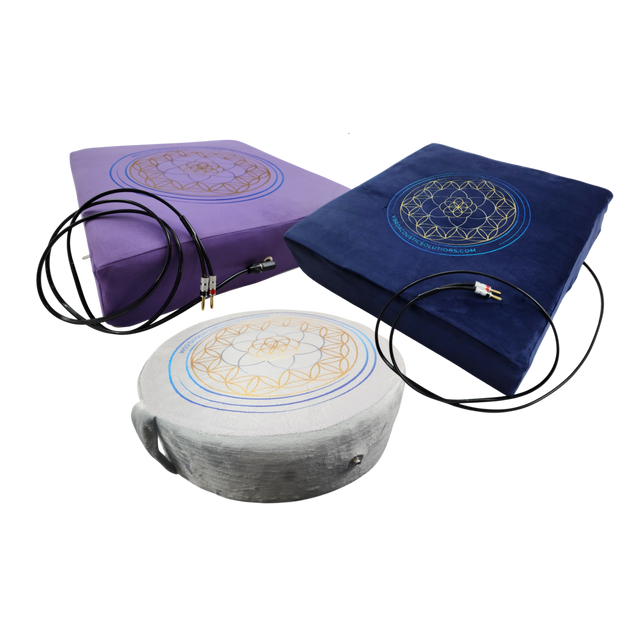
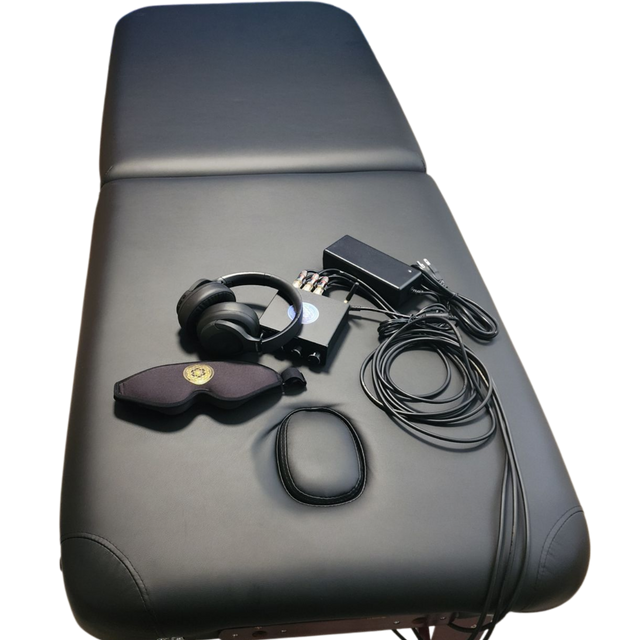
A sound healing cushion versus mat is not simply a question of which format feels more comfortable. The decision changes how low-frequency sound reaches the body, how much of the body receives it, and how easily the experience fits into a home routine or professional session. Both can support a deeply regulating vibroacoustic experience. The best choice depends on whether you need targeted contact, whole-body immersion, portability, or a treatment-ready surface.
Vibroacoustic therapy uses transducers to translate audio frequencies into tactile vibration. Rather than only hearing a tone through speakers, the body feels its mechanical movement through a cushion, mat, bed, or table. Frequencies in the low-frequency range, often about 20 to 120 Hz, are especially relevant because they are felt readily through soft tissue and the skeletal system. This tactile input can invite the nervous system to shift from vigilance toward settling, while rhythmic vibration may also create a gentle micro-massage effect in the areas in contact with the device.
How Vibroacoustic Frequency Delivery Changes by Format
A cushion and a mat can play the same carefully designed audio program, including relaxing music, binaural soundscapes, 40 Hz stimulation, or tones associated with grounding practices such as 432 Hz. Yet the physical delivery is different.
A vibroacoustic cushion concentrates vibration through a smaller contact zone. When it is placed behind the back, beneath the hips, under the legs, or against the chest while reclining, the transducer's movement is felt most strongly in that region. This localized contact can be useful when someone wants to bring attention and comfort to a particular part of the body, such as a tense low back or shoulders held high after a demanding day.
A vibroacoustic mat distributes contact across a larger area. Lying on a mat creates simultaneous input through the back, pelvis, legs, and sometimes the head or neck, depending on its design and position. The experience is often more enveloping. For people seeking full-body rest, sleep preparation, sensory regulation, or a dedicated restorative practice, this broader field of vibration can feel more complete.
Neither approach is inherently stronger. Intensity depends on transducer power, program design, surface material, amplifier settings, and the weight and position of the user. A well-designed cushion can deliver substantial tactile presence in a focused area, while a mat may feel gentler because its energy is spread across more of the body.
Sound Healing Cushion Versus Mat for Home Use
For home users, the practical question is usually simple: Where will you actually use it consistently?
Choose a cushion when flexibility matters
A cushion is often the more adaptable starting point. It can move from a desk chair to a sofa, favorite recliner, bed, or meditation space without taking over the room. That matters for people who want nervous system support woven into daily life rather than reserved for a scheduled session.
A cushion may be especially well suited to someone who spends long periods seated, experiences end-of-day muscular holding, or wants a compact way to pair low-frequency vibration with breathwork, guided relaxation, or music. It can also support a gradual introduction to vibroacoustic therapy. Instead of lying down for 30 minutes, a user might begin with 10 to 15 minutes while seated and notice how their body responds.
The trade-off is coverage. A cushion does not naturally create the head-to-toe containment of a full-body surface. Positioning matters, and users may want to move it during a session to address different areas.
Choose a mat when you want a dedicated reset space
A mat makes the intention clearer: lie down, reduce external demands, and allow the body to receive. It is a compelling choice for a bedroom, recovery room, sensory space, or quiet corner used for regular rest practices.
Because a mat supports more contact points, it is often preferable for people who want to use vibroacoustic sessions before sleep or after physical exertion. The supine position can reduce the effort of maintaining posture, and the broad distribution of vibration may make it easier to settle into slow breathing and body awareness.
The trade-off is setup. Mats need floor or bed space, and some users may find getting down to and up from the floor inconvenient. A mat is also less discreet than a cushion, although foldable or rollable designs can reduce storage demands.
What Practitioners Should Consider
For massage therapists, somatic practitioners, and integrative wellness providers, the choice is shaped by session flow and treatment environment as much as client comfort.
A cushion works well as an add-on modality. It can be used in a chair for intake, during guided regulation work, or as targeted support beneath the lumbar area, knees, or upper back. It offers flexibility when a practice has limited square footage or needs equipment that can move between rooms. A cushion can also help introduce clients to tactile sound gradually, particularly those who are unfamiliar with vibration-based therapeutic tools.
A mat is often better suited to a more immersive standalone session. It can become the central surface for a sound-based relaxation protocol, especially where clients arrive seeking downregulation, recovery support, or a sensory-rich restorative experience. For table-based practices, a vibroacoustic attachment system may offer another route: it brings low-frequency stimulation into an existing treatment table without requiring a separate mat on the floor.
In a clinical or professional setting, hygiene, durability, and operational flow matter. Consider wipeable surfaces, the time required to position a client, cable management, weight capacity, and whether the system allows repeatable control of volume and frequency settings. The goal is not merely a memorable sensation. It is a safe, consistent experience that supports the practitioner’s therapeutic intention.
Frequency Goals: Targeted Support or Whole-Body Immersion?
The frequency program deserves as much attention as the format. Low frequencies are commonly used in vibroacoustic systems because the body can feel them distinctly. Around 30 to 60 Hz, many people describe a grounded, physically present sensation. Frequencies near 40 Hz have drawn particular research interest in sensory stimulation and rhythmic neural activity, while 60 to 80 Hz can feel more energizing or muscular depending on intensity and placement.
The body does not experience frequency in isolation. A 40 Hz tone delivered at low volume through a full-body mat can feel very different from the same tone played more intensely through a cushion at the lumbar spine. Session length, music, posture, and the user's sensory preferences all shape the response.
For this reason, a cushion is often a strong match for intentional, area-specific work. A mat tends to suit programs designed around immersion, rhythmic settling, and full-body relaxation. Some households and practices ultimately use both: a cushion for frequent daily regulation and a mat or table system for longer restorative sessions.
Questions That Clarify the Right Choice
Before purchasing, consider the body position you return to most often. If your most reliable wellness moment happens in a chair after work, a cushion may earn more use than a mat stored in a closet. If your goal is to replace late-night screen time with a 20-minute restorative ritual, a mat may make that ritual easier to protect.
Also consider sensory preference. Some people find focused vibration reassuring and clear. Others prefer vibration to be distributed broadly so it does not feel concentrated in one place. If you are supporting a child, a neurodivergent family member, or clients with varied sensory needs, adjustable volume and brief introductory sessions are especially useful.
Finally, think about progression. A portable cushion can be an accessible entry into the science of somatic regulation. A mat can create a more immersive environment when you are ready to dedicate physical space and time to the practice. Vibroacoustic Solutions designs systems around this practical reality: therapeutic-grade frequency delivery should fit real homes and real treatment rooms.
The right surface is the one that helps the body receive sound often enough to become familiar with rest. Start with the place where you can most easily pause, make contact with the vibration, and give your nervous system a few uninterrupted minutes to settle.
Latest posts


Therapeutic Furniture Conversion Guide for Home
Read article