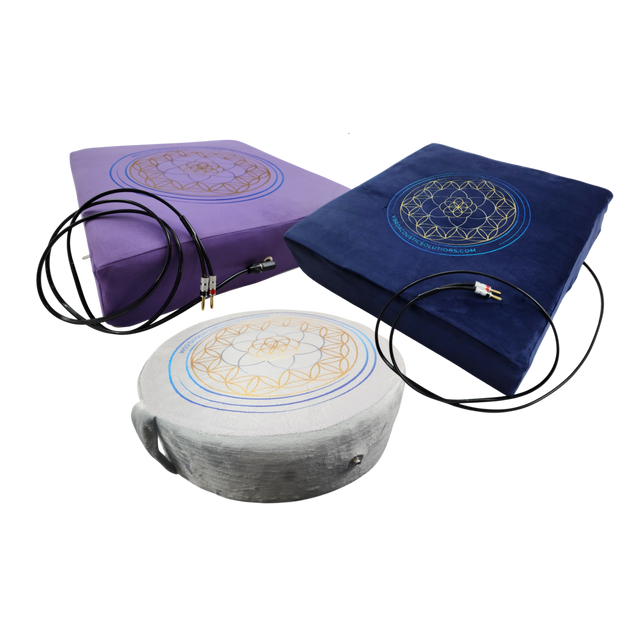
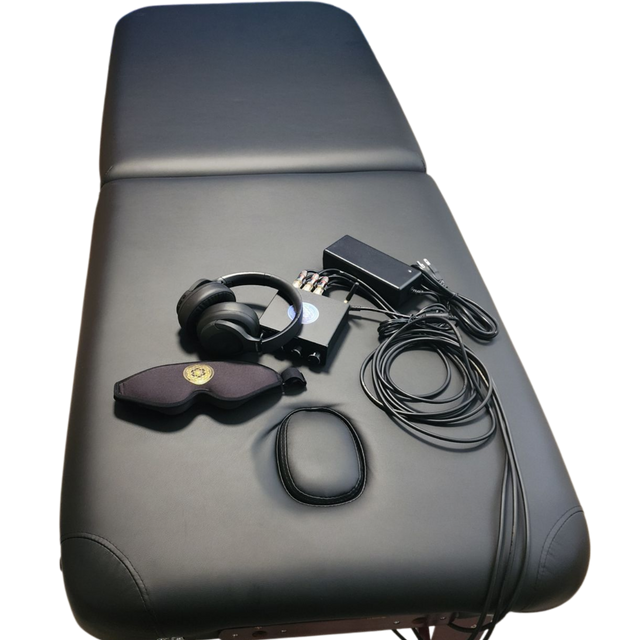
Some autistic children and adults do not need more stimulation. They need the right kind of input delivered in a predictable, controllable way. That is where vibroacoustic therapy autism support becomes clinically interesting. Rather than relying on spoken instruction or broad sensory exposure, vibroacoustic therapy uses low-frequency sound, usually in the 20 to 120 Hz range, transmitted through a bed, mat, cushion, or chair to create gentle mechanical vibration the body can feel.
That physical mechanism matters. Low-frequency sinusoidal tones generate vibration that travels through tissue as rhythmic sensory input. In practical terms, the body experiences this as a form of structured somatosensory stimulation - sometimes described as cellular micro-massage. Depending on the frequency, amplitude, session length, and the individual’s sensory profile, that input may support downregulation, body awareness, muscle relaxation, and a greater sense of safety in the nervous system.
For autism support, those outcomes are relevant because sensory dysregulation is often central, not secondary. Some individuals seek more input to feel organized. Others become overwhelmed by sound, touch, transitions, or unpredictable environments. A modality that combines low-frequency vibration with calming music or carefully selected audio can sometimes meet both needs at once: enough sensory input to anchor attention, but in a controlled format that reduces chaos rather than adding to it.
How vibroacoustic therapy autism support works
Vibroacoustic therapy is not just music you can feel. It is the therapeutic use of measurable low frequencies delivered through the body to influence muscle tone, autonomic regulation, and sensory processing. Most systems use transducers that convert audio signal into vibration. When a person lies or sits on the surface, those frequencies are conducted into the body while synchronized sound plays through speakers or headphones.
Research and clinical use often focus on lower frequencies such as 30 Hz, 40 Hz, and 52 Hz, though the exact protocol varies. Around 30 to 50 Hz, many practitioners are targeting muscle relaxation, reduced tension, and calming sensory input. Some protocols move through frequency sweeps, while others hold a steady frequency. A steady tone can feel more predictable for individuals who are sensitive to change. A sweep can be useful when the goal is broader stimulation, but it may also be too much for someone with a highly reactive sensory system.
This is one of the most important trade-offs in autism support. The same vibration that one person experiences as organizing and soothing may feel intrusive or irritating to another. That does not make the therapy ineffective. It means dosage, positioning, and frequency selection matter.
What the research suggests
The evidence base for vibroacoustic therapy in autism is promising but still developing. It is more accurate to say there is emerging support than to make sweeping claims. Small studies and case-based clinical reports have explored effects on behavior regulation, relaxation, attention, and sensory responsiveness. Some findings suggest improvements in calmness, reduced agitation, and better tolerance for therapeutic settings after sessions.
More broadly, research on vibroacoustic therapy across other populations has shown effects on pain, spasticity, stress, and autonomic regulation. Those findings matter because the mechanism is not autism-specific. Low-frequency vibration can influence the body through entrainment-like rhythmic input, muscle relaxation, and parasympathetic support. In other words, the pathway is somatic first. The behavioral changes, when they occur, are often downstream of better regulation.
There is also growing interest in 40 Hz stimulation because of research in other neurological contexts. That does not mean 40 Hz is a proven autism protocol. It means clinicians and families should separate what is experimentally interesting from what is established. In autism care, there is no single magic frequency. Response depends on the person, the setting, the sensory environment, and how well the session is introduced.
That distinction is part of good clinical communication. Vibroacoustic therapy is not a cure for autism, and it should not be marketed that way. Autism is a neurodevelopmental difference, not a condition to be erased. A more grounded goal is support: helping with regulation, transitions, sleep readiness, rest, and sensory comfort.
Where vibroacoustic therapy may be most useful
In practice, vibroacoustic therapy often fits best when the need is nervous system regulation rather than cognitive training. A child who struggles to settle after school, a teen who becomes overloaded in therapy environments, or an autistic adult who finds deep pressure calming may all respond to low-frequency vibration if the setup feels safe and predictable.
Sleep support is one common use case. Gentle low-frequency stimulation paired with low-arousal music may help reduce physical tension before bedtime. For some users, this can shorten the time it takes to transition from hyperarousal into rest. For others, especially those who are sound-sensitive, it may work better with minimal audio and very low amplitude vibration.
Another strong application is pre-session regulation in clinics. Massage therapists, occupational therapists, somatic practitioners, and integrative providers may use a short vibroacoustic session to help a client settle before hands-on work or guided therapeutic activity. When the body is less guarded, engagement often improves. The person may tolerate touch better, communicate more clearly, or simply remain in the room with less distress.
Home use can also be effective because familiarity lowers threat. A vibroacoustic cushion or bed-based system used in the same room, at the same time of day, with the same trusted caregiver nearby, may be far more successful than a sophisticated clinic session introduced too quickly.
Practical considerations for autistic users
The best session is usually the one that feels boring in the right way. Predictable. Repeatable. Free from surprise. Start with short exposure, often 5 to 10 minutes, at low intensity. Let the person stop the session immediately if they want to. Choice is not a small detail here. A sense of control can determine whether the nervous system interprets the experience as supportive or threatening.
Positioning matters. Full-body contact on a vibroacoustic bed can be deeply organizing for some users, but too immersive for others. A localized cushion on the back or under the legs may be easier to tolerate at first. The audio layer matters too. Some people prefer no melodic content at all and respond better to plain low-frequency vibration. Others do well with simple, slow, non-lyrical music.
Clinicians should also think about environmental load. If fluorescent lights are buzzing, the room is cold, or there are multiple competing sounds, the session may fail for reasons that have nothing to do with the frequencies. Vibroacoustic therapy works best when it is part of a larger sensory-informed setup.
What to avoid when evaluating claims
This area attracts both serious clinical innovation and exaggerated marketing. The credible version of vibroacoustic therapy is based on acoustics, neurophysiology, and measurable mechanical stimulation. That is different from making unsupported claims about special frequencies that supposedly transform consciousness or reverse complex conditions on their own.
For autism support, be careful with absolute language. No specific Hz value has been proven to work universally for autistic individuals. Claims that one tone can "treat autism" are not evidence-based. What is better supported is the idea that low-frequency vibration can influence arousal, muscle tone, and sensory experience in ways that may benefit some autistic users.
That is why equipment quality and protocol design matter. Clinical-grade transducers, controllable amplitude, stable frequency delivery, and adaptable session formats are more relevant than mystical branding. For providers and families looking at systems from companies such as Vibroacoustic Solutions, the practical question is not whether the technology sounds impressive. It is whether the system allows safe, adjustable, repeatable regulation work.
A useful role in a broader support plan
Vibroacoustic therapy autism support makes the most sense when it is integrated, not isolated. It can sit alongside occupational therapy, psychotherapy, massage therapy, sensory accommodations, and home regulation routines. In some cases it may help a person arrive at a calmer baseline. In others it may simply offer a nonverbal pathway to comfort when words are not the right tool.
That is its real value. Not as a dramatic promise, but as a precise form of somatic input that can meet the nervous system where it is. For many autistic individuals, feeling safe in the body is not a luxury. It is the starting point for everything else.
Latest posts


Vibroacoustic Systems for Therapeutic Regulation
Read article