A treatment table can become a somatic regulation tool when low-frequency sound is delivered through the body rather than simply played into a room. That is the central question behind current vibroacoustic therapy research trends: how do audible sound, tactile vibration, and a carefully designed rest environment work together to influence comfort, recovery, and nervous system state?
For practitioners and home users alike, the most useful shift is away from vague claims about vibration and toward measurable questions. Which frequency ranges are most comfortable? How long should a session last? Does a client respond best to a steady 40 Hz tone, a slow frequency sweep, music enriched with low-frequency vibration, or a combination of sound and hands-on care? Research is beginning to map those details.
The mechanism researchers are studying first
Vibroacoustic therapy uses transducers to convert an audio signal into physical vibration. When a person lies on a vibroacoustic bed, reclines on a cushion, or receives treatment on a table attachment, low frequencies travel through contact points in the body. Frequencies between roughly 20 and 120 Hz are commonly used because they are readily felt as vibration, particularly through the back, hips, legs, and thorax.
The experience is more than hearing bass. Mechanical oscillation creates gentle, repeated movement at the tissue-contact level, often described as cellular micro-massage. At the same time, the auditory system receives sound through the ears, while touch and pressure receptors register vibration through the skin and deeper tissues. This multisensory input may help shift attention away from threat signals and toward predictable sensory information.
That predictability matters. Slow, steady, non-threatening sensory input can support parasympathetic activity, the branch of the autonomic nervous system associated with rest, digestion, and restoration. Researchers are interested in heart rate variability, breathing rate, muscle tone, pain ratings, sleep quality, and mood because these measures offer practical windows into regulation.
The vagus nerve is also part of the conversation. Vibroacoustic therapy does not directly stimulate the vagus nerve in the same way as implanted or electrical devices, but low-frequency vibration, paced breathing, music, and a supported body position may create conditions associated with vagal regulation. For a client whose system has been running at high alert, that felt sense of safety can be clinically meaningful.
Vibroacoustic therapy research trends in 2026
One clear trend is a move from broad relaxation studies toward targeted applications. Earlier work often asked whether vibroacoustic sessions improved general well-being. Newer protocols are more likely to focus on a defined concern such as persistent pain, post-exercise recovery, sleep disturbance, sensory processing differences, neurological rehabilitation, or stress-related muscle tension.
Pain research remains a major area of interest. Small clinical studies and practice-based reports have repeatedly observed short-term reductions in self-reported pain and muscle discomfort after low-frequency vibration sessions. Researchers are now asking more useful follow-up questions: How long do effects last? Which types of pain respond best? Does vibroacoustic therapy work differently as a standalone relaxation session than as an adjunct to massage, physical therapy, or movement-based rehabilitation?
Sleep is another growing focus. Low frequencies around 30 to 60 Hz are frequently used in calming programs because they are easily perceived without feeling overly stimulating for many users. Studies examining sleep-related outcomes often track sleep onset, nighttime waking, perceived restfulness, and next-day stress. The strongest practical takeaway so far is not that one universal frequency solves sleep challenges, but that a consistent pre-sleep routine can help train the body toward a more settled state.
Neurodevelopmental and sensory-regulation applications are also receiving closer attention. For some autistic people and people with ADHD, predictable low-frequency input can feel grounding and organizing. For others, especially those with sound sensitivity or a history of sensory overwhelm, the same input may feel too intense. Research is increasingly emphasizing individualized intensity, user choice, and gradual exposure rather than assuming more vibration is better.
Better measurement is changing the field
A meaningful advance in vibroacoustic research is methodological. Instead of relying only on a participant saying they felt better after a session, more studies are pairing subjective reports with physiological and functional measures. Heart rate variability, electroencephalography, electromyography, cortisol sampling, range-of-motion assessments, and wearable sleep data can help researchers see what changes during and after treatment.
These measures bring needed precision, but they also reveal a central reality of somatic care: outcomes are personal. A 40 Hz program may feel deeply settling to one person and too activating to another. Volume, transducer placement, body position, music choice, session length, room temperature, practitioner presence, and the client’s baseline stress level can all affect the result.
That is why research designs are beginning to compare protocols rather than treating vibroacoustic therapy as a single, fixed intervention. A 20-minute session at 30 Hz is not equivalent to a 45-minute music-based program that moves gradually between 40 and 80 Hz. This detail is especially valuable for clinics that want repeatable care pathways without losing the flexibility that good client-centered practice requires.
Frequency-specific questions are becoming more refined
Low-frequency work is often discussed in broad ranges, yet certain frequencies continue to draw attention. Around 40 Hz, vibration is commonly associated with a firm, centered sensation that can work well in grounding-oriented programs. The 50 to 70 Hz range may feel more muscular or energizing, depending on amplitude and body contact. Frequencies below 30 Hz can create a slower, more spacious sensation, though they require thoughtful equipment setup and comfortable intensity settings.
Research interest in 40 Hz has expanded in neuroscience because rhythmic sensory stimulation at that rate has been studied for its relationship to gamma-band brain activity. In vibroacoustic settings, this does not mean every 40 Hz session should be treated as a neurological protocol. It does mean researchers are taking timing, rhythm, and frequency-specific sensory input more seriously than they did a decade ago.
Music remains equally important. A pure sine wave makes frequency control easier, while music can provide emotional familiarity, pacing, and a more immersive therapeutic experience. Many of the most promising real-world protocols combine both: carefully calibrated low-frequency vibration beneath music designed to support breathing, rest, movement, or recovery.
What this means for practitioners
For massage therapists, somatic practitioners, and integrative providers, the research trend to watch is personalization with documentation. Start with a clear therapeutic intention: downregulation before bodywork, a recovery-focused session after physical exertion, a sensory break between demanding activities, or a quiet transition before sleep. Then record the settings and the client response.
A useful clinical-grade starting point is often 15 to 30 minutes at a moderate intensity, with the client fully supported and able to request adjustments. Rather than selecting a frequency because it is fashionable, select it based on the desired sensory quality and the client’s feedback. Slower, steadier programs may suit a person seeking rest. More rhythmic or higher-energy programs may fit movement preparation or post-workout recovery.
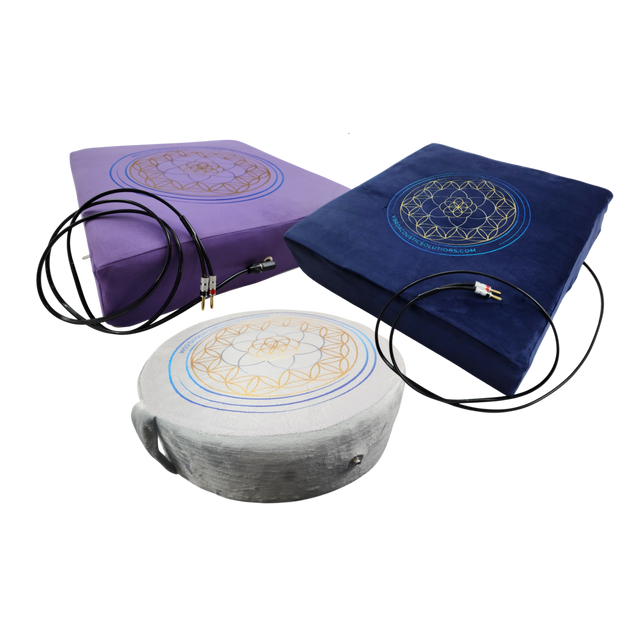
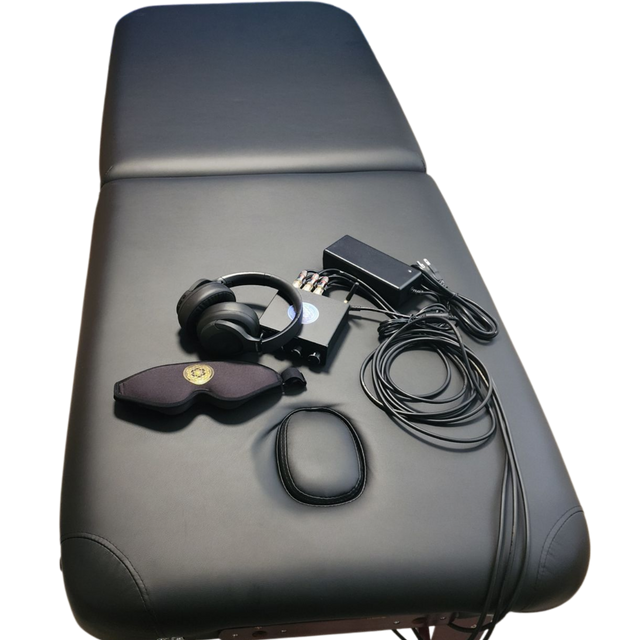
Vibroacoustic therapy is particularly well suited to treatment rooms because it can deepen the experience without requiring the practitioner to add more verbal instruction. A massage table attachment kit can provide low-frequency support during a session, while a vibroacoustic cushion offers a lower-footprint option for consultation rooms, meditation spaces, and home care plans.
Where the evidence still needs to go
The field needs larger studies with clearer reporting of frequency, amplitude, session duration, equipment type, and participant characteristics. Vibroacoustic therapy research has historically been difficult to compare because two studies may use the same label while delivering very different sensory experiences.
Researchers also need longer follow-up periods. Immediate relaxation is valuable, but practitioners and clients want to understand whether a series of sessions supports more durable changes in sleep habits, pain coping, stress resilience, and functional recovery. Comparative studies will be useful too, particularly those that examine vibroacoustic therapy alongside massage, guided breathing, physical rehabilitation, and music therapy.
That need for stronger protocol detail should be viewed as progress, not a limitation. It is how a promising therapeutic technology matures into a more precise tool for clinical and home use.
The most exciting direction is simple: vibroacoustic therapy is becoming more individualized, measurable, and practical. Start with a well-designed system, listen closely to the body’s response, and let consistent, comfortable sessions build a rhythm of safety and recovery over time.
Latest posts