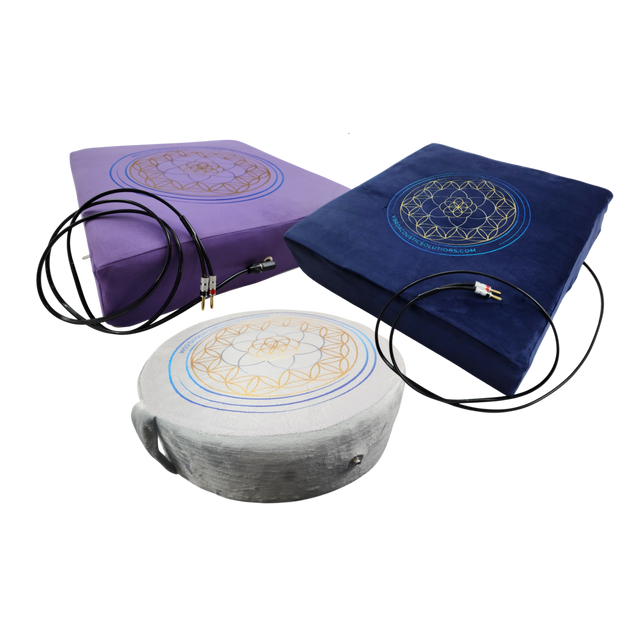
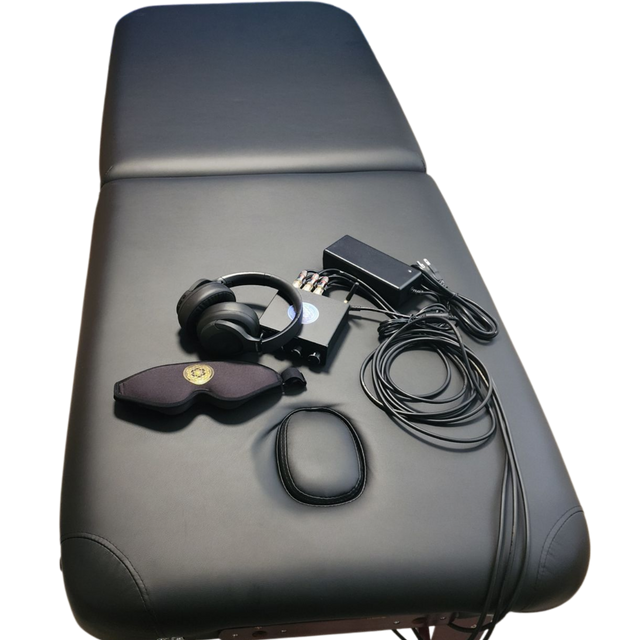
A low note felt through the back, hips, and legs can change a room before it changes a thought. This is one of the most tangible ways low frequencies support relaxation: they give the nervous system steady physical input, not just another sound to interpret. In vibroacoustic therapy, audible sound is paired with carefully delivered vibration so the body can receive rhythm through the skin, muscles, and connective tissue.
Low-frequency work is not simply about making music deeper or louder. It is about selecting a frequency range the body can comfortably perceive, setting an appropriate intensity, and allowing enough uninterrupted time for a shift from bracing toward regulation. For home users, this can create a reliable recovery ritual. For clinicians and bodywork practitioners, it can add a somatic layer to a treatment session without requiring more verbal processing from the client.
How Low Frequencies Reach the Nervous System
Humans hear approximately 20 Hz to 20,000 Hz, but the body also senses vibration mechanically. In vibroacoustic applications, frequencies commonly fall between 20 and 120 Hz. At these lower ranges, a transducer built into a bed, cushion, or treatment table can translate audio signal into gentle, repeatable movement against the body.
That movement is detected by mechanoreceptors in the skin and deeper tissues. Pressure, stretch, and vibration signals travel to the brain alongside information from the joints, muscles, and inner ear. The experience can be especially grounding because it is both heard and felt. Rather than asking attention to float away from the body, it offers a stable point of contact with it.
The right setting depends on the person and the goal. A 30 to 50 Hz session may feel broad and settling through larger areas of the body, while 60 to 80 Hz can feel more localized and energizing for some people. More intensity is not necessarily more therapeutic. A comfortable, clearly perceived vibration is generally more useful for relaxation than a setting that causes guarding, irritation, or sensory overload.
5 Ways Low Frequencies Support Relaxation
1. They provide predictable sensory input
Stress often narrows attention toward possible threats, sudden changes, and unfinished demands. A stable low-frequency pulse offers the opposite: a predictable sensory pattern that repeats without requiring a response. The brain can begin to orient toward that pattern instead of continuously scanning the environment.
This is why sustained tones, slow musical bass lines, and programmed frequency sweeps can feel calming when delivered at a comfortable level. The effect is not about forcing the mind to become quiet. It is about providing enough consistent information for the body to reduce some of its need for vigilance.
For people with sensory dysregulation, including some people with ADHD, autism, trauma-related tension, or chronic stress, predictability matters as much as the frequency itself. Start with a short session, a simple sound program, and modest volume. Complexity can be added later if it feels supportive.
2. They create a felt sense of grounding
Grounding is often described as an emotional experience, but it also has a physical basis. When vibration is delivered through a mattress, cushion, or massage table, the body receives pressure and movement across a wide contact area. This can strengthen awareness of where the body is supported in space.
In a vibroacoustic bed, a 40 Hz tone may be felt as a soft, even hum through the torso and pelvis. The body is not merely listening from a distance. It is in contact with the rhythm. For someone who feels mentally scattered after a demanding day, that contact can make it easier to notice the weight of the body, the surface underneath it, and the safety of the immediate environment.
This is also where the term cellular micro-massage is useful. It describes the fine mechanical movement transmitted through soft tissue during a session. The sensation should remain gentle and pleasant, like a broad internal hum rather than a sharp mechanical buzz.
3. They can support slower, more regular breathing
Breathing often changes with the state of the nervous system. Under pressure, breaths may become shallow, fast, or held. A slow low-frequency rhythm does not control breathing, but it can provide an external pacing cue that makes a longer exhale feel easier to access.
Try pairing vibration with a simple breathing pattern: allow the inhale to arrive naturally, then let the exhale extend without strain. Many people find that a session in the 30 to 60 Hz range is easier to settle into when the soundscape is sparse and the rhythm is unhurried. There is no need to match every breath to the frequency itself. The frequency is far faster than a breath cycle. Instead, use its steadiness as a background signal while the breath finds its own slower cadence.
This matters because breathing, heart rate, muscle tension, and attention influence one another. A calming session may begin as a sensory experience and become a whole-body regulation practice through this feedback loop.
4. They may reduce the felt intensity of muscular holding
Protective muscle tension is useful in short bursts, but it becomes exhausting when it remains switched on long after the stressful event has passed. Low-frequency vibration can bring awareness to areas that have been quietly working all day, such as the jaw, shoulders, low back, hands, and hip flexors.
Mechanical vibration also creates brief, repeated changes in pressure through the tissues. In a comfortable position, this input may help a person notice the difference between holding and releasing. That is one reason vibroacoustic sessions are often used before massage, stretching, breathwork, or rest. The goal is not to push tissue into relaxation. It is to create conditions in which the body has less reason to keep bracing.
Clinical and pilot research on vibroacoustic therapy has explored outcomes including perceived pain, anxiety, muscle tone, and quality of life across varied populations. Results are shaped by factors such as session duration, frequency selection, the person’s health needs, and whether therapy is combined with other supportive care. The practical lesson is clear: individualized settings matter more than a single universal frequency.
5. They make rest feel more intentional
A phone-free 20-minute rest period can be restorative on its own. Adding low-frequency vibration can give that time a clearer beginning, middle, and end. The body learns that a particular environment, position, and sound pattern are associated with downshifting.
This conditioned sense of safety can be valuable for people who struggle to transition out of work mode or who lie down at night only to feel their thoughts accelerate. A regular session does not need to be elaborate. A comfortable supine or side-lying position, low lighting, a warm blanket, and a familiar frequency program may be enough to establish a meaningful cue for rest.
Some people also connect deeply with frequency traditions such as 432 Hz music, Solfeggio tones, or rhythms inspired by the Earth’s natural cycles. These approaches carry personal and cultural meaning for many listeners. In a vibroacoustic setting, the most useful question is often experiential: does this program help the person feel safe, settled, and present in their body?
Using Low Frequencies Safely and Effectively
Begin with 15 to 20 minutes at a low-to-moderate intensity. The vibration should be easy to feel but should not rattle the body, numb an area, or create discomfort. If a client becomes more agitated, distracted, or physically tense, lower the intensity, simplify the audio, shorten the session, or stop. Regulation is not always immediate, especially for a nervous system accustomed to high alert.
For practitioners, placement matters. Full-body systems create an immersive experience for longer sessions, while cushions and massage table attachment kits can bring focused vibroacoustic support into existing care plans. A client receiving manual therapy may prefer a quieter 30 to 50 Hz foundation. Someone using a cushion during seated recovery may enjoy a slightly more noticeable frequency range. Keep communication open and invite clear feedback throughout.
People with implanted medical devices, acute injuries, pregnancy-related questions, or complex health conditions should consult an appropriate healthcare professional before using vibration-based equipment. Vibroacoustic therapy is a supportive wellness modality and can complement, rather than replace, individualized medical or mental health care.
Vibroacoustic Solutions systems are designed to make this kind of clinical-grade somatic support more accessible, whether the setting is a professional treatment room or a dedicated corner of home. The most effective session is rarely the loudest one. It is the one that leaves the body feeling a little more supported, a little less defended, and more able to rest.
Latest posts


Clinical Vibroacoustic Setup for Safer Sessions
Read article
Transducers Versus Subwoofers for Vibroacoustic Therapy
Read article