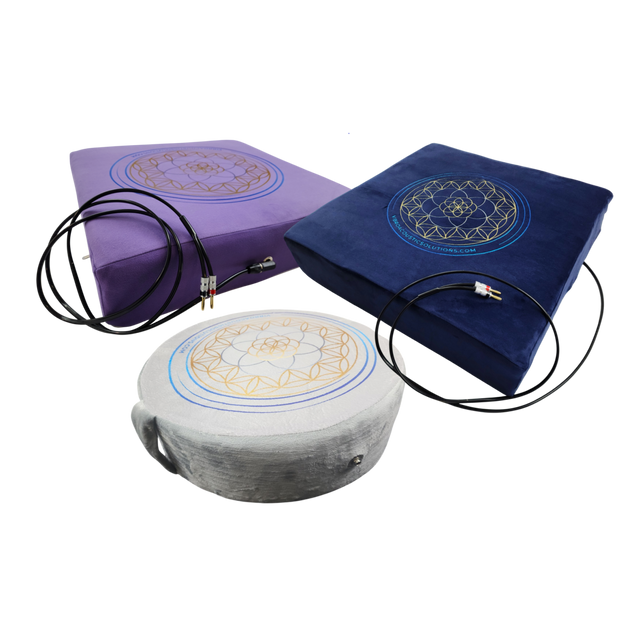
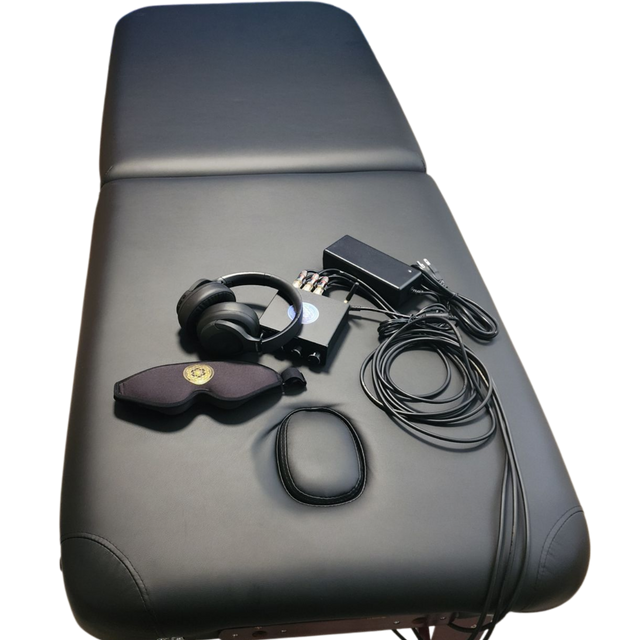
A vibroacoustic session can use the same 40 Hz tone at two very different intensity settings, and the body may experience them very differently. Frequency determines the rate of vibration, measured in Hertz (Hz). Intensity determines how much mechanical energy reaches the body through the bed, cushion, or treatment table. This guide to vibration intensity settings helps you choose a level that feels therapeutic, grounded, and appropriate for the person and setting in front of you.
Start With the Physical Mechanism
Vibroacoustic therapy converts low-frequency sound into tactile vibration. A transducer moves back and forth in response to an audio signal, transferring rhythmic mechanical motion into the surface beneath the body. That motion travels through soft tissue and skeletal structures as gentle pressure waves, often felt as pulsing, humming, or a slow internal massage.
At lower intensities, the sensation may be subtle but still meaningful. The nervous system receives consistent sensory input without demanding attention, which can make lower settings useful for rest, settling, and sensory-sensitive clients. As intensity rises, the displacement of the transducer and the felt movement through the body increase. This can create a more pronounced cellular micro-massage effect and a stronger sense of physical engagement.
Intensity is not the same as volume. The audible track may be quiet while the tactile vibration is substantial, particularly on a well-coupled vibroacoustic bed or massage table attachment. Likewise, turning up speaker volume does not necessarily create more therapeutic body vibration. When available, adjust the tactile output and audio volume independently.
Guide to Vibration Intensity Settings by Goal
There is no universally correct percentage or dial position. A 30% setting on one system can feel very different from 30% on another because transducer power, furniture construction, body weight, padding, and audio source levels all affect the result. Use the setting as a starting point, then let the felt response guide the session.
Gentle intensity for downregulation and sleep support
For calming sessions, begin with a barely-to-clearly perceptible vibration. The person should notice it within the first minute without feeling startled, braced, or compelled to analyze it. Many relaxation protocols use lower frequencies in the 20-60 Hz range, where the vibration often feels broad and enveloping rather than sharp.
A gentle setting works especially well when someone is new to vibroacoustic therapy, highly stressed, fatigued, or seeking pre-sleep support. It also gives the nervous system time to orient to the sensation. In practice, the best level is often one the person can stop actively noticing after several minutes while still feeling held by the rhythm.
Moderate intensity for general wellness and body awareness
Moderate intensity is where many home and clinical sessions begin after a short acclimation period. The vibration is easy to identify through the back, hips, legs, or contact area, but breathing remains natural and the body does not tense against it. Frequencies between 30 and 80 Hz are commonly used in vibroacoustic programs designed for relaxation, body awareness, and comfort.
This range can be useful for a post-workday reset, a massage enhancement, or a session intended to help a client reconnect with physical sensation. It is often more noticeable through a firmer massage table or a thin cushion than through a deeply padded mattress. Adjust for the equipment rather than assuming one setting should translate across systems.
Higher intensity for targeted recovery sessions
A higher setting creates a clear, more assertive tactile experience. It may be appropriate for short, targeted sessions when the recipient enjoys stronger sensory input and has already responded comfortably to gentler levels. Depending on the program, practitioners may work with frequencies from roughly 40-120 Hz to create a more localized or energizing feel.
Higher intensity is not automatically more effective. Too much mechanical input can shift from soothing to distracting, especially around the rib cage, head, neck, or areas of heightened sensitivity. A useful clinical principle is to use the lowest intensity that produces the intended felt response. If a person begins holding their breath, tightening their jaw, or asking when the session will end, reduce the setting.
Use Frequency and Intensity Together
Frequency shapes the character of the vibration. Intensity shapes its magnitude. Pairing them thoughtfully is more useful than treating either control as a stand-alone prescription.
Low frequencies, such as 20-40 Hz, tend to feel slow, spacious, and whole-body when delivered through a large surface. At a moderate tactile level, they can create a deeply settling experience. At high intensity, the same range may feel powerful through the pelvis, back, or chest, so it deserves a gradual approach.
Mid-range frequencies around 40-80 Hz often feel more defined and rhythmic. A 40 Hz setting is widely used in vibroacoustic applications because it produces a distinct, steady pulse through the body. At low-to-moderate intensity, it can be comfortable for extended sessions. At greater intensity, it may be better suited to a shorter interval with feedback from the client.
Higher frequencies, roughly 80-120 Hz, can feel finer and more surface-oriented depending on the equipment. They may require more output to become clearly tactile, but that does not mean the dial should be pushed aggressively. Increase in small increments and reassess after 30 to 60 seconds.
A Practical Calibration Process
Before a session, ensure the system is placed on a stable surface and that cables, transducers, and audio controls are properly connected. Poor mechanical coupling can produce rattling or uneven vibration, tempting you to raise the intensity when the real issue is placement.
Start the chosen program at a low level. Ask the person where they feel it and whether the sensation is comfortable, neutral, or too strong. Increase gradually until the vibration is clear and pleasant. For a home user, this may take only two or three adjustments. In a practice, it is worth documenting the client’s preferred frequency range, contact location, and intensity level for future sessions.
Recheck after the first few minutes. As the body settles into the surface, perception can change. A setting that initially felt ideal may become stronger as attention quiets and tissue contact improves. Conversely, a person may become more comfortable and request a modest increase.
The following cues usually indicate that intensity should come down: persistent muscle guarding, an unpleasant buzzing sensation, dizziness, headache, nausea, anxiety, or discomfort at the contact point. Pause rather than trying to push through. Lower the setting, change the frequency, reposition the body, or end the session if the sensation does not resolve.
Match Intensity to the Person, Not the Playlist
The same soundtrack does not produce the same session for every body. Body size, hydration, muscle tension, sensory processing, pain sensitivity, medication use, fatigue, and emotional state can all shape how vibration is perceived. A client with ADHD or autism-related sensory needs may prefer a predictable, clearly felt rhythm, while another person may regulate best with barely perceptible vibration. Neither response is more correct.
For trauma-informed care, consent and control are part of the setting. Explain what the vibration may feel like before beginning, establish an easy way to pause, and invite feedback without making the client feel they need to tolerate discomfort. Many practitioners find that a slow ramp-up supports trust more effectively than beginning at the session’s final intensity.
Meaning also matters. Some people choose music tuned to 432 Hz, Solfeggio-inspired tracks, or Schumann resonance-themed soundscapes because of the calm, ritual, and emotional connection they create. The tactile setting should still be individualized. Let the sound carry its intention while the intensity remains comfortable for the body receiving it.
Equipment Changes the Experience
A clinical-grade vibroacoustic bed distributes vibration across a larger contact area than a small cushion, so a lower setting can feel expansive and substantial. Cushions may require somewhat more output to be felt through clothing or thicker upholstery, while massage table attachment kits transmit vibration differently depending on the table’s frame, foam density, and client position.
Do not compare numbers across devices. Instead, compare outcomes: Can the person feel the vibration clearly? Does it support the purpose of the session? Can they remain physically at ease? This outcome-based approach is more reliable than chasing a particular percentage on the control panel.
If you have a health condition, implanted device, acute injury, pregnancy-related concern, or heightened sensitivity to vibration, use the equipment guidance and seek individualized direction from an appropriate healthcare professional before starting. A thoughtful setting is part of safe, supportive care.
The best intensity is rarely the most dramatic one. It is the level that gives the body enough rhythmic information to soften, organize, and rest while leaving the person feeling fully in control of their experience.
Latest posts

How to Prepare Sound Sessions That Feel Therapeutic
Read article

Vibroacoustic Cushions Versus Weighted Blankets
Read article