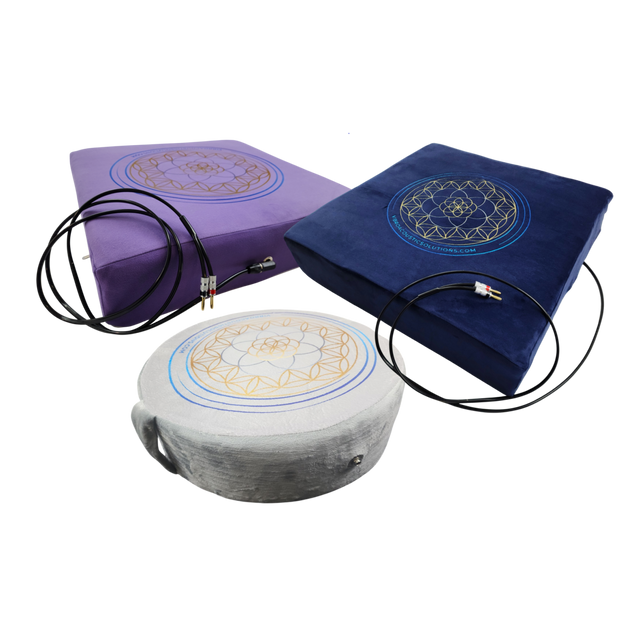
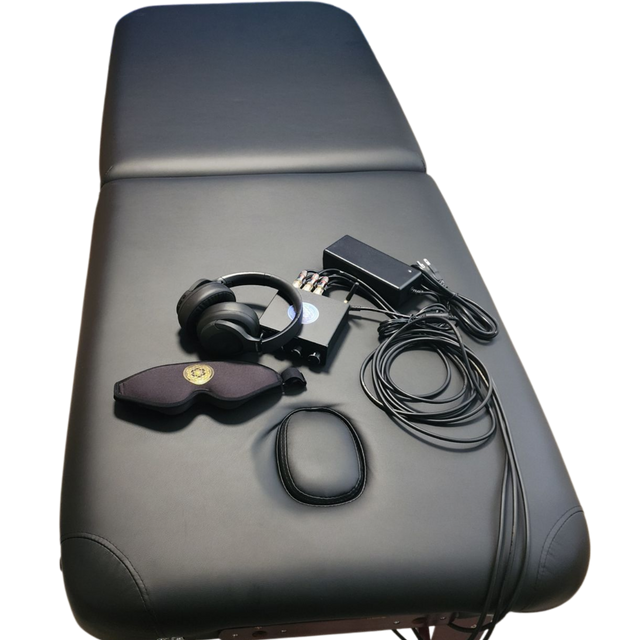
A low bass tone can be heard across a room. Through a tactile transducer, that same tone can be felt through the body as a steady, localized vibration. So, what is a tactile transducer? It is an electromechanical device that converts an audio signal into physical vibration, allowing a chair, bed, cushion, or treatment table to become a surface for felt sound.
For vibroacoustic therapy, that distinction matters. The goal is not simply to make furniture shake. It is to deliver carefully selected low-frequency sound as mechanical stimulation, creating an experience that can support relaxation, body awareness, muscular release, sensory regulation, and recovery.
What Is a Tactile Transducer in Simple Terms?
A tactile transducer is sometimes called a bass shaker, vibration speaker, or haptic transducer. Unlike a conventional loudspeaker, which is designed to move air and produce audible sound, a tactile transducer is designed to transfer energy into a solid surface.
It receives an electrical signal from an amplifier. Inside the unit, a voice coil and magnetic assembly move a weighted mass back and forth at the frequency contained in that signal. When the transducer is securely mounted to wood, metal, or a purpose-built therapeutic platform, that motion travels through the structure as vibration.
If the audio track contains a 40 Hz tone, the transducer moves 40 cycles per second. At 60 Hz, it moves 60 cycles per second. The person resting on the connected surface experiences those cycles as rhythmic vibration through contact points such as the back, hips, legs, feet, or shoulders.
This is the central physical mechanism behind vibroacoustic equipment: sound energy becomes mechanical energy, and mechanical energy is delivered through the body-supporting surface.
How Tactile Transducers Create a Vibroacoustic Experience
A complete system includes more than the transducer itself. The transducer needs an amplifier with enough power to control it cleanly, an audio source containing appropriate low-frequency material, and a surface that can transmit vibration without rattling or creating uncomfortable pressure points.
The mounting surface influences the sensation as much as the transducer model. A solid treatment table, for example, carries vibration differently than a soft foam cushion. A broad wooden panel can distribute low frequencies across a larger area, while a compact cushion can provide more direct stimulation at the back or seat. Proper placement, secure installation, and gain control make the difference between an even therapeutic field and a distracting buzz.
Most vibroacoustic sessions use low-frequency content, often in the range of about 20 to 120 Hz. Many therapeutic programs concentrate within roughly 30 to 80 Hz, where vibration is readily perceived through the body while remaining practical for beds, tables, and cushions. Audible music, nature recordings, guided relaxation, or tonal compositions may be played through separate speakers at the same time. This creates a coordinated experience: the ears receive sound while the body receives synchronized vibration.
The frequencies do not need to be loud in the room to be meaningful in the body. Because the transducer is coupled directly to a physical surface, it can create a substantial felt experience at a comfortable listening level.
Why low frequencies feel different
Low-frequency vibration has a long wavelength and tends to travel efficiently through structural materials. Rather than being experienced only as a sound source in front of the listener, it can be perceived across a contact area as a pulsing, rolling, or gently enveloping sensation.
The body also responds to vibration through several pathways. Mechanoreceptors in the skin detect pressure and movement. Muscles, tendons, and joints provide proprioceptive information about position and motion. The vestibular system is sensitive to movement and rhythm. Together, these sensory inputs can bring attention out of racing thoughts and back toward immediate physical experience.
That is one reason many people describe a well-designed session as grounding. The sensation gives the nervous system clear, rhythmic information to orient around. For a client arriving with stress-related tension or sensory overload, this predictable input can make it easier to settle into massage, breathwork, rest, or another therapeutic practice.
Tactile Transducer vs. a Regular Speaker
Both devices use electromagnetic principles, but their jobs are different. A regular speaker uses a cone to move air. It is optimized for audible detail, including voices, instruments, and higher frequencies. A tactile transducer uses its internal moving mass to vibrate the surface to which it is attached. It is optimized for physical sensation, especially in lower frequency ranges.
A transducer can produce some audible noise, particularly when mounted to a resonant surface, but it should not be selected as a substitute for full-range speakers. Conversely, a standard speaker placed under a massage table cannot reliably create the same direct mechanical coupling. It may add sound to the room, but it will not efficiently deliver vibration through the table and into the client.
For therapeutic use, pairing the two is often the most complete approach. External speakers provide the musical and emotional layer. Tactile transducers provide the somatic layer.
What a Tactile Transducer Can Support
The value of tactile stimulation comes from its ability to make sound tangible. When low-frequency vibration is delivered at a comfortable intensity, it can support a downshift from mental effort into embodied awareness. Many home users incorporate it into evening relaxation, sleep preparation, gentle stretching, meditation, or post-exercise recovery routines.
In clinical and integrative settings, practitioners may use vibroacoustic equipment to deepen a session without requiring active effort from the client. Massage therapists can use it as an added layer beneath hands-on work. Somatic practitioners may use consistent rhythmic vibration to help clients notice breath, tension patterns, or sensations of safety in the body. Sound professionals can combine it with music designed around specific tonal and rhythmic experiences.
Research into vibroacoustic therapy has explored outcomes related to relaxation, pain perception, motor function, stress, and quality of life. Studies and clinical applications vary widely in session length, frequency selection, equipment design, and participant needs, so there is no single setting that fits everyone. Still, the recurring clinical interest is clear: low-frequency vibration is a practical, noninvasive way to deliver sensory input through the whole body or a targeted region.
For people with sensory sensitivity, the trade-off is especially important. More intensity is not necessarily better. Some people respond beautifully to a gentle 30 to 40 Hz experience, while others prefer a more noticeable 50 to 70 Hz pulse. Starting low and adjusting gradually allows the body to lead the session.
Choosing the Right Setup
The right tactile transducer setup depends on where and how it will be used. A home user may want a compact cushion or a conversion kit that brings vibration to an existing recliner or bed. A practitioner may need a massage-table attachment system that is durable, quiet, easy to clean, and simple to operate between appointments. A dedicated vibroacoustic bed offers the largest contact area and can create a more immersive full-body field.
Power matching is essential. An underpowered amplifier may distort when asked to reproduce low frequencies, while an oversized system without thoughtful gain control can create excessive vibration. Installation also matters. A loosely mounted transducer can rattle, waste energy, and pull attention away from the therapeutic experience.
Look for equipment built for low-frequency transmission, with clear guidance on amplifier compatibility, mounting, and volume adjustment. Clinical-grade systems should make it easy to repeat settings and create a reliable experience from session to session. At Vibroacoustic Solutions, this practical design focus helps bring sound-based somatic support to treatment rooms and home environments without making the technology feel inaccessible.
Using Tactile Vibration With Care
A tactile transducer is a tool, not a one-size-fits-all protocol. Begin with short sessions, comfortable volume, and simple low-frequency programs. Notice whether the vibration feels settling, energizing, neutral, or overstimulating. The goal is a sense of supportive contact, not endurance.
People who are pregnant, have implanted electronic devices, have an acute injury, or are managing a complex health condition should consult a qualified healthcare professional before using strong vibration. Practitioners should also incorporate informed consent, check-ins, and the client’s stated sensory preferences into every session.
When sound becomes something the body can feel, a familiar environment can take on a different therapeutic quality. A tactile transducer offers a direct bridge between audio, touch, and nervous system awareness - inviting the body to participate in the listening.
Latest posts

How to Prepare Sound Sessions That Feel Therapeutic
Read article
Guide to Vibration Intensity Settings for Therapy
Read article