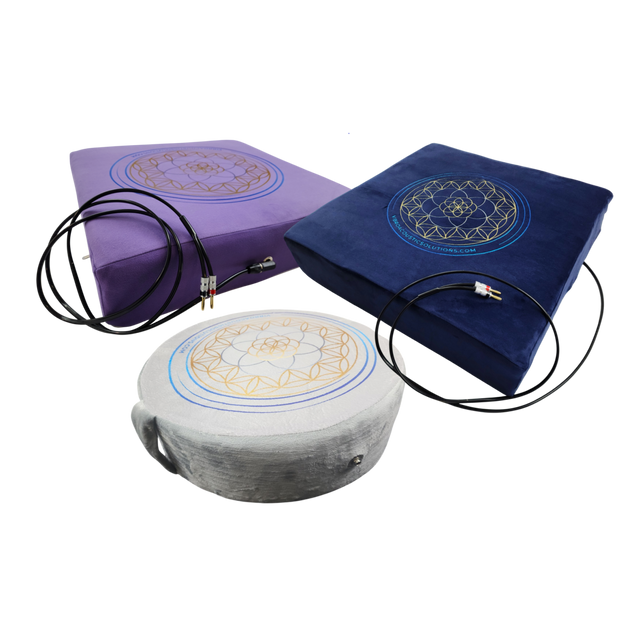
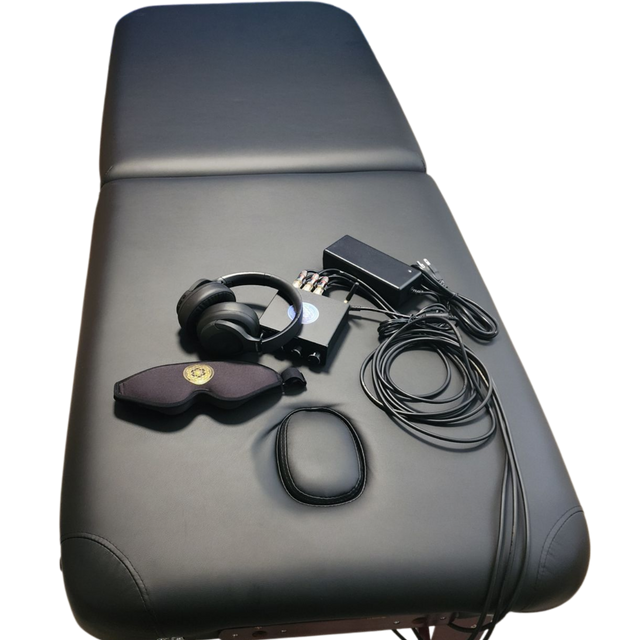
A 40 Hz tone played through ordinary headphones may be heard as a low hum. Delivered through a vibroacoustic bed, cushion, or treatment table, that same frequency becomes something the body can feel: a steady mechanical pulse moving through tissue. That difference helps answer the question, why do low frequencies relax? They do not only reach the ears. When sound is physically coupled to the body, low-frequency vibration can create a clear sensory signal that supports settling, grounding, and nervous system regulation.
Low frequency is physical movement, not just sound
Frequency describes how many cycles occur in one second, measured in hertz (Hz). A 40 Hz signal cycles 40 times per second. As frequency decreases, the sound wave becomes slower and longer. Low-frequency sound is often felt as much as heard, especially when it is delivered through a surface that supports the body.
In vibroacoustic therapy, transducers convert an audio signal into controlled mechanical vibration. Instead of asking the nervous system to interpret sound only through hearing, the system sends rhythmic information through the skin, muscles, connective tissue, and skeletal structure. This is why a well-designed vibroacoustic session can feel fundamentally different from listening to relaxing music through speakers.
The body is equipped to detect vibration. Specialized sensory receptors in the skin and deeper tissues respond to pressure, stretch, and rapid mechanical change. Pacinian corpuscles, for example, are particularly responsive to vibration, while muscles and joints continuously relay information about position and movement to the brain. A low-frequency session gives these systems a consistent, predictable stream of input.
Predictability matters. When the brain receives steady sensory information without a demand to react, it may reduce its vigilance. The result can be a felt shift from bracing to settling: slower breathing, softer muscle tone, a heavier feeling in the limbs, or the sense that it is finally safe to rest.
Why do low frequencies relax the nervous system?
Relaxation is not simply the absence of stress. It is an active physiological state involving the autonomic nervous system, which continuously adjusts heart rate, breathing, muscle tension, digestion, and alertness. Low-frequency vibration may support this shift by giving the nervous system an organized sensory rhythm to orient around.
A slow, stable pulse can function much like other forms of rhythmic regulation, including rocking, paced breathing, walking, or repetitive touch. The input is external, but the response is embodied. Many people naturally begin to breathe more slowly when the vibration beneath them is even and comfortable. As breathing settles, the body may move toward parasympathetic activity, the branch of the autonomic nervous system associated with restoration and recovery.
Research on vibroacoustic therapy has reported promising changes in subjective relaxation, pain perception, anxiety, muscle tension, and quality of life across varied clinical and wellness settings. Findings differ based on the population, session length, music selection, frequency range, and equipment used. Still, a recurring theme is that low-frequency stimulation may be especially useful when a person is too activated, fatigued, or uncomfortable to benefit from talk-based relaxation alone.
There is also a practical somatic reason low frequencies can feel calming: they are difficult to ignore. A gentle vibration through the back, hips, or legs provides immediate information about where the body is in space. For people who feel scattered, tense, overstimulated, or disconnected from physical sensation, that clear body-based feedback can be deeply regulating.
The frequency ranges most often used for relaxation
There is no single relaxation frequency that works identically for every body. Vibroacoustic therapy is most effective when frequency, amplitude, music, session duration, and positioning are adjusted to the individual. Even so, several ranges are commonly used in clinical-grade vibroacoustic programs.
20-40 Hz: Deep, grounding stimulation
Frequencies between 20 and 40 Hz are often experienced as slow, substantial, and grounding. They are commonly used when the goal is deep rest, physical settling, or a strong sense of contact with the treatment surface. Around 30 Hz, vibration can feel especially broad and enveloping through the torso and larger muscle groups.
At the lower end of the range, amplitude should be managed carefully. More intensity is not automatically more therapeutic. A comfortable, clearly perceptible vibration is usually more supportive than a powerful sensation that causes guarding or sensory overload.
40 Hz: Rhythmic, centered, and widely studied
Forty hertz is one of the most recognized frequencies in vibroacoustic practice. It is often used for relaxation, muscle release, and focused sensory regulation. Researchers have also explored 40 Hz rhythmic stimulation in relation to neural entrainment, making it a point of ongoing interest in sound and neuroscience research.
For many users, 40 Hz feels neither too slow nor too buzzy. It can provide a stable, centered rhythm that works well with calm music, guided breathing, or a quiet treatment environment.
50-80 Hz: More localized body awareness
As frequencies move upward, vibration may feel more active, textured, or localized. The 50-80 Hz range can be useful for bringing awareness to areas of muscular holding or for sessions that blend relaxation with recovery-oriented bodywork. Some people find these frequencies comforting; others prefer lower settings when they are already highly activated.
The right range depends on the person in front of you. Sensory preferences, body size, tissue sensitivity, stress level, sound sensitivity, and the goal of the session all influence what feels regulating.
Why vibration can feel safer than trying to “relax”
Being told to relax can create pressure, especially for someone living with chronic stress, persistent discomfort, trauma-related tension, ADHD-related sensory needs, or sleep disruption. The body may be accustomed to staying alert. In that state, quiet alone can feel unfamiliar rather than peaceful.
Vibroacoustic therapy offers a different entry point. It does not require someone to visualize, explain their feelings, or force their thoughts to stop. The experience begins with sensation: a measured pulse beneath the body, often paired with carefully selected music. That sensory foundation can make rest more accessible because the nervous system has something consistent to track.
This is also where music matters. Low frequencies provide the physical component, while melody, tempo, harmonic movement, and personal associations shape the emotional experience. A client may respond beautifully to ambient music with a 30 Hz undercurrent, while another settles more easily with nature sounds, familiar instrumental music, or a tone-based program. The technology provides the delivery system; personalization creates the therapeutic fit.
A practical approach to low-frequency sessions
For home users, a useful starting point is a 20-30 minute session at a low-to-moderate amplitude. Choose a position that allows the body to be fully supported, such as lying on the back with a cushion under the knees or reclining comfortably. Begin with a frequency in the 30-40 Hz range and notice whether your jaw, shoulders, abdomen, and hands begin to soften.
For practitioners, start each session with a short sensory check-in. Ask whether the client prefers more or less vibration, whether the rhythm feels soothing or distracting, and where they feel it most clearly. Small adjustments can dramatically change the experience. A lower amplitude, a different body position, or a shift from 50 Hz to 40 Hz may be all that is needed to move from stimulation to regulation.
It is helpful to allow a few quiet minutes after the vibration ends. The transition matters. Clients often notice their most profound sense of calm not during the strongest sensation, but in the stillness that follows it.
Low frequencies work best when the body has a choice
Low-frequency vibration is not a switch that forces relaxation. It is a therapeutic input that can invite the body toward a more regulated state. Some days, 30 Hz may feel grounding and restorative. On another day, the same setting may feel too present, particularly when someone is fatigued, overstimulated, or sensitive to touch and sound.
The most supportive practice is responsive rather than prescriptive: begin gently, listen to the body, and make room for adjustment. When vibration feels safe, steady, and well matched to the person receiving it, low frequencies can become more than something you hear. They can become a reliable pathway back to rest.
Latest posts

Vibroacoustic Cushions Versus Weighted Blankets
Read article

Best Home Wellness Vibration Products for Relief
Read article