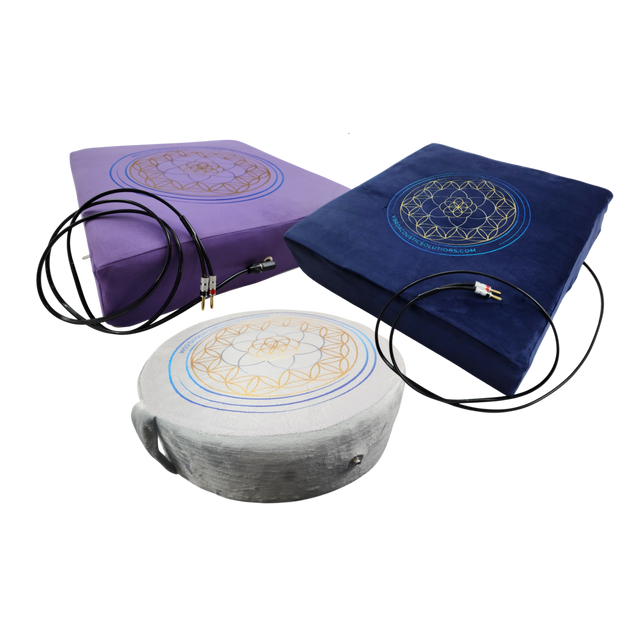
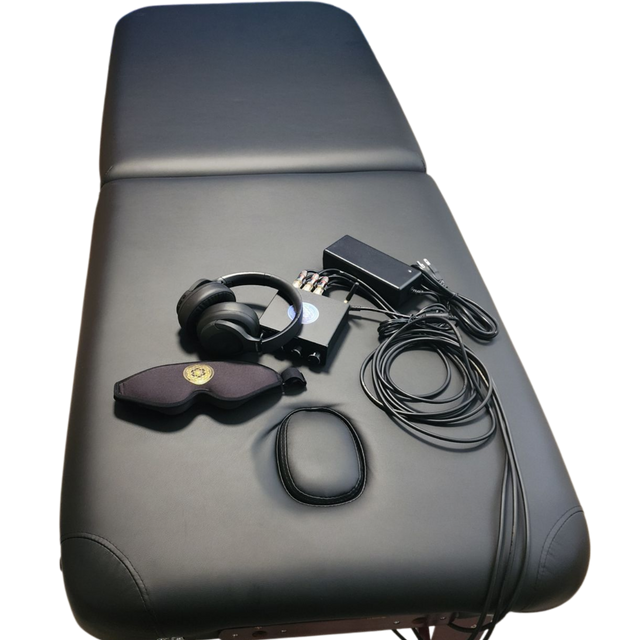
A speaker playing calming music can change the atmosphere of a room. A well-designed vibroacoustic system changes the experience in the body. This home sound therapy system review focuses on that distinction: whether a system can deliver low-frequency sound as measurable tactile vibration, comfortably and consistently enough to support nervous system regulation, rest, and recovery.
For home users, the right choice is rarely about the most features or the largest speaker. It is about contact, frequency range, acoustic control, and whether the system fits into a routine you will actually use. For practitioners, those same details determine whether a session feels clinically intentional or simply like music with extra bass.
What a Home Sound Therapy System Actually Does
Vibroacoustic therapy uses low-frequency sound, typically transmitted through transducers built into a bed, mat, cushion, or treatment-table attachment. A transducer converts an audio signal into physical movement. When the body rests against the surface, those oscillations travel through the contact points of the back, hips, legs, or feet as gentle vibration.
This is the physical mechanism that makes a dedicated system different from headphones or a conventional soundbar. The ears receive the audible portion of the track, while the body receives a synchronized tactile signal. Frequencies between roughly 20 and 120 Hz are especially relevant because they are readily felt as vibration. Lower frequencies around 20 to 50 Hz can feel broad, grounding, and deeply physical; frequencies from about 50 to 100 Hz often feel more localized and rhythmic depending on the surface and program.
The experience is not about force. In a properly calibrated system, vibration is delivered at a comfortable level that invites the body to settle rather than brace. Many users describe a shift from mental overactivity into a more embodied awareness of breath, muscle tone, and internal rhythm.
Home Sound Therapy System Review: The Features That Matter
A meaningful review starts with the system's signal path, not its appearance. A beautiful cushion with weak transducers or a poorly matched amplifier may produce a vague rumble rather than clean, usable vibration. Conversely, a thoughtfully engineered conversion kit can turn an existing massage table, recliner, or bed into a highly practical therapeutic surface.
Frequency response and usable low end
Look for a system designed to reproduce low-frequency material rather than merely boost bass. Consumer speakers often emphasize audible bass around 60 to 100 Hz, but therapeutic vibroacoustic programs may include content below that range. A system capable of working across approximately 20 to 120 Hz gives more room for targeted sound programs, sustained tones, music, and rhythmic protocols.
The number on a specification sheet is not the full story. Surface construction affects what you feel. Foam density, upholstery thickness, body position, and the placement of the transducers all influence how evenly vibration reaches the body. A system should feel present across the contact surface, not concentrated in one uncomfortable point beneath the spine.
Transducer placement and body contact
For full-body sessions, a vibroacoustic bed or table attachment generally provides the most immersive contact. It can support a supine position with vibration distributed through larger areas of the body. This can be particularly valuable for people seeking a dedicated rest practice or for clinics that want to integrate sound-based somatic support into massage, bodywork, or recovery sessions.
Cushions are more portable and more affordable. They work well in a favorite chair, on a sofa, or behind the back during a brief decompression practice. The trade-off is coverage: a cushion can offer excellent localized vibration, but it does not create the same whole-body field as a bed or table system.
DIY conversion kits occupy a useful middle ground. They make sense when you already have furniture or a treatment table you love and want to add clinical-grade vibroacoustic capability without replacing it. Installation quality matters here. Secure mounting, correct wiring, and sensible transducer placement are central to a clean, reliable result.
Amplifier control and audio quality
The amplifier is the control center of the experience. It should provide enough power for the number and type of transducers in the system, with clear volume control and dependable connectivity. Underpowered amplification can make vibration feel thin. Excessive power without control can make the surface feel abrupt or fatiguing.
A useful home system allows the tactile level to be adjusted independently from the audible music when possible. Some people prefer a quiet room with primarily felt vibration; others want guided meditations, nature recordings, ambient music, or tonal programs to be part of the session. Having control over both lets one surface serve multiple needs.
Audio quality is also worth considering. Harsh highs, distortion, or unpredictable Bluetooth behavior can interrupt the sense of safety that makes restorative sessions possible. Simple, reliable controls often matter more than an overloaded app.
Which System Fits Your Space and Goals?
The best system depends on where you need support to happen. A home user managing evening stress or sleep preparation may benefit most from a cushion that can be used every day without rearranging a room. Someone building a recovery-focused wellness space may find that a dedicated vibroacoustic bed creates the stronger ritual and the more complete physical experience.
For massage therapists and integrative practitioners, a table attachment kit can be especially compelling. It preserves familiar treatment workflows while adding a tactile sound layer that clients can feel throughout a session. The aim is not to distract from skilled hands-on care. It is to create a steadier sensory environment that may help clients arrive, settle, and integrate their session more fully.
Consider practical factors before choosing:
- Available space: A bed offers the fullest format but needs a permanent footprint. Cushions and conversion kits are easier to store or move.
- Primary position: Think about whether you want support while seated, lying on your back, or receiving treatment on a massage table.
- Session length: For 10- to 20-minute daily practices, convenience often wins. For longer restorative sessions, comfort and full-body distribution become more important.
- Who will use it: A personal system can be tailored to one body and one routine. A practitioner system needs durable materials, repeatable setup, and intuitive controls for many clients.
The Evidence Lens: What Researchers Are Studying
The science of somatic regulation is interested in how rhythmic sensory input influences the body’s stress response, perception of discomfort, and state of arousal. Vibroacoustic therapy combines two forms of input at once: audible sound and mechanosensory stimulation through the skin, muscles, and connective tissue.
Research has explored vibroacoustic interventions in contexts including relaxation, pain management, motor rehabilitation, and care for people with complex sensory needs. In many protocols, researchers use low frequencies in the 30 to 120 Hz range, delivered through chairs, mattresses, or other contact surfaces. Findings commonly examine self-reported relaxation, changes in perceived discomfort, mood, muscle tone, or physiological measures such as heart rate variability.
Heart rate variability is of particular interest because it reflects changing patterns in the autonomic nervous system. It is not a score of wellness by itself, but it offers researchers one window into how the body shifts between activation and recovery. Gentle, predictable vibration paired with slow music or breathing cues can give the nervous system consistent sensory information to organize around.
Individual response still matters. Some people love a low 30 Hz pulse and find it deeply settling. Others prefer gentler tactile settings, more melodic music, or a gradual increase in intensity. Sensory-sensitive users often do best when they begin at low volume for short sessions and adjust from there.
Sound Programs: From Therapeutic Tones to Meaningful Music
A versatile system should not lock you into one kind of audio. Slow instrumental tracks, nature-based soundscapes, guided breathwork, binaural-style listening programs, and frequency-focused compositions can each create a different context for practice.
Many people feel a strong connection to 432 Hz music, Solfeggio tones, or recordings inspired by the Earth’s Schumann resonance near 7.83 Hz. These traditions carry history, intention, and a feeling of resonance that can make a session more personal. In a vibroacoustic setting, the audible program can be paired with tactile frequencies in the range a transducer can physically reproduce, creating an experience that is both emotionally meaningful and physically grounded.
For a first session, choose material with a slow tempo, limited sudden changes, and a steady low-frequency foundation. Lie or sit comfortably, start the vibration lower than you think you need, and give your body several minutes before deciding whether to adjust it. More intensity is not automatically more therapeutic.
What Makes a System Worth the Investment?
A home sound therapy system earns its place when it reduces friction between intention and practice. If it takes ten minutes to connect cables, move furniture, and troubleshoot an app, it may remain unused. If it is ready for a 15-minute regulation session after work or a longer recovery practice on a weekend, it becomes part of the environment that supports your well-being.
Vibroacoustic Solutions offers beds, cushions, massage-table attachment kits, and DIY options because there is no single correct format for therapeutic sound. The more useful question is whether the system brings reliable low-frequency contact to the place where you already rest, recover, or care for others.
Choose the surface that makes you want to return to it. A consistent, comfortable sensory practice can become a quiet signal to the body: this is a place where it is safe to soften, listen, and recover.
Latest posts

Therapy Table Attachment Review for Practitioners
Read article

Massage Table Kit vs Bed: Which Fits Your Practice?
Read article