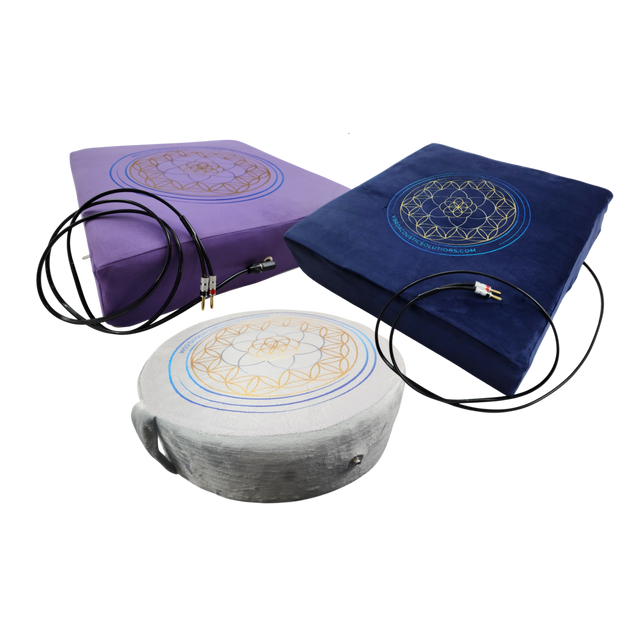
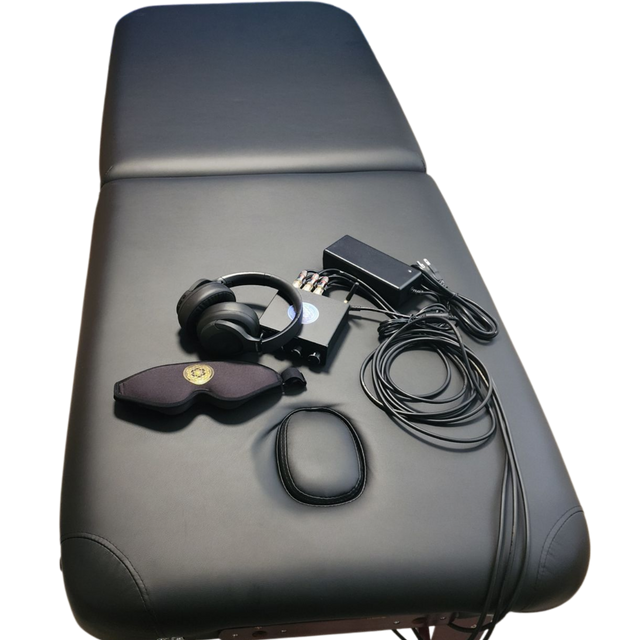
A massage table can support excellent hands-on work, but the right transducer changes what the client feels beneath the surface. This massage table transducer review focuses on the factors that determine whether low-frequency sound becomes a distracting buzz or a grounded, whole-body therapeutic experience: frequency response, mechanical coupling, output control, comfort, and real-world setup.
What a Massage Table Transducer Actually Does
A transducer is not simply a speaker mounted under a table. It receives an audio signal from an amplifier and converts that signal into mechanical energy. Instead of primarily moving air to create audible sound, it transfers vibration into the table structure, then through the padding and into the body.
That physical pathway matters. Low-frequency vibration travels through larger areas of tissue differently than airborne music. When a client lies on a properly coupled treatment table, they may feel a steady wave through the back, hips, legs, and rib cage. The experience can support body awareness, muscular settling, and a sense of nervous system regulation while the practitioner continues massage, bodywork, or somatic therapy.
Most vibroacoustic table applications operate in a low-frequency range of roughly 20 to 120 Hz. The lower end is felt as spacious, slow movement. Frequencies around 40 to 60 Hz often create a fuller, more centered sensation through the torso and pelvis, while 80 to 120 Hz can feel more localized and energizing. The most useful system is not necessarily the one with the highest advertised power. It is the one that delivers these frequencies evenly, quietly, and comfortably through the specific table being used.
Massage Table Transducer Review: What Separates a Good System
A meaningful review begins with the transducer's behavior under a real person, not a specification sheet alone. A quality unit should create tactile vibration with minimal rattling, heat, or audible distortion. It should also retain enough detail at lower frequencies that a 30 Hz tone feels intentional rather than weak or muddy.
Frequency range and usable low end
Look beyond a broad frequency claim. A system may state that it reaches 20 Hz, yet produce very little usable vibration there. The question is whether lower tones remain perceptible and stable after the transducer is attached to a padded table and loaded with body weight.
For relaxation-focused sessions, many practitioners appreciate the 30 to 60 Hz region because it can feel slow, enveloping, and easy to integrate with Swedish massage, breathwork, or down-regulation practices. For body awareness or more alert sessions, settings between 60 and 100 Hz may be appropriate. A capable transducer should handle movement across this range without sudden jumps in intensity.
Research and clinical applications of vibroacoustic therapy have used a variety of low-frequency protocols, commonly within the 20 to 120 Hz range. Small clinical and pilot studies have reported improvements in perceived relaxation, pain experience, and anxiety measures following vibroacoustic sessions. Results vary with the person, protocol, sound program, and therapeutic setting, which is why controllability matters more than a one-size-fits-all frequency prescription.
Mechanical coupling and table construction
The table is part of the instrument. A transducer mounted to a rigid, well-built table frame can distribute vibration very differently from one mounted to a lightweight portable table with flexible panels. If the contact point is loose, the energy may turn into an audible rattle instead of a clean tactile signal.
A strong attachment design uses secure mounting hardware and positions the transducer where vibration can travel through the table's central structure. The ideal placement depends on the table's frame, upholstery, cable routing, and intended client position. For most full-body sessions, central placement supports a more balanced experience than mounting at the head or foot end alone.
Weight capacity deserves attention as well. The transducer and mounting system should not compromise the table's working load or its stability during treatment. Portable tables can work beautifully with an attachment kit, but they may need lower output settings than heavier stationary tables. That is a trade-off worth accepting when mobility is essential.
Output control matters more than maximum power
More power does not automatically produce better therapy. Excessive output can create a sharp, distracting vibration that competes with hands-on work and makes it difficult for a client to settle. Fine volume control allows the practitioner to match intensity to body size, table construction, frequency, and client preference.
A useful setup has an amplifier designed to drive the transducer safely, with clear gain control and enough headroom to avoid distortion. It should make it easy to begin at a low level, gradually increase intensity, and lower the output immediately if the client reports discomfort. A dedicated volume control within reach of the treatment area is a practical advantage during sessions.
Audible noise and treatment-room atmosphere
Some audible sound is normal, especially with very low tones or when the table is on a hard floor. Still, a well-installed system should emphasize felt vibration rather than mechanical noise. Buzzing hardware, loose cables, and table legs that chatter against flooring can pull attention away from the therapeutic environment.
Before evaluating the system, test it with the room quiet and the table empty, then again with someone lying on it. Check several frequencies, including 30 Hz, 40 Hz, 60 Hz, and 80 Hz. Listen for rattles at each setting. Often, a small adjustment to mounting tension, cable position, or floor contact resolves what initially appears to be a transducer problem.
What Clients May Feel Across Different Frequencies
The body does not experience every frequency in the same way, and neither does every client. A low 20 to 40 Hz program may feel like a broad pulse or gentle internal movement, especially through the pelvis, abdomen, and back. Mid-low frequencies around 40 to 70 Hz are often experienced as fuller and more physically present. Higher settings in the 70 to 120 Hz range can bring a clearer, more focused vibration through the contact areas of the table.
These responses are personal. Someone with a highly activated nervous system may prefer barely perceptible input at first, while another person may find a more noticeable vibration deeply settling. For trauma-informed and sensory-aware practice, consent and choice are central. Invite clients to describe the experience in simple terms: too strong, too subtle, too concentrated, or comfortable.
The sound source also shapes the session. Sine-wave programs make frequency changes easy to perceive and are useful for structured vibroacoustic sessions. Music with a well-designed low-frequency layer can feel more emotionally spacious and may blend naturally into massage. Some clients are drawn to 432 Hz music, Solfeggio-based compositions, or other meaningful sound traditions. When these recordings are paired with appropriately designed tactile frequencies, they can create a setting that feels both personally resonant and physically grounding.
Practitioner Use Versus Home Use
For a massage therapist or clinic owner, the best transducer system is usually one that disappears into the workflow. It should install securely, withstand repeated sessions, and allow fast adjustments without interrupting care. A table attachment is particularly valuable when practitioners want to add clinical-grade vibroacoustic support without replacing a trusted treatment table.
Home users may prioritize simpler setup, compact storage, and an easy way to create a restorative routine before sleep or after demanding days. In that setting, a massage table attachment can still be effective, though comfort, cable management, and amplifier placement become even more important. A system should feel approachable enough to use consistently rather than like technical equipment that stays in a closet.
Vibroacoustic Solutions offers massage table attachment options for practitioners and home users who want to convert an existing surface into a sound-based therapeutic system. The practical value is clear: the table already supports the body, and the transducer adds a low-frequency tactile layer without requiring a separate full-size vibroacoustic bed.
Installation, Safety, and Session Design
Installation should be deliberate. Secure the transducer according to its mounting requirements, keep wires away from moving table parts, and ensure that the amplifier has airflow and a stable power connection. Test the table before every new client, particularly after moving a portable setup.
Start sessions at low intensity. Give the client a few minutes to notice the vibration before changing frequency or volume. A gentle 30 to 45 Hz program can be a thoughtful opening during grounding work, while a broader range may fit a longer relaxation or recovery session. If a person has a health condition, is pregnant, has an implanted electronic device, or has concerns about vibration exposure, encourage consultation with an appropriate licensed health professional before use.
The Best Review Question to Ask
The most useful question is not, “Does this transducer vibrate?” Nearly all of them do. Ask whether it can deliver calm, controlled, low-frequency mechanical energy through your actual table, for your actual clients, without taking away from comfort or clinical focus.
When the answer is yes, the transducer becomes more than an add-on. It becomes a quiet foundation under the session - one that gives the body another pathway to feel supported, sensed, and safely at rest.
Latest posts


Vibroacoustic Systems for Therapeutic Regulation
Read article