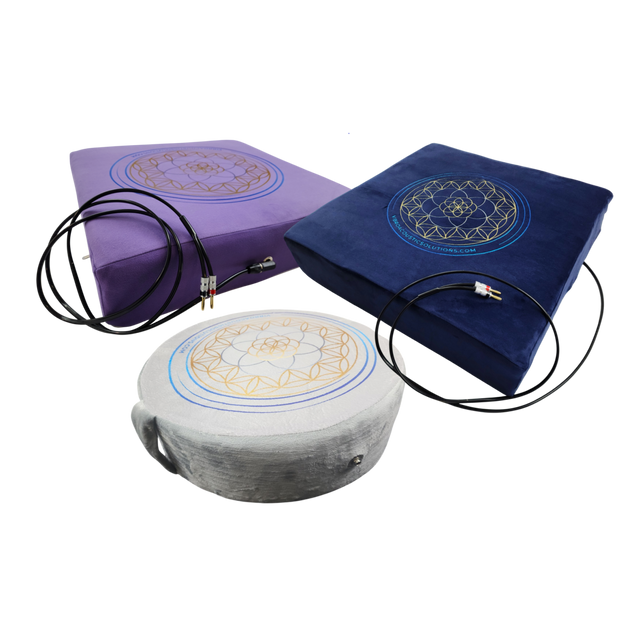
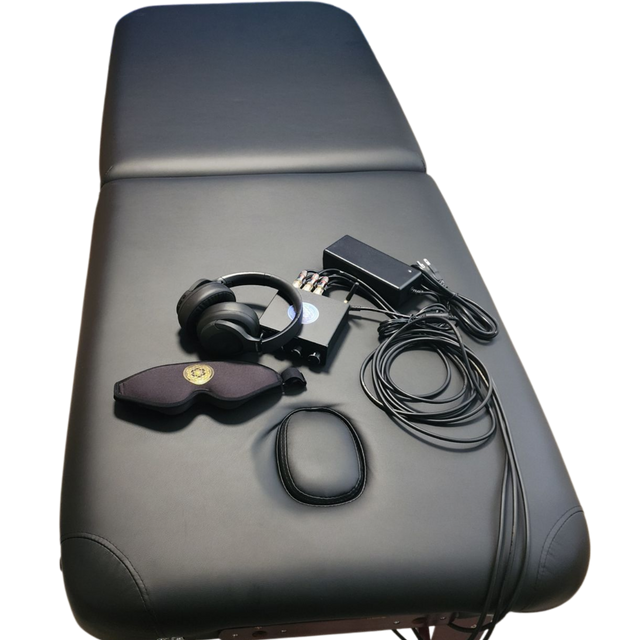
A sound frequency mat vs cushion decision is really a decision about where you want vibration to meet the body. Both use low-frequency sound to create tactile vibration, but their contact area, positioning, and therapeutic role are very different. A mat can create an immersive, whole-body experience for rest and recovery. A cushion brings focused vibration to a chair, massage table, or specific area of tension.
The best choice is not automatically the largest system or the most portable one. It depends on your goals, your treatment environment, the positions your body tolerates best, and whether you need a personal regulation tool or a flexible addition to professional care.
How vibroacoustic frequency reaches the body
Vibroacoustic therapy begins with a transducer, a component that converts an audio signal into physical vibration. Instead of only hearing a low tone through speakers, the body feels it through the surface beneath it. Frequencies commonly used in vibroacoustic settings fall between about 20 and 120 Hz, with many relaxation and body-based protocols concentrating in the 30 to 80 Hz range.
At these lower frequencies, sound has enough physical movement to be felt through soft tissue, muscle, and contact points with the furniture. The sensation is often described as rhythmic, grounded, or gently pulsing. This is why the construction of the surface matters: the body does not receive vibration in the same way when it is lying across a full-length mat as when it is supported by a compact cushion.
Researchers studying vibroacoustic therapy have explored its effects on relaxation, perceived pain, muscle tone, stress response, and quality of life. Clinical protocols vary widely, but sessions often use 20 to 40 minutes of low-frequency stimulation paired with calming music, breathwork, or quiet rest. The most useful frequency is not universal. A steady 40 Hz program may feel organizing and clear for one person, while a slower 30 Hz or 32 Hz experience may feel more settling for another.
Sound frequency mat vs cushion: the core difference
A sound frequency mat distributes vibration across a larger area of the body. When used on a bed, recliner, floor surface, or treatment table, it can contact the back, hips, legs, and sometimes shoulders at once. That broad contact supports a more immersive sensory experience, particularly when the goal is full-body downshifting after stress, physical exertion, or an overstimulating day.
A vibroacoustic cushion concentrates the experience. It is typically placed behind the back, under the hips, beneath the calves, or on a chair or treatment table. Because the vibration is localized, a cushion can be especially practical when a person spends most of their day seated, cannot comfortably lie flat, or wants to bring focused sensory input to a particular body region.
Neither format is inherently more therapeutic. The difference is dosage and distribution. A mat gives the nervous system a larger field of tactile information. A cushion offers a smaller, more targeted point of contact that can be easier to position and integrate into daily life.
When a full-body frequency mat makes more sense
A mat is often the better fit for home users building a dedicated recovery ritual. Lying down reduces the postural work of sitting, which can make it easier to notice the vibration, slow breathing, and settle into stillness. For people who experience widespread muscular guarding or carry stress through several areas of the body, a larger contact surface can feel more complete than a single-point device.
This format also works well for sessions organized around sleep preparation. A 20- to 30-minute session before bed may create a clear transition from activity to rest, especially when paired with low lighting and a familiar soundscape. Some people prefer frequencies around 30 to 40 Hz for this type of practice, while others respond well to gently modulating programs that move through a range rather than holding one tone.
In a clinic, a mat can help create a more enveloping treatment experience on a massage table or reclined surface. It is especially useful for massage therapists, somatic practitioners, and integrative providers who want vibration to support the beginning or closing phase of a session. The client can feel the sound through the body while remaining fully clothed and supported.
The trade-off is space. Mats require a surface large enough to use comfortably, and they are most effective when they are not bunched, folded sharply, or placed on an unstable base. They are less convenient for someone who wants a quick session at a desk or prefers upright positioning.
A mat may be the better choice if you want:
- Full-body relaxation, recovery, or sensory grounding
- A dedicated lying-down practice for evening or post-exercise use
- Broad contact across the back, hips, and legs
- A more immersive treatment add-on in a clinic or studio
When a vibroacoustic cushion is the smarter choice
A cushion brings sound-based vibration into the places where people already spend time. Placed in an office chair, reading chair, vehicle seat, or treatment table, it can make short regulation sessions more realistic. Consistency often matters more than creating the perfect environment once a week.
For a home user, a cushion can support a five- to 15-minute reset between meetings, after school pickup, or before transitioning into the evening. Its smaller size can also be helpful for people who find full-body vibration too intense at first. Starting with one contact area and a lower volume allows the body to become familiar with the sensation gradually.
For practitioners, cushions offer placement flexibility. One client may benefit from support behind the thoracic spine while receiving bodywork. Another may prefer vibration beneath the knees, pelvis, or feet while resting on a treatment table. This adaptability makes a cushion a useful entry point for practices that want to add vibroacoustic support without reorganizing the entire treatment room.
A cushion has limits, however. It cannot replicate the broad sensory coverage of a mat, and placement changes the experience significantly. Under the low back, vibration may feel deep and anchoring. Behind the upper back, it can feel more expansive. Under the feet or calves, it may create a distinctly different grounding effect. That variability is a strength, but it requires a little experimentation.
Frequency selection matters as much as format
The physical design determines where vibration lands. The audio program determines its rhythm and character. Lower frequencies near 20 to 30 Hz are often perceived as slow and weighty. Frequencies around 40 Hz can feel more defined and rhythmic. The 50 to 80 Hz range may feel more activating or muscular, depending on volume, body position, and the individual receiving it.
Many people also choose tones for their emotional or spiritual resonance. Frequencies such as 432 Hz, Solfeggio-based music, and nature-infused soundscapes can make a session feel personally meaningful. When those audible tones are paired with a properly designed low-frequency tactile track, the experience can engage both listening and touch.
Intensity deserves as much attention as Hz. More vibration is not always better. A comfortable level should feel clear and present without causing bracing, discomfort, numbness, or agitation. In professional settings, checking in before and during the session helps the practitioner adjust volume, placement, and duration to the client’s response.
How to choose for home or practice
Choose a mat when the intended experience is spacious, reclined, and whole-body. Choose a cushion when flexibility, portability, and localized support matter more. If you are equipping a practice, consider the positions you use most often. A massage-focused practice may benefit from a table-compatible cushion or attachment system, while a relaxation room may call for a larger mat or bed-based setup.
For either option, begin with short sessions. Ten to 20 minutes at a moderate level is enough to learn how the body responds. Notice changes in breath, jaw tension, muscle tone, mood, and readiness for sleep or activity. These observations help turn vibroacoustic therapy from a novelty into a repeatable somatic regulation practice.
Vibroacoustic Solutions designs systems around this practical reality: therapeutic sound works best when it fits the body, the room, and the rhythm of real life. The right surface is the one you will use consistently, safely, and with enough comfort to let your nervous system receive the vibration rather than resist it.
A mat can become a restorative destination. A cushion can become the small, reliable point of support that makes regulation possible in the middle of an ordinary day. Both offer a meaningful way to let sound be felt, not just heard.
Latest posts

Therapeutic Chair System Review for Home and Clinics
Read article
A Practical Guide to Clinic Relaxation Technology
Read article
A Trauma Informed Sound Therapy Example in Practice
Read article