A busy grocery store, a scratchy shirt tag, a late meeting, or an unexpected change in plans can push the nervous system past its comfortable processing range. Learning how to support sensory regulation means looking beyond behavior and asking a more useful question: what kind of input is the body receiving, and what kind of input does it need to feel organized again?
Sensory regulation is not about making every environment quiet, still, or perfectly controlled. It is the ongoing ability to notice sensory information, process it, and respond without becoming overwhelmed, shut down, restless, or disconnected. For many adults, children, and clients in therapeutic settings, the most effective support is consistent, body-based, and tailored to the individual nervous system.
What sensory regulation means in the body
The nervous system is constantly sorting information from both the outside world and inside the body. Light, sound, touch, movement, temperature, and smell all matter. So do interoceptive signals such as hunger, muscle tension, heart rate, fatigue, and the feeling of a full bladder. The brain integrates this information to decide whether a person can stay engaged, needs more alertness, or needs protection and recovery.
When input is manageable, the body can remain in a flexible state of attention. When stimulation exceeds capacity, the stress response may rise. This can look like irritability, panic, fidgeting, headaches, emotional flooding, insomnia, withdrawal, or difficulty finding words. Under-responsive states can look different: low energy, numbness, trouble initiating tasks, or a strong need for intense movement or pressure.
This is why sensory support is highly individual. One person may settle with quiet and dim light, while another needs rhythmic movement, firm pressure, or low-frequency sound to feel present. The goal is not to eliminate sensation. It is to provide the right dose of sensation at the right time.
How to support sensory regulation with predictable input
Predictability reduces the processing burden on the nervous system. A reliable morning sequence, a familiar transition ritual after work, or a consistent wind-down routine gives the brain fewer surprises to manage. This is especially helpful during periods of stress, pain, disrupted sleep, trauma-related tension, or high demand.
Start by observing patterns for several days. Notice what happens before dysregulation, what the body does during it, and what genuinely helps afterward. A person who becomes agitated after video calls may need visual rest and movement. Someone who feels depleted after caregiving may need low light, quiet, warmth, and time without conversation.
Build regulation into the day before overwhelm peaks. A two-minute grounding pause between appointments is often more effective than waiting until the body is fully overloaded. For clinic owners and practitioners, this may mean allowing a few quiet minutes between clients, reducing harsh overhead lighting, and offering clients clear information about what sensations to expect during a session.
Use the sensory systems intentionally
The most useful sensory tools tend to be simple enough to use consistently. Consider the sensory systems involved rather than relying on a one-size-fits-all routine.
Proprioceptive input, which comes from muscles and joints, is often organizing because it gives the brain clear information about body position. Slow resistance exercises, carrying a moderately weighted item, wall pushes, gardening, or a supported stretch can provide this type of input. Deep pressure may feel grounding for some people, though it should always be voluntary and comfortable.
Vestibular input comes through movement and balance. Gentle walking, rocking, cycling, or slow swaying can help some people transition out of stress. Faster spinning or intense movement may be energizing for one person and dysregulating for another, so pace matters.
Auditory support deserves the same individualized approach. Some nervous systems recover best in near silence, while others benefit from steady, predictable sound. Rhythmic music, nature recordings, or carefully delivered low-frequency vibration can offer a stable sensory anchor when used at a tolerable volume and duration.
Why low-frequency vibration can feel regulating
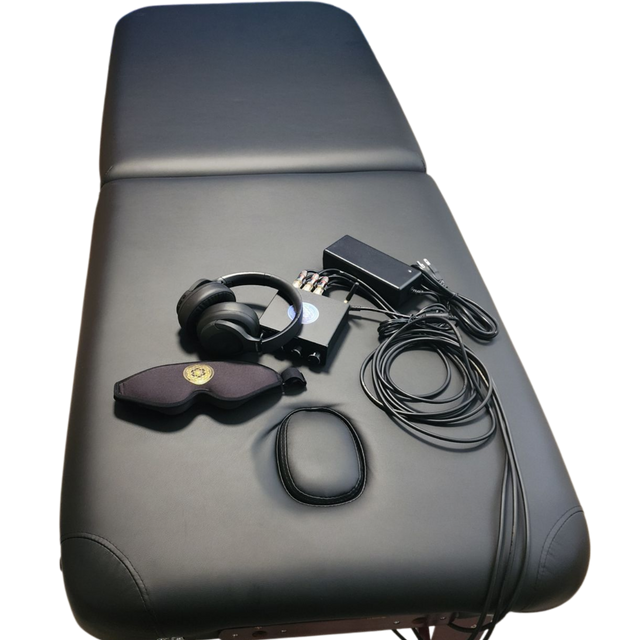
Vibroacoustic therapy uses sound frequencies, commonly in the approximate range of 20 to 120 Hz, delivered through speakers or transducers that allow the body to feel sound as vibration. At these lower frequencies, the experience is not only auditory. Mechanical vibration travels through the support surface and into the body as tactile, rhythmic input.
That physical mechanism matters. The body contains mechanoreceptors in the skin, muscles, connective tissue, and joints that respond to pressure, stretch, and vibration. Slow, consistent vibration can give the nervous system a clear stream of nonverbal sensory information. For a person who feels scattered or disconnected, that predictable input may be easier to process than a crowded verbal environment.
Frequencies around 30 to 80 Hz are commonly used in vibroacoustic applications because they create a distinctly felt sensation through a bed, chair, cushion, or treatment table. Lower frequencies often feel broad and grounding, while somewhat higher frequencies can feel more localized or stimulating depending on the equipment, volume, body position, and listener sensitivity. The right setting is the one that feels comfortable, not the one that feels most intense.
Research into vibroacoustic interventions has explored outcomes including relaxation, pain perception, muscle tension, mood, and autonomic regulation. Small clinical studies and reviews have reported that rhythmic low-frequency stimulation can support relaxation and perceived well-being for some participants, particularly when sessions are delivered in a calm environment. Researchers are especially interested in the combination of audible music, tactile vibration, and rest because it engages both the auditory and somatosensory systems at once.
For sensory regulation, the practical value is often the experience of containment. A person lies or sits on a supportive surface, receives a steady pattern of vibration, and has permission to stop performing, explaining, or solving. Vibroacoustic Solutions systems are designed to make that clinical-grade tactile sound experience accessible in home and professional settings.
Begin with a low-demand session
More stimulation is not automatically better. If someone is new to vibroacoustic therapy, begin with a comfortable position, a lower volume, and a short session of about 10 to 15 minutes. Choose simple, slow music or tones without abrupt changes. Notice breathing, muscle tension, temperature, and whether the person feels more settled, more alert, or overstimulated.
A useful first goal is not dramatic relaxation. It is simply increased body awareness without distress. If the vibration feels too strong, reduce intensity, shorten the session, or place a layer of cushioning between the body and the surface if appropriate for the equipment. Some people prefer sessions earlier in the day because the input feels energizing; others find a gentle evening session supports a transition toward sleep.
Create a sensory recovery plan for real life
A sensory plan works best when it is available during ordinary moments, not only during a crisis. Keep it specific and realistic. Instead of writing reduce stress, identify the first actions that tend to help: step outside for five minutes, drink water, use noise-reducing headphones, sit in a dim room, take a slow walk, or use a familiar vibroacoustic track.
For home users, designate one small area as a recovery space. It does not need to be elaborate. A supportive chair or therapy surface, softer lighting, a blanket, water, and a way to reduce interruptions can be enough. The essential feature is permission: this is a place where the body can downshift without needing to justify the need.
Practitioners can incorporate a similar principle into treatment design. Explain sensations before beginning, invite clients to communicate preferences, and avoid assuming that a calming modality will feel calming to every person on the first visit. Choice, pacing, and consent are themselves regulating inputs.
When sensory needs change from day to day
Sensory capacity is not fixed. Sleep loss, illness, hormonal changes, grief, pain, conflict, medication changes, and a demanding workweek can all lower tolerance for sound, touch, light, and social interaction. A routine that felt restorative last month may feel like too much today.
This is where flexible tracking helps. After a sensory practice, ask: Do I feel more present? Is my breathing easier? Can I think more clearly? Do I have more capacity for the next task? Those answers are more useful than forcing a preferred tool to work.
If sensory distress is persistent, severe, or affecting daily functioning, a qualified occupational therapist, mental health professional, physician, or other appropriate clinician can help identify supportive next steps. Sensory tools and vibroacoustic sessions can sit alongside professional care as part of a broader plan for recovery and regulation.
The most meaningful sensory support often begins with a quiet shift in perspective: the body is not being difficult. It is communicating. When you respond with steady, well-matched input and enough time to recover, regulation becomes less about pushing through and more about creating the conditions for safety to return.
Latest posts


Vibroacoustic Systems for Therapeutic Regulation
Read article