A rehabilitation session can feel productive in the moment, then leave you wondering what changed when pain shows up later that day or the next morning. Pain after rehab exercises is not automatically a sign that you have caused harm, but it is useful information. The body is communicating about load, tissue tolerance, movement quality, recovery capacity, or nervous system sensitivity.
The goal of rehabilitation is not to eliminate every sensation. It is to apply enough challenge to help the body adapt without repeatedly overwhelming it. Learning that distinction can make recovery feel less uncertain, whether you are rebuilding after an injury, managing persistent pain, or supporting clients in a clinical setting.
Why Rehabilitation Exercises Can Create Pain
Exercise places mechanical demand on muscles, tendons, joints, and connective tissue. In a well-dosed program, that demand signals the body to adapt. Muscles develop greater capacity, tendons gradually tolerate more force, and the nervous system becomes more confident in movements that may have previously felt guarded or threatening.
A common response is delayed-onset muscle soreness, often called DOMS. It tends to emerge 12 to 24 hours after an unfamiliar or more demanding session, peak around 24 to 72 hours, and gradually ease. This soreness is usually broad rather than sharply localized. You may notice stiffness when first getting out of a chair, tenderness when pressing a muscle, or discomfort that improves as you gently warm up.
The mechanism is more complex than simply "lactic acid." Challenging movement, especially slow lowering or eccentric work, creates temporary microscopic disruption in muscle fibers and connective tissue. The immune system participates in repair, local chemical signals increase sensitivity, and the nervous system registers the area as sore while recovery is underway.
Rehabilitation can also create symptoms because the exercise dose exceeded current capacity. That does not mean the exercise was wrong. It may mean the range of motion was too large, the resistance was too high, the session was too long, or there was not enough recovery between sessions. Sleep disruption, stress, medication changes, nutrition, and a demanding workday can all lower the amount of load a person can comfortably tolerate.
Pain After Rehab Exercises: Normal Response or a Load Mismatch?
The most helpful question is not, “Should rehab hurt?” It is, “What is the pattern, and what happens next?” A predictable, temporary response that settles within a day or two is different from pain that escalates, changes your movement substantially, or lingers without improvement.
Mild muscular soreness may be acceptable when it stays manageable, does not significantly alter your gait or daily function, and returns close to baseline by the next session. In many rehabilitation settings, a modest increase in symptoms that settles within 24 hours can be a workable starting point. Your individual plan may call for a more conservative threshold, particularly after surgery or during a flare of persistent pain.
Pain is more likely to suggest a load mismatch when it is sharp, catching, burning, increasingly swollen, or associated with instability, locking, numbness, or new weakness. Pain that gets progressively worse during exercise, remains elevated for several days, or causes you to compensate with a limp deserves attention. So does pain that wakes you consistently at night or appears alongside fever, unusual warmth, significant redness, or calf swelling.
For people living with chronic pain, the nervous system can become highly protective even when tissues are not newly injured. This does not make the pain less real. It means the rehabilitation plan may need to prioritize predictability, slower exposure, breathing, sleep, and a sense of safety alongside strength and mobility work. The science of somatic regulation recognizes that recovery is both mechanical and neurological.
Use the 24-Hour Response as Feedback
A practical way to assess a session is to compare your symptoms before exercise, shortly afterward, and the following day. If discomfort rises mildly during a session but returns near your usual level by the next day, the dose may be appropriate. If you are notably worse the next day, reduce one variable for the next session.
That variable might be repetitions, resistance, range of motion, time under tension, or frequency of sessions. Change one factor at a time when possible. If you reduce everything at once, it becomes difficult to learn what your body was responding to.
How to Adjust Without Stopping Your Progress
When symptoms are higher than expected, avoiding all movement is not always the answer. Complete rest can sometimes increase stiffness, apprehension, and sensitivity. Instead, consider a recovery-focused adjustment: shorten the session, lower the resistance, use a more supported position, or choose easy range-of-motion work and brief walks.
For example, if three sets of 12 sit-to-stands create lasting knee pain, try two sets of six from a slightly higher surface. If loaded shoulder work causes a sharp response, a clinician may recommend reducing the range, changing the angle, or returning temporarily to isometric holds. Isometric exercise uses muscle contraction without substantial joint movement and can be a useful bridge when dynamic loading feels too provocative.
Pacing matters as much as intensity. A single hard session followed by several days of increased pain often builds less capacity than smaller, repeatable sessions. Think in terms of the weekly load rather than trying to win one workout. Consistency gives the nervous system repeated evidence that movement can be safe and manageable.
Recovery basics also have a direct effect on how exercise feels. Hydration, regular meals with adequate protein, sleep, and gentle movement support tissue repair and nervous system regulation. These are not glamorous interventions, but they influence the body’s ability to process training stress.
Where Vibroacoustic Therapy May Fit in Recovery
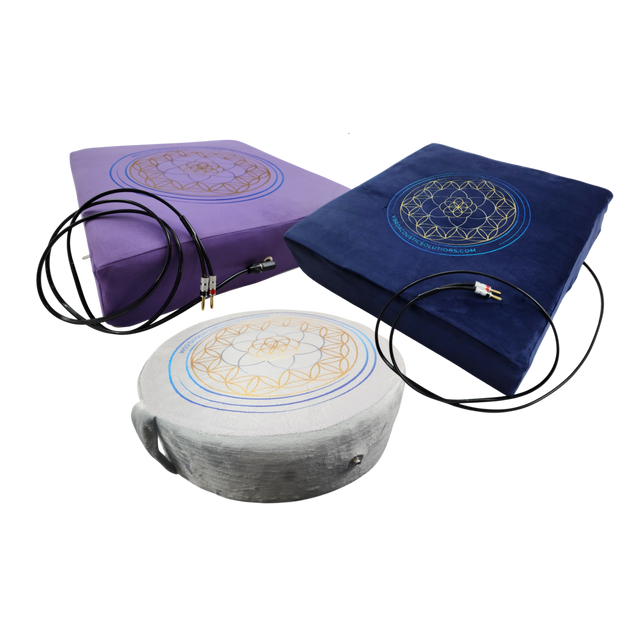
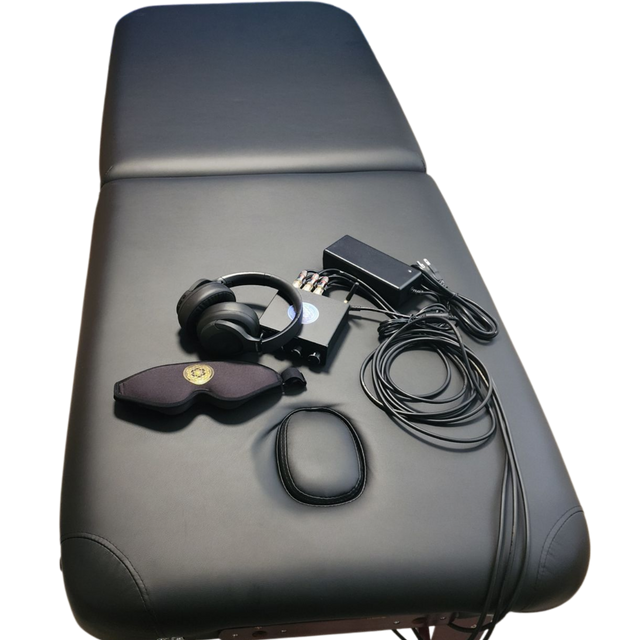
Vibroacoustic therapy uses low-frequency sound delivered through a bed, cushion, chair, or treatment table. Rather than only hearing sound through the ears, the body receives tactile vibration through contact points. Frequencies in the approximate 20 to 120 Hz range are commonly used because low-frequency energy is readily perceived as physical vibration across the body.
This mechanical input can create a gentle, rhythmic sensory experience. Muscles may feel less guarded, breathing can become slower and more regular, and the client has an opportunity to shift out of a high-alert state before or after movement. For a person whose pain response includes significant tension or sensory overload, that shift in state can make a rehabilitation session feel more approachable.
Frequency selection should follow the purpose of the session. Lower ranges around 20 to 40 Hz are often experienced as grounding and deeply felt, while frequencies around 40 to 80 Hz can feel more localized and stimulating through a treatment surface. Research on vibration-based exercise and recovery commonly explores frequencies in the 20 to 50 Hz range, although protocols vary widely by device, amplitude, body position, and treatment duration. That variation is why vibroacoustic sessions should be viewed as supportive regulation and recovery tools, not as a substitute for individualized rehabilitation programming.
For home users, a 10- to 20-minute low-frequency session after gentle mobility work may provide a quiet transition into recovery. For practitioners, vibroacoustic support can be integrated before exercise to help a client settle, between more demanding tasks to reduce guarding, or after treatment as part of a down-regulation routine. Vibroacoustic Solutions systems are designed to bring this clinical-grade sensory support into home and professional environments without requiring a dedicated sound therapy room.
The best response is personal. Some people prefer a barely perceptible vibration, while others find a more present low-frequency experience comforting. Start at a comfortable volume, choose a supported position, and notice whether the session leaves you feeling calmer, more mobile, or more sensitive. Comfort is useful data.
When to Pause and Contact Your Clinician
Stop the exercise and seek guidance from your rehabilitation provider if pain is sharp, severe, or rapidly increasing, or if you notice new numbness, weakness, loss of coordination, joint instability, major swelling, or changes in bowel or bladder control. After surgery, follow the specific precautions from your surgeon and physical therapist rather than relying on general exercise rules.
Vibroacoustic therapy should also be introduced thoughtfully. People with acute injuries, unexplained swelling, circulation concerns, implanted medical devices, pregnancy-related precautions, or conditions that affect sensation should check with an appropriate clinician and follow device guidance before use.
Recovery rarely moves in a straight line. A painful response after rehab does not erase progress, and a symptom-free day does not mean it is time to double the load. Treat each session as a conversation with your body: listen closely, adjust with intention, and build capacity at a pace your system can trust.
Latest posts


Vibroacoustic Systems for Therapeutic Regulation
Read article