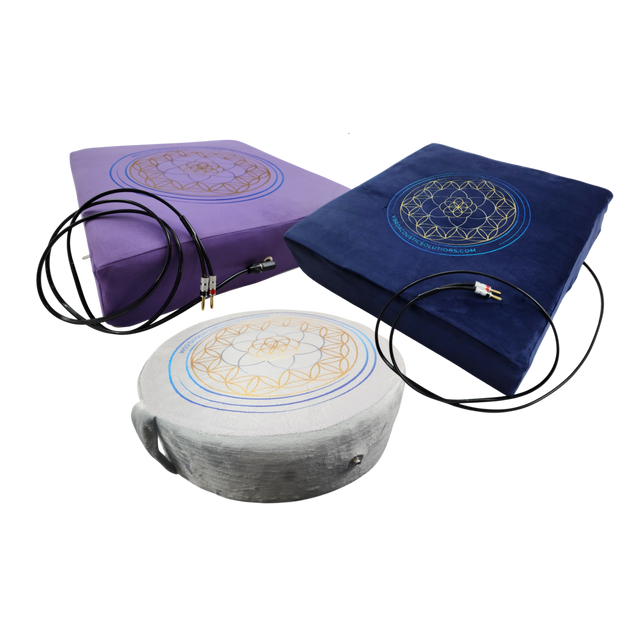
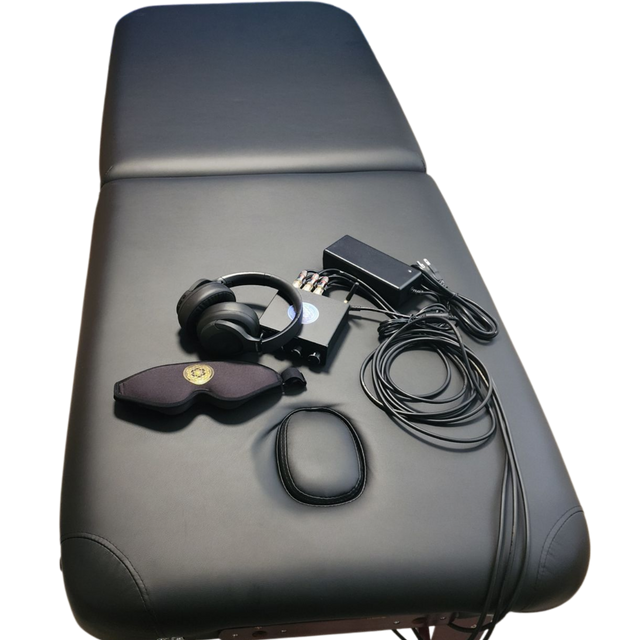
After a demanding workout, a difficult treatment day, or weeks of disrupted sleep, the body rarely needs more stimulation. It needs a clear signal that it can downshift. Therapeutic frequencies for recovery create that signal through sound you can hear and low-frequency vibration you can physically feel - delivered through a vibroacoustic bed, cushion, or treatment table.
This is not passive background audio. In a clinical-grade vibroacoustic system, a transducer converts an audio signal into mechanical vibration. That vibration travels through the surface of the bed or cushion and into the body at contact points such as the back, hips, legs, or shoulders. The result is a combined auditory and tactile experience that can support muscular release, interoceptive awareness, and nervous system regulation.
How frequency becomes a recovery tool
Frequency is measured in hertz (Hz), or cycles per second. A 40 Hz tone completes 40 cycles each second. When that signal drives a vibroacoustic transducer, the listener does not only hear 40 Hz. They experience a rhythmic physical oscillation through the body.
The body is highly responsive to mechanical input. Pressure receptors in the skin, connective tissue, and muscles continually send information to the brain about touch, movement, position, and safety. Slow, predictable vibration can give this sensory system a stable pattern to orient around. For someone carrying stress in the jaw, diaphragm, shoulders, or low back, that steady input may make it easier to notice tension and allow it to soften.
This is why frequency should not be treated as a magic number. Its effect depends on the full dose: frequency, amplitude, waveform, duration, body position, speaker placement, music, and the person receiving it. A 40 Hz session at a gentle amplitude on a padded treatment table can feel deeply settling. The same frequency at a high output level may feel alerting or simply uncomfortable.
Therapeutic frequencies for recovery: useful ranges
Most vibroacoustic therapy sessions work in the low-frequency range, often from about 20 to 120 Hz. These frequencies are especially well suited to tactile delivery because they can be felt clearly through the body without requiring high volume.
20 to 40 Hz for settling and body awareness
Lower frequencies tend to feel broad, slow, and grounding. Many practitioners use the 20 to 40 Hz range at the beginning of a session to help clients transition out of a busy, externally focused state. The vibration is often most noticeable through larger contact areas, including the back and pelvis.
Around 30 Hz to 40 Hz, the experience can feel like a steady internal massage rather than a sharp buzz. This range is commonly paired with slow breathing, body scanning, massage, or quiet rest. It can be particularly useful when recovery means moving from sympathetic activation toward a calmer, more regulated state.
40 to 80 Hz for muscular recovery and relaxation
Mid-low frequencies are frequently used for post-exertion recovery, chronic muscular holding patterns, and relaxation-focused treatment. At these settings, the vibration can feel more defined in the tissues while remaining comfortable enough for a longer session.
Forty hertz is a familiar setting in vibroacoustic practice because it is both palpable and versatile. It may be used as a consistent tone or incorporated into music designed for therapeutic listening. Some research interest in 40 Hz also extends to rhythmic sensory stimulation and brain-network activity, making it a compelling area for ongoing clinical exploration.
The most useful choice is not always a single fixed frequency. Gentle sweeps, such as moving slowly between 30 and 60 Hz, can prevent the body from habituating to one sensation. For clients who feel sensitive to vibration, a lower amplitude sweep often feels more comfortable than a sustained, stronger tone.
80 to 120 Hz for focused sensory input
Higher low-frequency settings can create a tighter, more localized sensation, particularly when the transducer is close to the area of concern. Some people enjoy this range after activity because it feels more energizing and physically distinct. Others find it too stimulating late in the day.
That difference matters. Recovery is not one experience. A runner seeking support after training may prefer a more noticeable session in the afternoon, while a person preparing for sleep may benefit from a slower, gentler protocol. The body’s response is the most useful guide.
What the research says about vibroacoustic recovery
Vibroacoustic therapy research has explored outcomes such as pain perception, anxiety, relaxation, motor function, sleep quality, and quality of life. Across small clinical studies and research reviews, participants commonly report reduced pain intensity, improved relaxation, and a greater sense of physical ease after sessions. Researchers also consistently point out that protocols vary widely, including differences in frequency, session length, music selection, and patient populations.
That variation is meaningful rather than inconvenient. It reflects the reality that therapeutic sound is individualized. A recovery protocol for an athlete, a person living with persistent pain, and a child with sensory regulation needs should not look identical.
For practitioners, the evidence supports a thoughtful, adjunctive role. Vibroacoustic therapy can complement massage, physical therapy, psychotherapy, occupational therapy, breathwork, and restorative movement by helping the client arrive in a more receptive physiological state. It is not a substitute for medical evaluation, rehabilitation planning, or treatment prescribed for an injury or health condition.
Building a practical recovery session
A useful first session is usually simple. Begin with 15 to 25 minutes at a comfortable intensity, using a narrow range such as 30 to 50 Hz or a gentle sweep through that range. The goal is not to make the body work harder. It is to provide enough sensory information for the person to feel held, settled, and present.
Position matters as much as programming. Full-body contact on a vibroacoustic bed offers an immersive experience that can support whole-body relaxation. A cushion may be ideal for seated use, targeted support at the low back, or a shorter home session. For massage therapists and bodyworkers, a table attachment kit can layer low-frequency vibration beneath hands-on care without changing the familiar treatment environment.
Before beginning, ask a few practical questions: Does the person want to feel calmer, looser, more awake, or more connected to their body? Are they sensitive to sound or vibration? Is this a morning recovery practice, a post-training session, or part of a bedtime routine? These answers guide choices better than a universal frequency chart.
Track the response after each session. Notice breathing, muscle tone, comfort, mood, sleep that night, and how the body feels the following day. If a session leaves someone restless, reduce the intensity, shorten the duration, or choose a lower frequency range next time. Gentle adjustments are part of the therapeutic process.
Sound, meaning, and the recovery environment
The vibration itself is only one layer of the experience. The audible soundscape shapes expectation, attention, and emotional tone. Some people prefer minimal tones or nature-based music. Others connect deeply with tonal traditions, including 432 Hz music or Solfeggio-inspired compositions, because of the history, symbolism, and felt spaciousness they bring to practice.
These preferences deserve a place in a recovery plan. When a soundscape helps a person feel safe, emotionally open, or spiritually grounded, it can strengthen their willingness to rest and stay present with the body. A therapeutic environment should make room for both measurable parameters and personal meaning.
When to use added care
Vibroacoustic therapy is non-invasive, but it is still a meaningful physical stimulus. Individuals with an acute injury, recent surgery, pregnancy, a known blood-clotting concern, implanted medical devices, severe osteoporosis, or a condition affected by vibration should consult an appropriate healthcare professional before beginning. Practitioners should also use a slower introduction when working with clients who have sensory sensitivities, trauma-related hypervigilance, or active pain flare-ups.
Comfort is a clinical signal. The best session is not the most intense one. It is the one that leaves the person feeling more resourced, more aware of their body, and better able to participate in the recovery practices that matter most.
Recovery does not always arrive as a dramatic breakthrough. Sometimes it begins with a quieter breath, shoulders that drop without being told, or ten minutes of stillness that finally feels available. Therapeutic frequency can help create the conditions for those small shifts - and small shifts, practiced consistently, can change how recovery feels in daily life.
Latest posts