A low bass note can fill a room, but it may barely register in the body. Place the same low-frequency signal through a properly mounted tactile transducer, and the experience changes: vibration travels directly into the surface supporting the body. That is the practical difference behind transducers versus speakers in vibroacoustic therapy. Both convert an audio signal into physical energy, yet they are designed to deliver that energy in very different ways.
For a home user creating a calming recovery space or a practitioner equipping a massage table, the choice affects more than volume. It influences tactile clarity, client comfort, placement options, and the consistency of a session.
Transducers versus speakers: the physical difference
A conventional speaker uses an electromagnetic voice coil to move a cone back and forth. That moving cone pushes and pulls the surrounding air, creating pressure waves that the ears interpret as sound. Speakers are excellent at producing audible music, guided meditations, and environmental sound. Their primary medium is air.
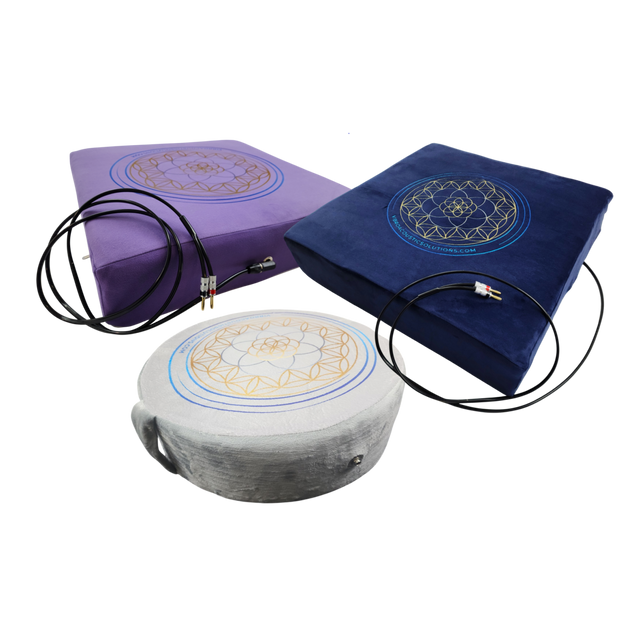
A tactile transducer also uses electromagnetic force, but instead of moving a cone to project sound into a room, it transfers mechanical vibration into an attached surface. When mounted beneath a bed platform, inside a cushion, or onto a treatment table, the transducer turns that structure into the vibrating element. Its primary medium is the furniture and, through direct contact, the body resting on it.
This distinction is often described as airborne sound versus structure-borne vibration. Airborne sound reaches the listener through the ears. Structure-borne vibration travels through materials and is perceived through the skin, muscles, connective tissue, and skeletal system. A transducer may create some audible sound, especially at higher settings, but hearing it is not its central purpose.
There is a technical nuance worth knowing: a loudspeaker is, by definition, a type of transducer because it changes electrical energy into motion and sound. In vibroacoustic equipment conversations, however, “transducer” usually means a tactile bass transducer or vibration exciter. That shared language can prevent confusion when comparing components or planning a system.
Why low frequencies matter in vibroacoustic therapy
Frequency is measured in hertz (Hz), meaning cycles per second. Lower frequencies move more slowly and generally create longer, more physically perceptible waves. A 30 Hz signal completes 30 cycles each second. At a suitable intensity and with good mechanical coupling, that movement can be felt as a slow rhythmic pulse through a table, mattress, or cushion.
Vibroacoustic therapy commonly works within approximately 20 to 120 Hz, with many applications concentrating in the 30 to 80 Hz range. The lower end can feel broad, grounding, and enveloping. Frequencies around 40 Hz are often used in vibroacoustic programs because they provide a clear tactile sensation without requiring intense audible volume. Higher frequencies, roughly 80 to 120 Hz, can feel more localized, detailed, or stimulating depending on the surface and the listener.
The body does not experience every frequency in the same way. Tissue composition, body position, furniture materials, signal level, and individual sensory preferences all shape perception. A firm massage table may transmit vibration with impressive directness, while a thick memory-foam mattress may soften or absorb some of the signal. This is why a system that feels ideal for one person may need adjustment for another.
Researchers studying vibroacoustic interventions often examine outcomes related to relaxation, perceived pain, muscle tension, sleep, mood, and autonomic regulation. The proposed mechanism is not simply “more bass equals more benefit.” Rhythmic low-frequency stimulation can provide predictable sensory input, while carefully chosen music or tones engage attention and emotional response. For many people, this combination creates a supportive setting for downshifting from stress and reconnecting with bodily sensation.
What speakers do well
Speakers remain an essential part of many therapeutic sound environments. They reproduce the musical detail that makes a session emotionally resonant: the warmth of a drone, the articulation of a singing bowl, a therapist’s voice, or the subtle spatial movement in ambient music. They also make it easy to share sound with a room without physical installation.
For meditation, breathwork, guided relaxation, and sound-based sessions where listening is the primary goal, quality speakers may be all that is needed. They are usually simpler to position, easier to move between rooms, and more familiar for clients who prefer an auditory experience.
Speakers can produce bass, including frequencies below 80 Hz, but audible bass is not identical to tactile vibration. To make low frequencies strongly felt across a bed or table using speakers alone, volume often has to rise substantially. That can disturb others nearby, create room resonance, and make a calming program feel louder than necessary. It may also produce uneven sensation, with strong bass in one area of the room and much less in another.
Where tactile transducers excel
A transducer is especially useful when the therapeutic objective includes direct, low-frequency sensation without turning the room into a bass-heavy listening space. It delivers energy into the surface beneath the person, so the experience can remain relatively quiet in the surrounding environment while still feeling substantial to the user.
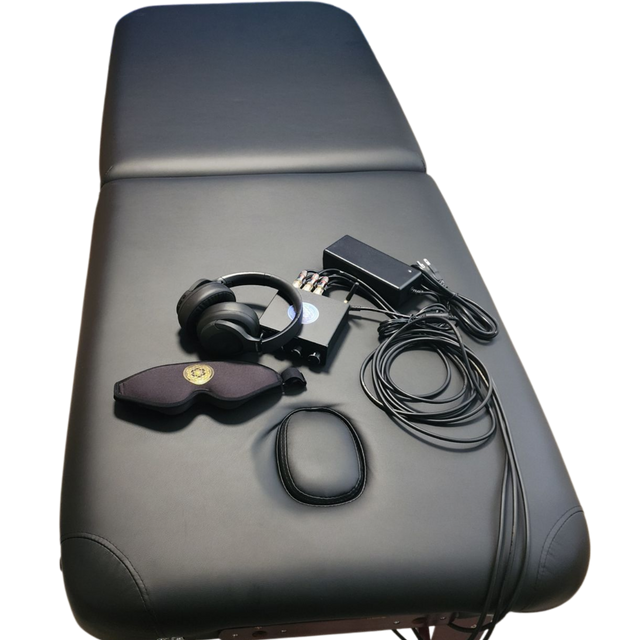
This makes transducers well suited to vibroacoustic beds, massage tables, recliners, floor cushions, and DIY furniture conversions. A practitioner can pair a tactile signal with gentle overhead audio, allowing the client to hear music at a comfortable level while feeling the low-frequency component through the body. At home, this can make evening regulation or recovery sessions more private and practical in shared living spaces.
Mechanical coupling is the reason installation matters. A transducer needs a firm attachment point so its movement can transfer efficiently into the furniture. A loose mount, thin unsupported panel, or highly flexible surface can rattle, waste energy, or create an uneven feel. A well-designed system considers the transducer’s power rating, the amplifier’s output, the surface material, mounting position, and the user’s body contact with the surface.
More power is not automatically better. Excessive intensity may feel overwhelming, especially for people with sensory sensitivity, trauma-related tension, migraine tendencies, or a lower threshold for vibration. Clinical-grade practice means treating intensity as a dosage variable: start gently, observe the response, and adjust frequency, volume, and session length with care.
Choosing the right setup for your goal
The best choice depends on whether you want to hear sound, feel vibration, or create an integrated experience. For many users, the answer is not speakers or transducers. It is both, with each component assigned the task it performs best.
A home user focused on stress regulation or sleep may prefer a cushioned transducer system paired with low-volume music or headphones. The tactile layer can support a sense of containment, while the audio layer provides a soothing emotional and attentional focus. Begin with a comfortable level in the 30 to 60 Hz range and shorter sessions, then notice whether the body feels settled, neutral, energized, or overstimulated afterward.
A massage therapist or somatic practitioner may benefit from a table-mounted tactile system because it can add a low-frequency sensory dimension without competing with conversation or bodywork. For hands-on sessions, moderate levels are often more useful than dramatic vibration. The goal is for the vibration to support the treatment atmosphere, not become a distraction.
For sound practitioners working with instruments, recorded soundscapes, or intentional frequencies such as 432 Hz or Solfeggio-based music, speakers carry the tonal and harmonic character of the recording. Transducers can add a separate low-frequency foundation beneath it. These layers do not need to match exactly. A musical track may have its own tuning and meaning, while the tactile channel can be designed around frequencies the body readily perceives, such as 40 Hz or 60 Hz.
Practical details that shape the experience
Before selecting equipment, consider the surface you are converting. Solid wood platforms and well-built treatment tables typically transmit vibration differently than upholstered furniture with springs, thick foam, or a reclining mechanism. Weight distribution matters too. A large bed may benefit from more than one transducer or a placement strategy that avoids leaving one side feeling noticeably stronger.
Signal routing deserves equal attention. A transducer requires an amplifier capable of driving its impedance and power requirements. It should not be connected casually to a speaker output without confirming compatibility. A dedicated low-frequency channel or crossover can help send the tactile unit the frequency range it is designed to reproduce, while speakers handle the fuller audible program.
Keep sessions comfortable and intentional. Avoid placing vibrating equipment where it may destabilize a person getting on or off the surface, secure all cables, and use equipment according to manufacturer instructions. People with implanted electronic devices, acute injuries, pregnancy-related concerns, or complex health conditions should consult an appropriate qualified clinician before introducing strong vibration into a wellness routine.
The more useful question
The debate around transducers versus speakers becomes clearer when you stop asking which one is superior. Speakers are built to shape the soundscape around a person. Tactile transducers are built to bring low-frequency motion into the surface supporting them. Together, they can create a layered vibroacoustic environment where the ears receive sound, the body receives rhythm, and the nervous system has space to settle.
Start with the experience you want someone to have. If you want music to be heard, choose speakers with care. If you want bass to be felt without filling the room with volume, choose tactile transducers. If you want a more complete somatic sound environment, let each technology do what it was designed to do.
Latest posts


Vibroacoustics Versus Red Light Therapy Compared
Read article