A hard session can leave more behind than productive fatigue. Your shoulders may stay elevated hours after lifting, your jaw may feel set after a fast run, or your low back may feel guarded after a demanding class. Learning how to ease postworkout tension starts with recognizing that this sensation is not always the same as muscle soreness. Often, it is your muscles and nervous system remaining in a state of readiness after the work is over.
The goal is not to force your body to "loosen up." Effective recovery gives tissues circulation, gives the nervous system clear signals of safety, and allows your breathing and movement patterns to normalize. The right approach depends on whether you feel local muscle stiffness, whole-body activation, delayed soreness, or pain that needs clinical assessment.
Why tension can linger after exercise
During exercise, the sympathetic nervous system raises heart rate, blood flow, alertness, and muscle activation. This is a useful performance state. Muscles also maintain a degree of tone to stabilize joints and transfer force, particularly during strength training, hills, sprinting, or unfamiliar movement.
Afterward, that activation does not always switch off immediately. A demanding workout, insufficient sleep, dehydration, psychological stress, or rushing straight into work can keep the body in a guarded pattern. The neck, hips, calves, forearms, and low back are common places to hold that residual tone.
Postworkout tension also differs from delayed onset muscle soreness, or DOMS. DOMS commonly peaks 24 to 72 hours after a novel or high-volume workout and is associated with temporary exercise-related muscle damage and inflammation. Tension may appear immediately, feel more like clenching or restricted range of motion, and often responds well to gentle downregulation rather than more intensity.
Start with a gradual exit from training
Stopping abruptly after high-intensity work can make the transition into recovery feel harsher. Spend five to 10 minutes lowering the pace with easy walking, cycling, or relaxed mobility. This does not need to be elaborate. The purpose is to let breathing, circulation, and muscle recruitment step down progressively.
Choose movement that feels noticeably easier than your training. After heavy lower-body work, a slow walk and comfortable hip circles may be more useful than aggressive stretching. After an upper-body session, gentle arm swings, thoracic rotation, and easy reaching can restore motion without asking fatigued tissue to produce more force.
Static stretching has a place, especially when a specific area feels shortened, but intensity matters. Hold a position at a mild to moderate sensation for 20 to 45 seconds while breathing normally. Avoid forcing range or bouncing into a stretch. If stretching creates sharp pain, tingling, or increased guarding, back away and choose lighter movement instead.
Use breath to change the recovery signal
Your breath is one of the fastest ways to influence the shift from performance mode toward recovery. Longer, unforced exhales are especially useful because they support parasympathetic activity, the branch of the autonomic nervous system associated with rest, digestion, and restoration.
Try two to five minutes of quiet nasal breathing with an inhale of about four seconds and an exhale of six to eight seconds. Let the ribs expand in all directions rather than lifting only through the chest. There is no need to chase a perfect count. A smooth, comfortable rhythm is more regulating than a rigid technique.
For practitioners, this is a valuable transition ritual before bodywork or sound-based sessions. Clients often arrive with exercise-induced activation still present in their breathing, facial muscles, and postural tone. Establishing a slower respiratory rhythm first can make other therapeutic inputs feel more settling.
Restore the basics that muscles need
Muscle tissue needs fluid, electrolytes, energy, and time to recover. If you finish training sweaty, depleted, and immediately return to meetings or errands, tension can feel more pronounced simply because the body has not received its basic recovery inputs.
Rehydrate according to the length, heat exposure, and sweat loss of your session. For longer or very sweaty workouts, a drink or meal containing sodium can help replace electrolytes. Pairing protein with carbohydrate within the next few hours supports muscle protein synthesis and replenishes glycogen. Exact timing is less critical for most people than meeting overall daily nutrition needs consistently.
Sleep is equally practical. Short sleep can heighten pain sensitivity and make ordinary muscular stiffness feel more intense. If an evening workout leaves you wired, make the post-training environment quieter and dimmer, and avoid turning recovery into another demanding task.
Add heat, self-massage, or gentle pressure strategically
Heat can be comforting when tension feels diffuse, achy, or linked to cold, stress, and general stiffness. A warm shower, bath, or heating pad may increase local circulation and help the body settle. It is often most useful before easy mobility, rather than as a reason to push deeply into a tight area.
Self-massage tools can also help, but more pressure is not automatically better. Spend 30 to 90 seconds on one region, then move, breathe, and reassess. A foam roller, massage ball, or hands-on massage may reduce the perception of tightness and temporarily improve range of motion. Bruising, breath-holding, and bracing are signs that the input is too intense.
If your tension is accompanied by swelling, acute injury, unusual weakness, numbness, or pain that worsens rather than improves, skip aggressive self-treatment and consult an appropriate licensed healthcare professional.
Use vibroacoustic therapy for whole-body downregulation
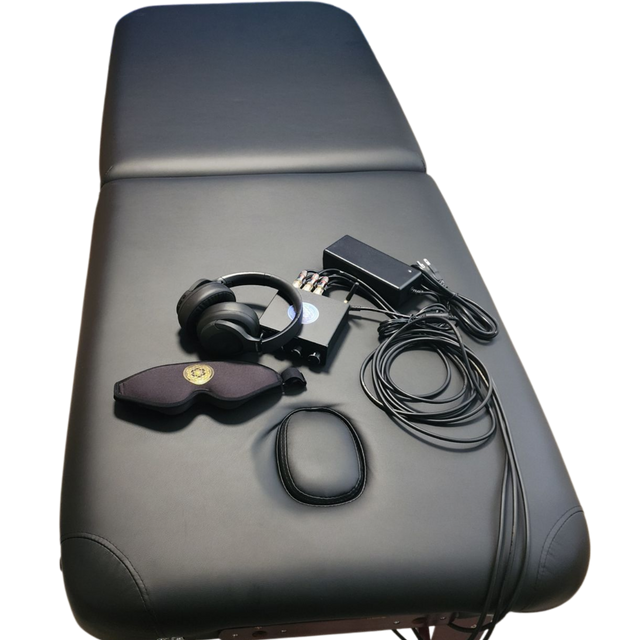
Vibroacoustic therapy works through low-frequency sound transmitted into the body through a bed, cushion, chair, or treatment table. Rather than only hearing a tone, the user feels mechanical vibration through the tissues. This tactile input can function as a form of gentle sensory stimulation, while the accompanying audio supports attention, breathing, and emotional settling.
Frequency matters because different ranges create different tactile experiences. Low frequencies around 20 to 60 Hz are often felt as broad, grounding vibration through the back, hips, and legs. Frequencies from roughly 60 to 120 Hz may feel more localized or stimulating depending on the transducer, volume, body position, and the surface carrying the vibration. In research and rehabilitation settings, mechanical vibration in approximately the 20 to 50 Hz range has been explored for its effects on neuromuscular activation, circulation, flexibility, and recovery responses.
For postworkout tension, the therapeutic aim is usually not stimulation for performance. It is a comfortable dose that helps reduce protective bracing and supports autonomic regulation. A 15- to 30-minute session at a moderate, pleasant intensity can create space for slower breathing and body awareness without demanding more work from fatigued muscles.
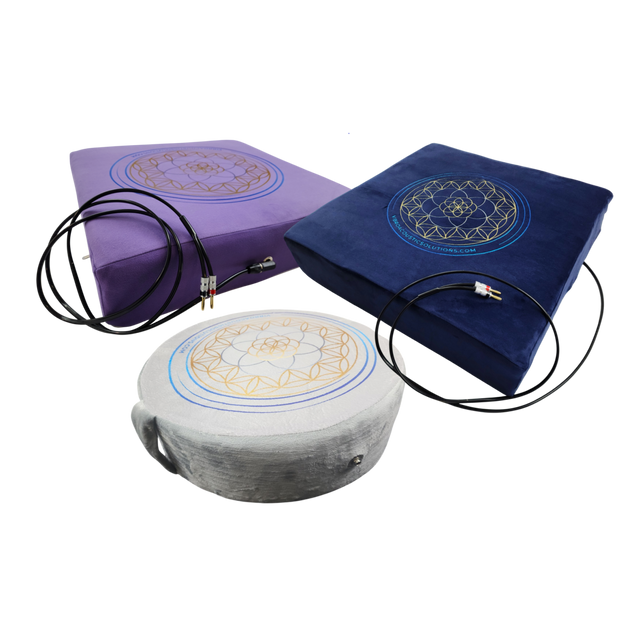
A vibroacoustic bed or massage table attachment can be particularly useful for clinics that want a consistent recovery ritual before or after manual therapy. At home, a cushion or conversion kit can make this kind of low-frequency support accessible without adding another complicated recovery routine. Vibroacoustic Solutions designs systems for both settings, with tactile sound delivery that can be tailored to the user and treatment environment.
A simple 20-minute recovery session
Settle into a supported position, ideally lying down with your knees comfortably bent or elevated. Choose low-frequency audio that feels soothing rather than forceful, and keep the volume at a level where your body can soften into the vibration.
For the first five minutes, place one hand on the chest and one on the abdomen, allowing your exhale to lengthen naturally. During the next 10 minutes, scan from jaw to feet and notice where you are still gripping. You do not need to fix each area. Simply soften the tongue, lower the shoulders, release the hands, and allow the legs to become heavy.
Use the final five minutes to sit up gradually, drink water, and take a short walk before returning to your day. The transition matters. Moving too quickly from a restorative session back into a stressful environment can erase some of the benefit you have just created.
Know when to train, recover, or seek support
Mild tension that improves with movement is often compatible with an easy recovery day. You may benefit from walking, mobility work, low-intensity cycling, or a lighter training session. But persistent pain that changes your mechanics, pain at rest, visible swelling, radiating symptoms, fever, or sudden loss of strength calls for professional evaluation.
There is also a training-load question. If you repeatedly feel intensely tight after similar workouts, your program may need adjustment. Review volume, exercise selection, warm-up quality, rest periods, and progression. More recovery tools cannot fully compensate for a workload that outpaces your current capacity.
The most effective recovery practice is the one you can repeat without dread. A few minutes of slower breathing, easy movement, hydration, and low-frequency vibration can become a reliable signal that training is complete and restoration has begun. Give your body that signal consistently, and tension has less reason to stay on guard.
Latest posts

Vibroacoustics Versus Red Light Therapy Compared
Read article
Transducers Versus Speakers: What Your Body Feels
Read article